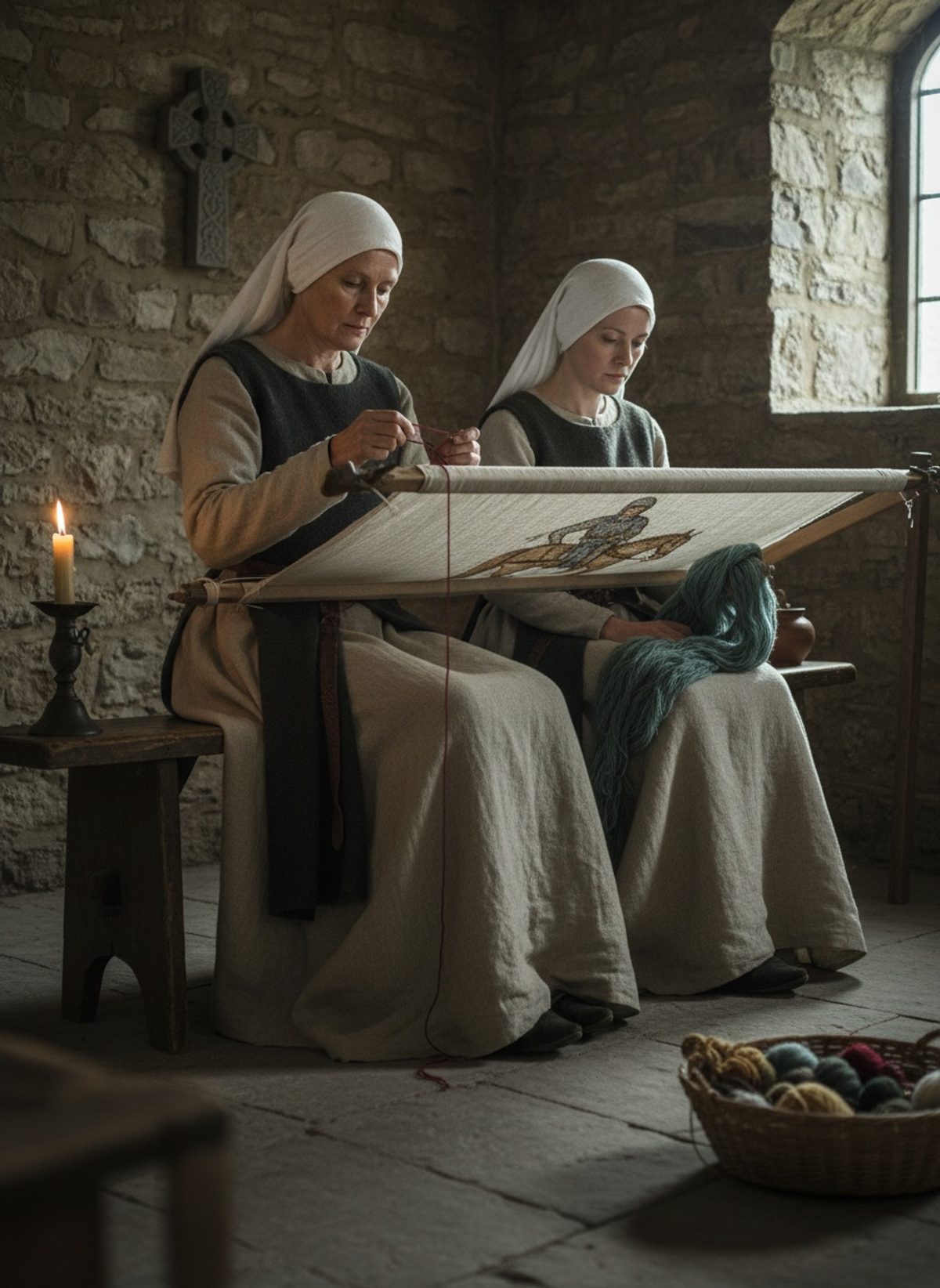
Their hands were deft and steady. Yet, they stitched the story of their own defeat under the gaze of the very conquerors who had subdued them. The mighty Bayeux Tapestry is not, as its name suggests, a tapestry; it is embroidery, crafted meticulously in wool on bleached linen, by English women who almost certainly spoke Anglo-Saxon.
The Unlikely Chronicles of Conquest
The year 1066 stands tall in the annals of history, marking the tumultuous clash and subjugation of the Anglo-Saxons by the Normans. Amidst all the chaos, death, and fire, a strip of linen silently bore witness to the seismic shifts in power.
The Bayeux Tapestry, stretching over an astonishing 70 meters, provides historians with a vivid tableau of the events surrounding the Norman Conquest of England. While often overshadowed by grand battles and intriguing conspiracies, the creation of this embroidery encapsulates a lesser-known narrative — that of the conquered crafting a record of their loss under the direction of invaders.
Unlike the rich narratives often told of kings and warriors, this tapestry is a visualization sprung from the hands of women whose stories otherwise remain in shadow. Anglo-Saxon women proficient in the art of embroidery wove their narrative — an art form that had flourished in England long before the Normans arrived.
Read next: The London Workshop That Printed a Revolution in 1476
Under the unyielding gaze of their new lords, these women transformed their skill into a national legacy. Although commissioned by William the Conqueror's half-brother, Bishop Odo of Bayeux, it is speculated that the handiwork was completed in England itself, at one of the great embroidery workshops that existed at the time.
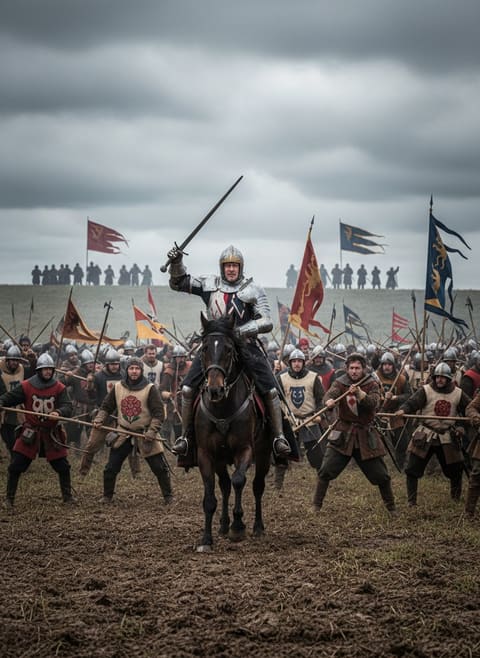
The tapestry tells the tale with unapologetic honesty. Ships brimming with warriors, horses charging into battle, and the precise chaos of war — all are displayed with stark clarity. Although intended to celebrate William’s victory, it inadvertently captures the pain and complexity of subjugated lives.
It is this conflicting duality — a triumphalist chronicle filled with empathy for both victors and the vanquished — that lends the embroidery its unique power. Through the stitching, we see the true color of history: not simple, nor easy, and certainly not monochrome.
The Fabric of Reality
What sets the Bayeux Tapestry apart is its unparalleled depiction of eleventh-century life. In an era where words held weight and access to writing was limited, this vibrant embroidery acts as a pseudo-documentary of medieval society. Soldiers don chainmail hauberks and wield kite-shaped shields; their clothing and armory shed light on how warfare was fought and won. Yet, its story is also in the details — the mundane interwoven with the majestic.
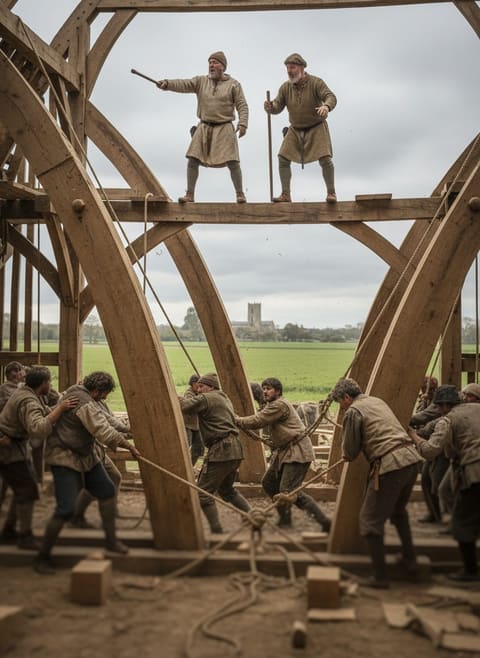
Workers construct ships with meticulous care. Horses bear their burden on journeys beyond the horizon, and men gather around communal feasts. Even mythical creatures, dragons and griffins, find their place in the linen limelight, offering commentary on the superstitions and narratives that shaped beliefs. The embroidery becomes a doorway into the past, revealing not just how people fought, but how they lived, what they valued, and even where they faltered.
Read next: The Peasant Who Walked Into London and Shook a King's Hand
Yet one cannot ignore the omission of sections. Several meters are missing, hinting at stories lost or untold. What exactly did these missing panels depict? Were they scenes deemed too sensitive, too detailed, echoing truths that rulers preferred to erase? Or were these just mundane casualties of time? The absence blurs the edges of the historical picture, challenging us to fill in the gaps, to imagine the untold stories that lay within the stitch of history’s tapestry.
The Legacy of Linen
For nearly 900 years, the tapestry was hidden from view, preserved within the confines of Bayeux Cathedral. It survived wars, revolutions, and the inevitable passage of time, emerging stronger, as if charged with the guardianship of its tale. The rediscovery of this embroidered chronicle in the 18th century allowed it to once again command attention, opening windows into the era it so vividly portrays.
In its intricate designs and detailed narrative, the Bayeux Tapestry has inspired not only historians but also artists, filmmakers, and storytellers. Its influence permeates our understanding of the medieval world, encouraging the viewer to delve deeper into the folds of its narrative. Much more than a chronicle of conquest, it symbolizes resilience, the tenacity of culture, and the power of artistry to preserve history.
The tapestry's continued allure lies not merely in its artistic execution but also in its unyielding documentation of a pivotal moment — a moment where threads of fate intertwined to shape a nation's destiny. It is an enduring testament to how history can be sewn into the very fabric of society, reminding us always to look beyond the surface of victory and defeat, and to find meaning in the subtleties of story spun from thread.