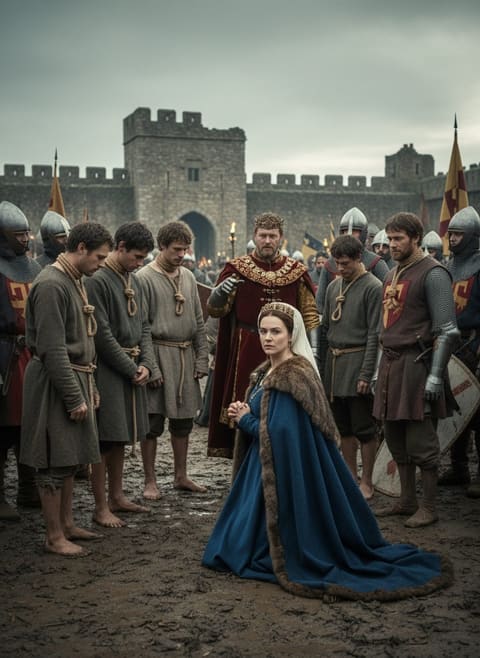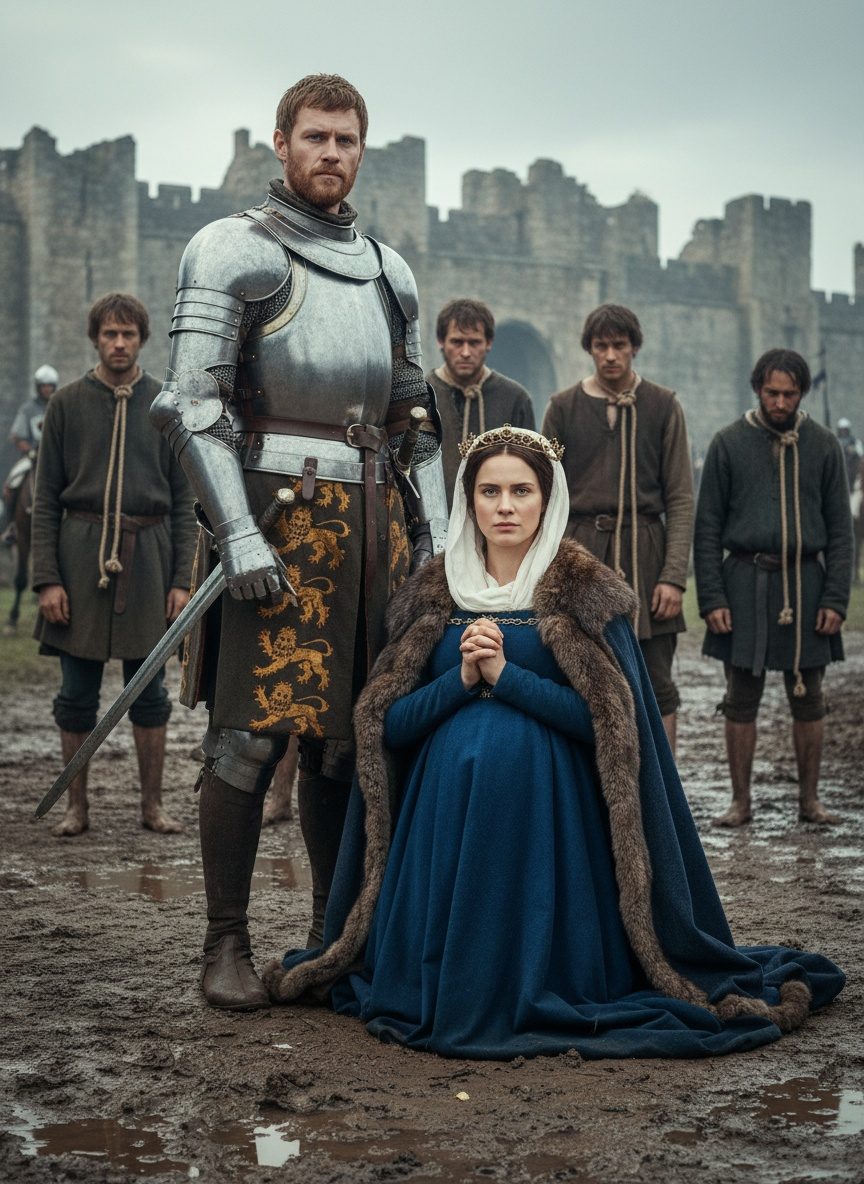
The muddy ground cradled her knees as the strained ropes dug into the necks of the condemned. The air was thick with tension, a heavy silence blanketing the gathered soldiers and onlookers. Queen Philippa of Hainault, her belly rounded with the imminent birth of another heir, lifted her eyes to her husband, the mighty King Edward III. Her plea — the lives of six men hanging by the threads of a king's whim.
The Siege of Unyielding Walls
The siege of Calais had dragged on for what felt like an eternity. For eleven long months, the city stood defiant against the relentless English forces. Hunger gnawed at the bones of its citizens as supplies dwindled, their resolve tested as thoroughly as the crumbling walls that shielded them. Edward III, determined to capture this vital gateway and protect the lands of his forefathers, refused to relent. His demand was clear: the leading citizens of Calais must surrender if the city hoped to spare itself further ruin.
Within the city, emaciated figures had become a grim tableau of resilience. The leaders of Calais, branded as the "Burghers," made a decision steeped in honor and sacrifice. Among them, whispers of courage spread—one insistent notion prevailed: to save their people, their own lives would be forfeit.
Edward's Grim Demand
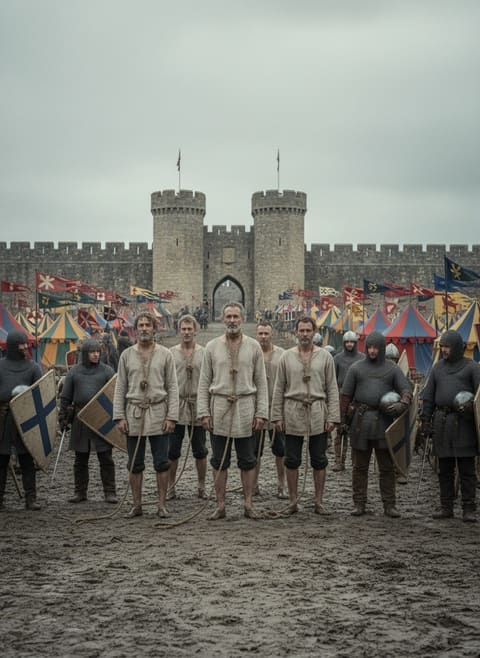
August 1347. The English camp stirred with the sounds of muted anticipation as six men, disheveled and weary, emerged from the gates of Calais. Each step toward their waiting doom was accompanied by the rustle of their tattered garments, heavy with the weight of fate's ruthless hand. Ropes hung ominously from their necks, symbols of their intended end. Edward, both king and conqueror, watched impassively as the procession approached.
Read next: The Day a Welsh Girl Barred the Door on a King's Army
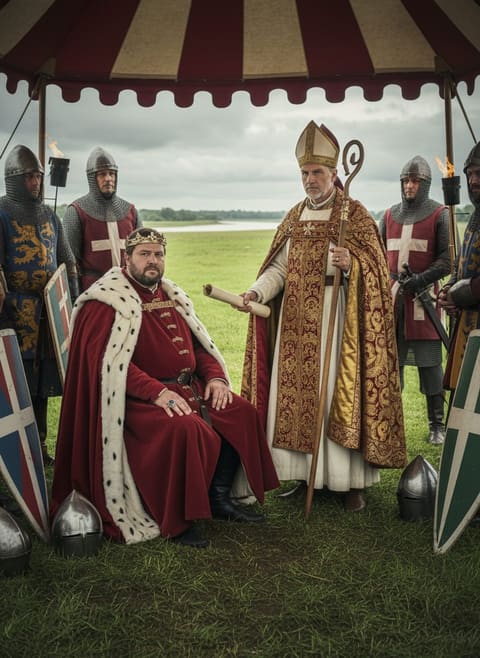
The King's demand was simple yet unyielding: retribution in exchange for mercy. It was a show of strength, a demonstration that would establish English rule through the execution of sacrifice. Justice, he called it, a message seared into history with the lives of these noble souls.
The Queen's Bold Intervention
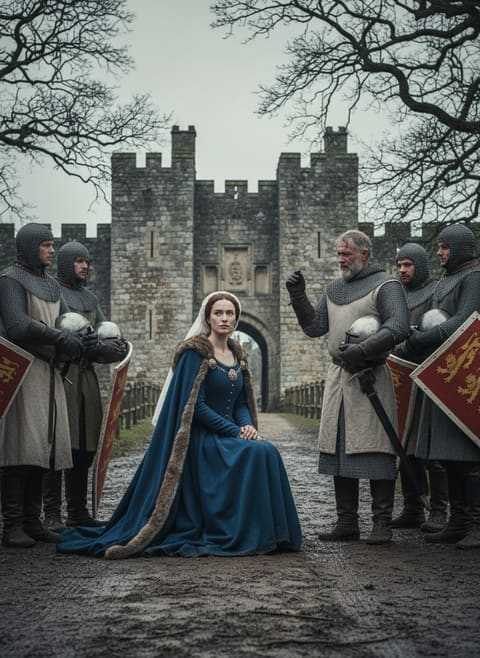
In an unexpected turn of events, Queen Philippa, despite the caution begged by her advisors due to her delicate condition, approached the scene. The sight of the Burghers in their humbled state and the quiet dignity they possessed stirred something profound within her. With a heart full of compassion, she pleaded with Edward, her words crystalline in their sincerity.
The onlookers watched, breaths held tight within their chests, as Philippa sank to her knees in the mire, the dampness clinging to her skirts. Her voice, though gentle, resonated with undeniable strength. She entreated her husband for clemency, to show mercy rather than flex the iron fist of conquest. "For the sake of our unborn child, for the grace of God, let mercy temper your hand," she urged.
Edward's Reluctant Concession
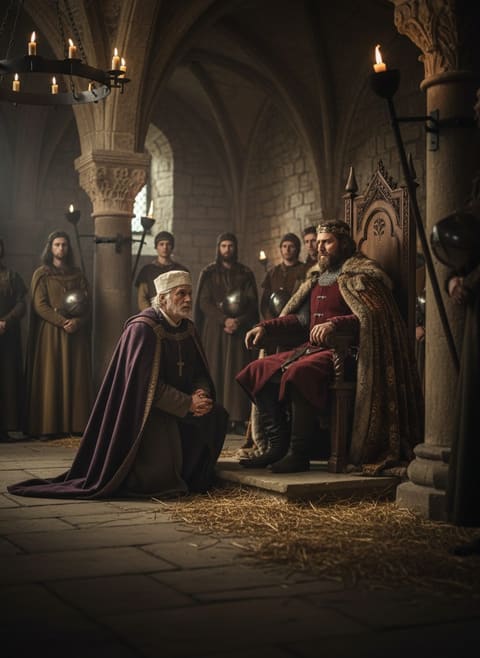
For all his resolute nature, King Edward III was confronted with a tableau of stark humanity — the pleading of the queen and the noble acceptance of their fate by the Burghers. Her words softened the hard lines of his expression, her courage and compassion eroding the stone of his resolve. Reluctantly, yet undeniably moved, Edward acquiesced. The six men, poised on the brink of eternity, would live.
Read next: The Day a Medieval Mayor Knelt and Saved Six Condemned Men
This act of clemency, spurred by Philippa's bravery, marked a significant pivot not just in the siege's narrative but also in the king's legacy. The Burghers of Calais, those human symbols of sacrifice, had been spared through a queen's quiet rebellion and love—a poignant reminder that even amidst warfare, the human heart favors peace.
A Legacy of Compassion
The scene of a queen's supplication etched itself into the annals of history, a testament to compassion's power during the cruellest of times. Philippa's plea became a story passed down through generations—a queen, heavy with child, willing to kneel in the mud to remind her king and his kingdom of the values they should hold dear.
As history turned its pages, this singular act continued to resonate, a reminder that mercy often requires bravery and that the boundaries of power can sometimes be softened by the gentle touch of compassion. In an era defined by wars and conquests, the soft-spoken plea of a queen in the mud-bound fields outside Calais offered a powerful contrast—a legacy of grace and humanity preserved in the chronicles of England and the hearts of its people.