He was a carpenter's son from Yorkshire. He built a machine that finally showed Britain's sailors where on Earth they truly were. The tale of this ingenious clockmaker, often lost in the annals of time dominated by lofty scientific discourse and prestigious academic triumphs, is one of determination and relentless pursuit in an era when the seas devoured ships and men whole. Amidst majestic wooden hulls and billowing sails, one could hear the frantic whispers of navigators; they were desperate for solutions, for maps and stars that did not betray them. Yet longitude remained elusive, a haunting riddle of the seas.
The mystery of longitude was a terror to mariners. While latitude could easily be determined by the position of the sun, longitude demanded a timekeeper of extraordinary precision aboard ships. Without longitude, ships prowled the crude wilderness of potential disaster, with captains estimating positions often to fatal conclusions. The Board of Longitude, established in 1714, offered an enormous prize—one that many believed could never be claimed. Esteemed astronomers and royal dignitaries had grappled with this conundrum with no success. Into this daunting arena of high stakes walked a humble craftsman, John Harrison, whose story could have been that of a mere footnote, if not for his remarkable perseverance and the resounding triumph of his life's work.
Born in 1693 in Foulby, a small village in Yorkshire, Harrison was surrounded by the rhythmic tick of wooden clocks, their gears and escapements becoming inseparable from his consciousness. His first creations, made entirely from wood, were intricate yet dependable. But it was the haunting absence of sea-worthy precision that guided Harrison from the domestic confines of his village to the harsh terrains of maritime challenge. Despite a pronounced Yorkshire accent and a limp that often distracted the sophisticated circles he yearned to impress, his wood clocks struck the hours with unfaltering accuracy, a prelude to his later miracles.
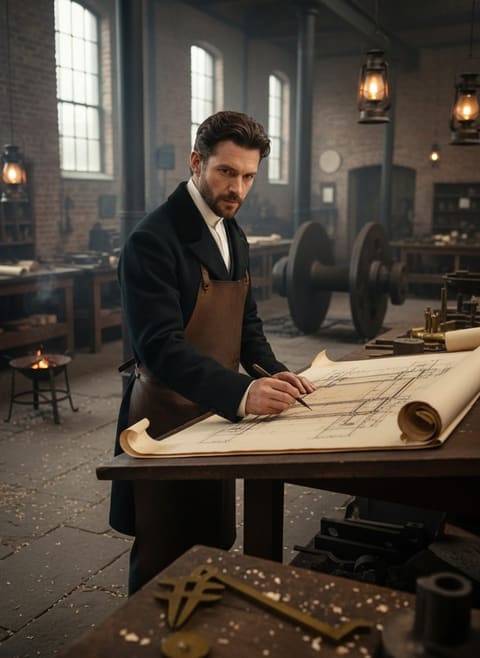
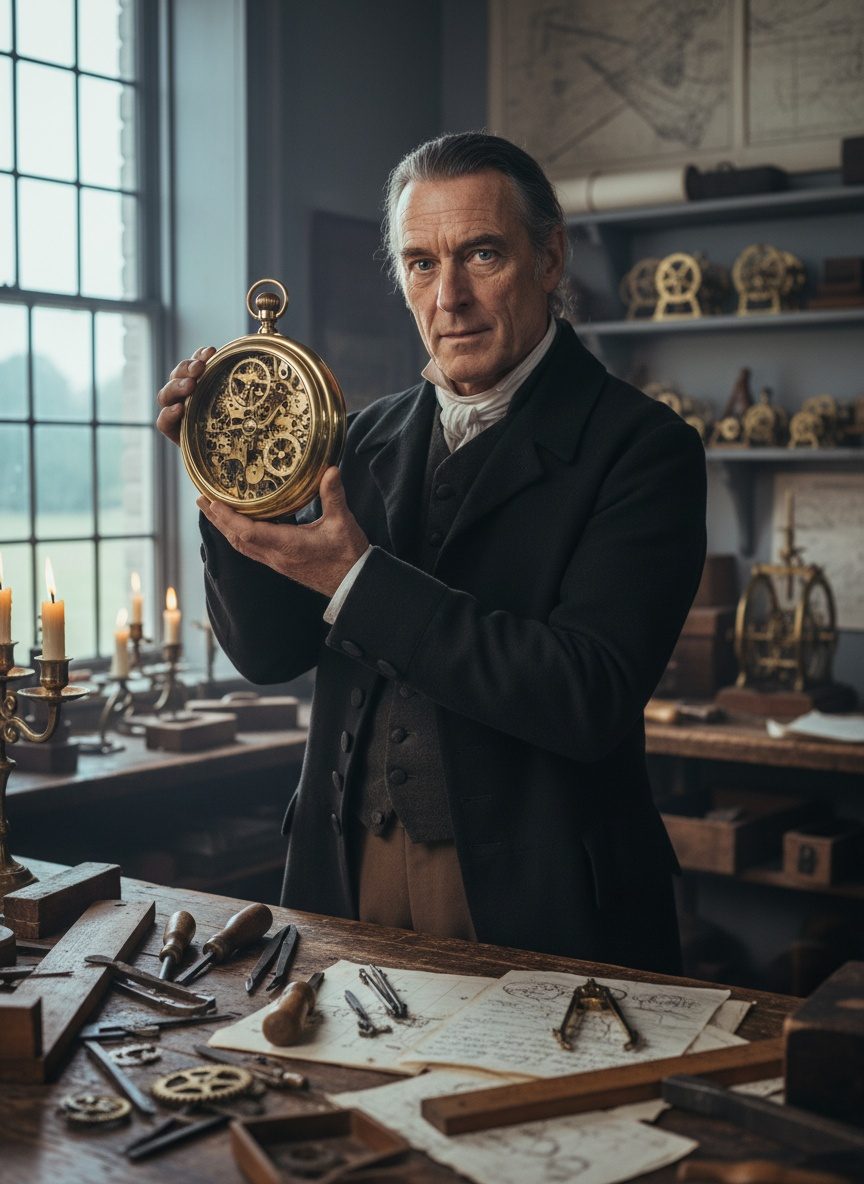
Capturing the elusive second required more than a keen eye and skilled hands; it required an unyielding spirit. Harrison spent years scrutinizing every minuscule detail—how pendulums were affected by the rocking of a ship, how temperature changes warped metal springs. His dedication led to the creation of the marine chronometer known as H4, a compact marvel of engineering that defied the exponential difficulties posed by ocean travel. Unlike any timepiece before, H4 kept time with unprecedented accuracy, becoming the critical component for measuring longitude.
Read next: The Day a Weaver's Son Mapped the Invisible World
But Harrison's triumph was far from assured. In a world dominated by those who professed higher learning and formal recognition, the self-taught clockmaker faced incredulity and skepticism. His sands in the arena began to shift, and the challenge amplified as his work began to agitate the scientific establishment. Yet Harrison was relentless. He transported the machine to London, a journey both literal and metaphorical, a testament to his unstoppable will to rectify the failures of the illustrious.
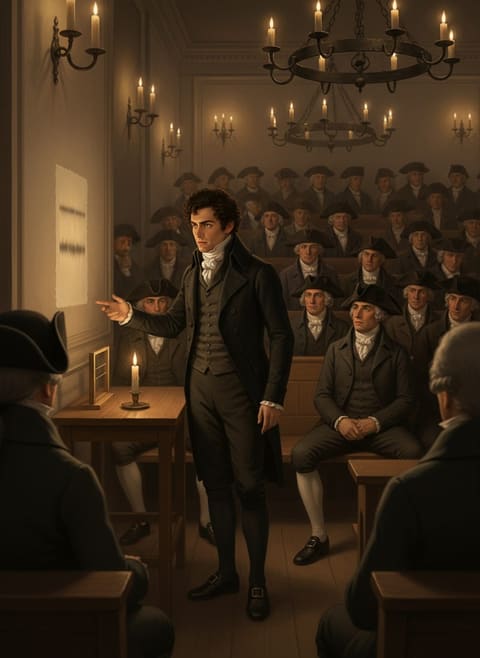
London in the mid-18th century was a bustling heart of commerce and intellect, and Harrison's entry into its world was like a quiet revolution. Faced with censure by some of astronomy's most excellent minds and officials dubious of a mechanical solution, he was required to undertake tests that ranged from arduous maritime trials to persistently dogged skepticism. His H4 was subjected to stringent evaluative journeys, one of which took it across the perilous waters to Jamaica—a definitive proof of concept that it kept time with an astounding precision that could indeed save lives and decimate maritime tragedies.
Read next: The Day a Clockmaker's Son Rewired How We See the Stars
Despite the success of these trials, Harrison remained locked in bureaucratic stalemate. Almost two decades beyond initial achievement, funds and recognition were withheld by the very establishment that had sought a solution. His advocates, a gradually swelling number of convinced seafarers and loyal supporters, mounted pressure. Yet fame and fortune eluded him even when his contribution was undeniable, leaving him to navigate the treacherous politics of acknowledgment while sailors silently applauded from afar.
It was not until later in his life, long after his hair had turned grey, that Harrison finally received recognition for his ingenuity and unflagging perseverance. The method to measure longitude accurately, which he had birthed amidst ridicule, would transform navigation and save countless lives at sea, yet the true reward of his efforts was the peace in knowing he had guessed the world accurately against all odds and voices of dissent.
As we reflect on Harrison's story today, it's a stark reminder that innovation often emerges from where it is least expected. Historical narratives often favor grand voices and scholarly endeavors, yet it was a man of modest means and determination that turned the tide of naval history. The perfect second, the precise measurement he delivered the world, was born not from privileged education, but from the relentless pulse of a Yorkshire town's clock, carrying a whisper of knowledge, skill, and the courage to challenge convention. Amidst the uncharted waters of possibility and discovery, stands the legacy of those who dared to claim the impossible, forever shaping the journey of mankind across the seas.