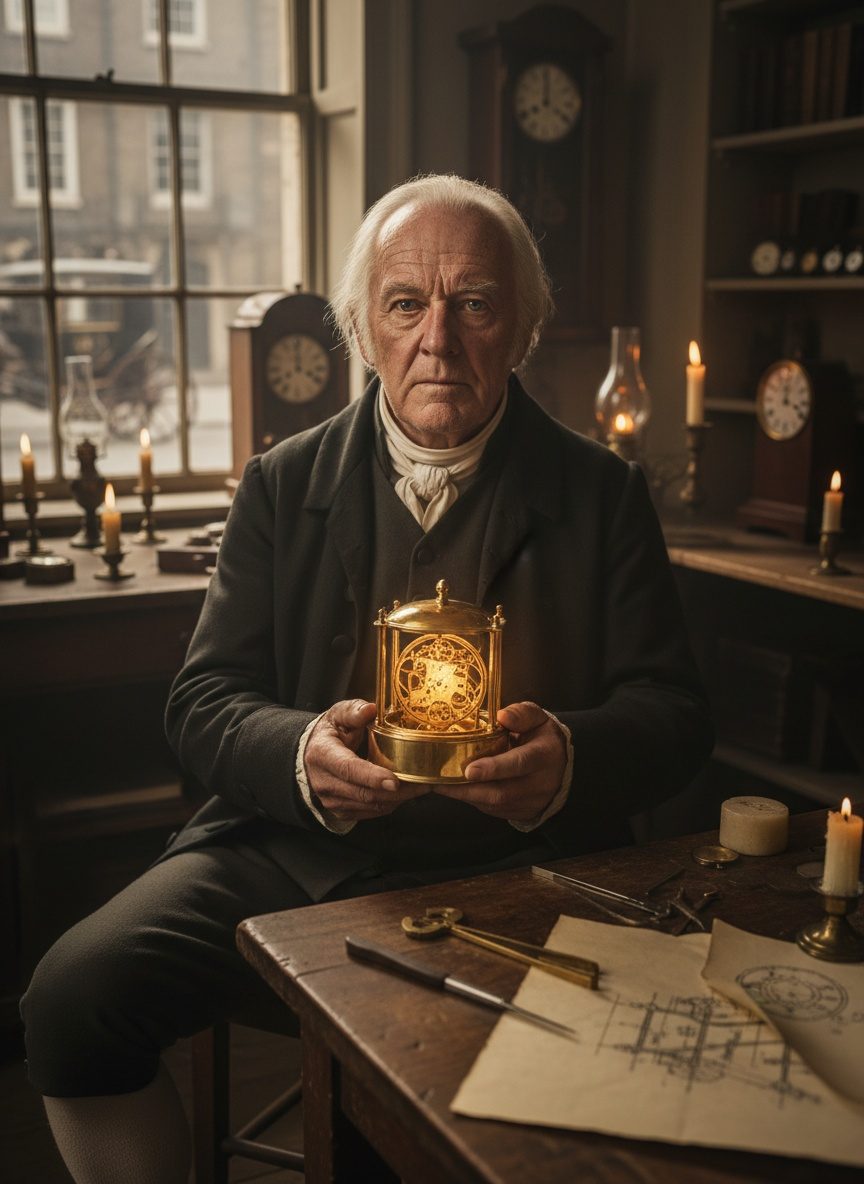
The day began with an unusually crisp chill in Windsor's autumn air, the grounds of the castle muffled in the soft glow of dawn. Mist clung to the dew-streaked cobblestones, creating an ethereal backdrop as the rising sun began its slow ascent. The whispers of history seemed to linger around the ancient stones, wrapping the scene in a sense of quiet significance. Yet beyond this serene morning loomed a truth that was anything but tranquil: for centuries, the vast oceans had remained a formidable arena, where sailors braved the terrifying unknown. The horizonless sea held more than just waves; it harbored uncertainty and peril. And though the sunshine lifted the mist, only one man in England held the key to a safe passage across those treacherous waters.
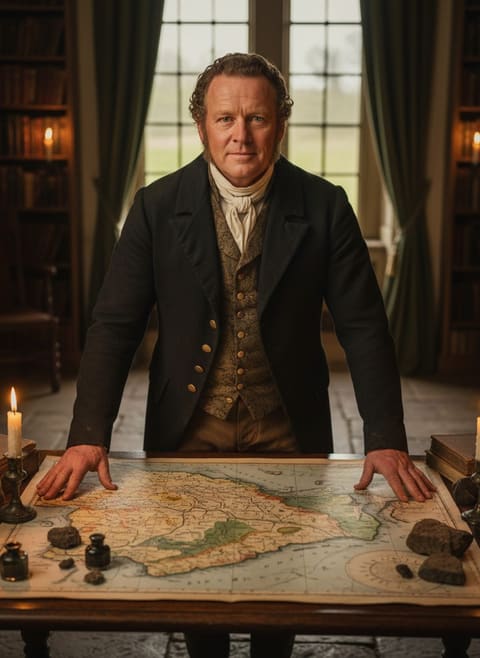
John Harrison, a name scarcely known outside his circle, was born to a humble Yorkshire family. His father, a carpenter and a painfully devoted printer, had taught young John the stark honesty of wood. Unbeknownst to the world, the ticking hands of time would also carve a path for his son. Harrison had wrestled with the relentless enigma of longitude for forty long years. For those unfamiliar with the stakes: sailing the open seas without an accurate measure of longitude was akin to venturing into a labyrinth without a thread to guide you back. Giants of the intellect like Sir Isaac Newton had wrestled mightily with this riddle, only to retreat unsatisfied.
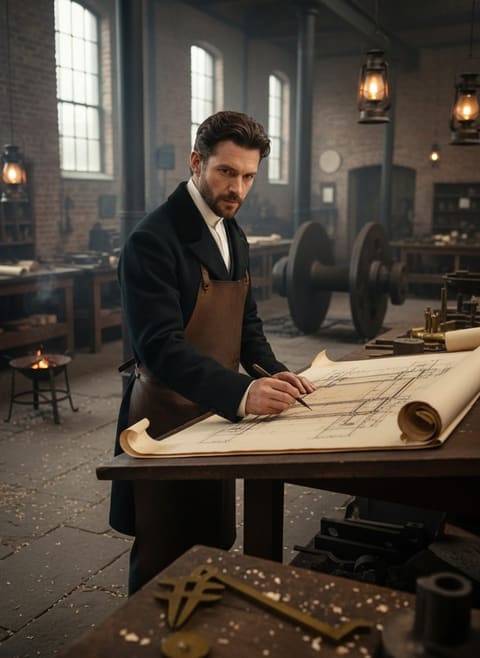
Harrison’s solution, fashioned from brass and wood, and inspired by the precision of clockwork, was the marine chronometer—a device that could keep precise time even at sea. It provided mariners with the crucial component they needed to ascertain their longitude by measuring the difference between the local time and the time at a reference point, typically Greenwich. Despite the elegance and ingenuity of his invention, recognition and reward remained elusive. Parliament’s Board of Longitude had scoffed at his creation, dubious of a clock’s fidelity amidst the untamed seas. Recognition was an uphill battle against entrenched scientific skepticism and bureaucratic lethargy.
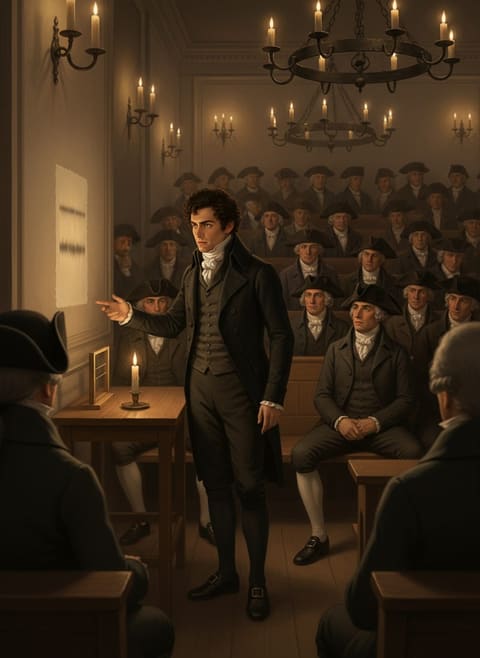
By 1773, Harrison was eighty years old, a craftsman at the edge of despair but steadfast in his belief. Bearing the weight of his design’s potential, he appealed to King George III. The king, a man intrigued by both inventions and academia, received him in the intimate setting of Windsor Castle. The monarch, known for his astute fascination with innovation, listened keenly, a frown of concentration furrowing his brow as Harrison laid out his work. Outside the window, the leaves rustled in the morning breeze, a fitting symphony to accompany this pivotal moment.
Read next: The Day a Weaver's Son Mapped the Invisible World
Histories written in textbooks seldom acknowledge how often progress hinges on the advocacy of individuals in power. King George III's curiosity and sense of fairness breathed new life into Harrison's invention. Dubbing himself “Harrison’s timekeeper’s watchdog,” the king personally tested the chronometer at his own Kew Observatory, allowing no stone to go unturned. His findings were unequivocal: the chronometer, beyond all doubt, attained unprecedented precision.
The king’s intervention ignited a shift. Suddenly, the Board of Longitude found itself under the royal gaze, a scrutiny that was impossible to ignore. With royal endorsement, John Harrison at last received recognition—and the advancement of maritime navigation as well as a handsome financial reward, long promised through the Longitude Act. The promise of safer seas, where mariners could anticipate their destinations with a certainty previously reserved for dreamers, was finally within reach.
Read next: The Day a Clockmaker's Son Rewired How We See the Stars
Harrison’s life work wasn’t simply an answer to an academic question; it was a transformation of sea travel that would shape an era of discovery and commerce. Shipping routes became safer and more efficient, empires were better connected, and civilization benefited as cultures intertwined with new-found ease. His chronometer didn't just revolutionize navigation; it made the wide world feel a little smaller and infinitely more navigable.
Long after the echoes of clockwork faded from Windsor’s halls, the chronometer’s tick-tock still resonates. Within the quiet triumphs of uncelebrated inventors lies a reminder that the greatest breakthroughs often require a marriage of steadfast belief and fortuitous advocacy. This tale stands as a testament to the notion that even the lamest printer's son can leave an indelible mark, fixing the bearings of an entire world. In doing so, Harrison handed humanity not just its longitude, but the truth that unyielding vision can indeed change the course of history.