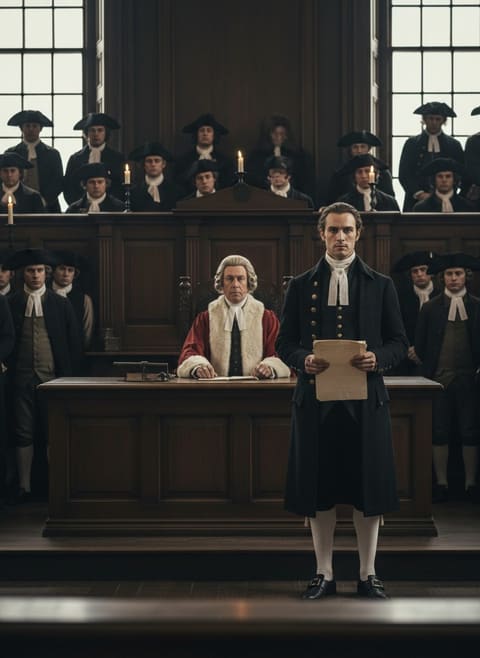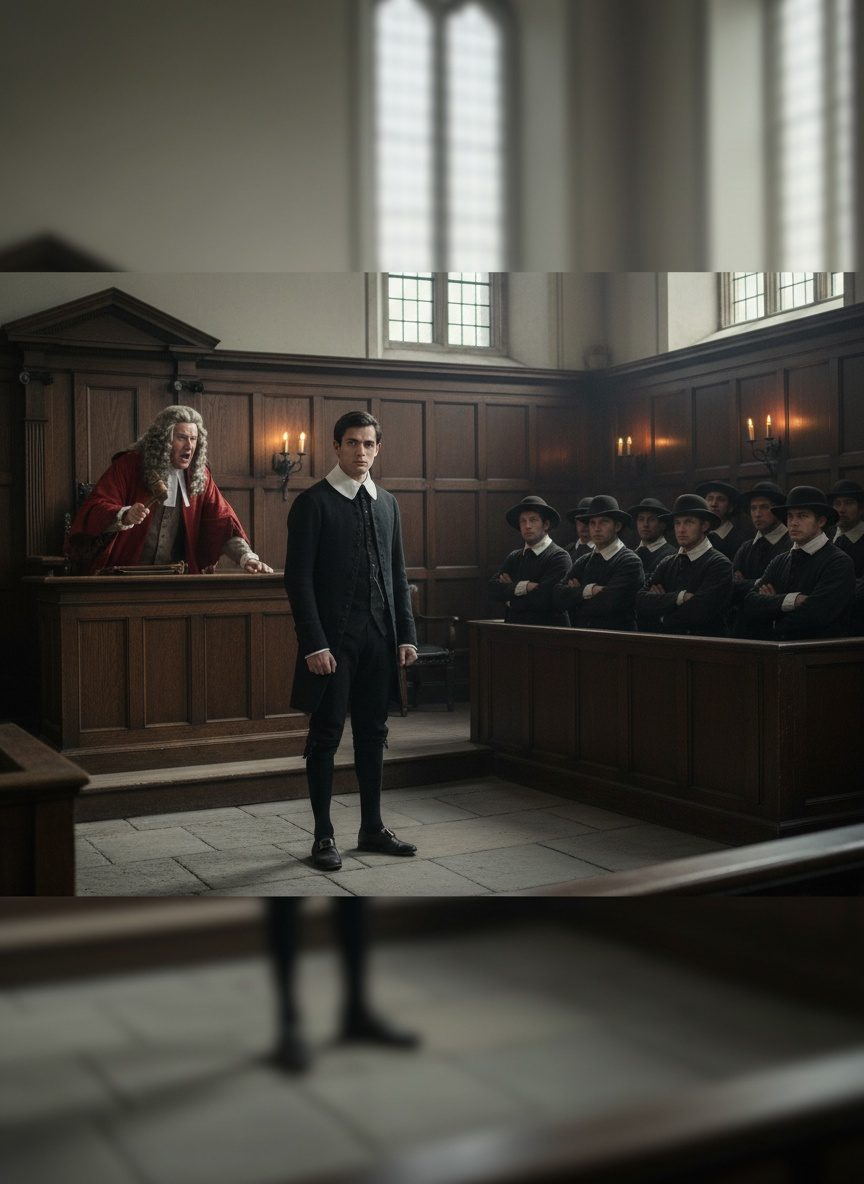
The flickering candlelight danced across the stern faces of the jurors as the sound of the judge’s gavel reverberated through the Old Bailey courtroom. Silence gripped the air, heavy with anticipation. William Penn, a young and unyielding Quaker, stood trial, his shoulders squared and steadfast, refusing to bend to the oppressive gaze of the court. The charge? Preaching without a licence. A simple act of defiance that threatened the carefully controlled order of Stuart England.
The Courage of Conviction
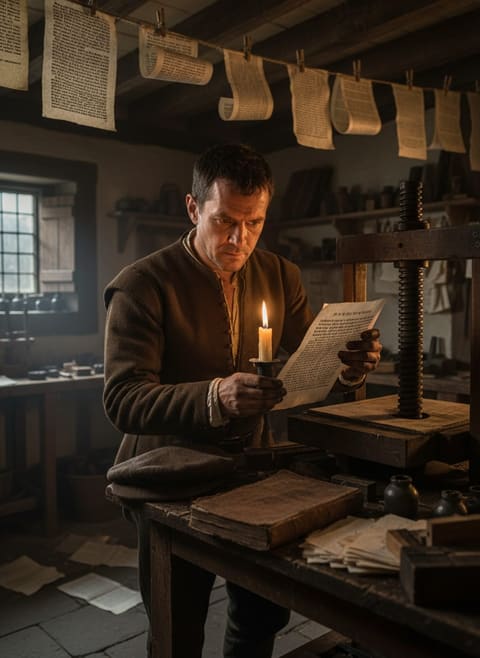
The year was 1670, and London pulsed with the tension of religious oppression and burgeoning ideas of freedom. Those who dared to challenge the ecclesiastical norm often faced dire consequences. William Penn, son of Sir William Penn, Sir William Penn, a distinguished admiral, was no stranger to controversy. His embrace of Quakerism, a movement promoting peace, equality, and religious freedom, put him at odds with the Crown. Yet, for Penn, accepting limitations on what could be preached and printed was a betrayal of his deeply held beliefs.
As he addressed the jurors, Penn's voice echoed through the courtroom with unwavering determination. His plea was not just for himself, but for every individual silenced by the heavy hand of state and church. The court, led by a judge determined to silence dissent, expected a swift conviction. The charges seemed clear-cut, and the outcome, predetermined. Yet, the twelve jurors found themselves at a crossroads, where conscience clashed with coercion.
Jury in Revolt
The deliberation room was sparse and dim, filled with the murmurs of men wrestling with the weight of justice. The judge’s instructions were emphatic—convict Penn. The law was straightforward, and dissent would not be tolerated. But as the hours wore on, a quiet resolve settled over the jurors. One man, a silk merchant named Edward Bushell, voiced what lay heavily on their hearts. They were not just weighing the fate of one man, but the principles that would shape a nation.
Read next: The Day a Cornish Surgeon Walked Into a Condemned Cell
The judge, frustrated by their hesitation, called the jury back, demanding they deliver a conviction. Yet again, they returned empty-handed. This defiance was met with wrath. The judge, in what he believed to be a decisive tactic, ordered them locked up without food, drink, or even a basic comfort. For days, the jurors remained incarcerated, enduring physical hardship to preserve the sanctity of their verdict—“not guilty.”
The Verdict Heard Around the World
On the final day, weak from hunger but resolute in spirit, the jurors entered the courtroom to deliver an unwavering verdict. William Penn was to be acquitted. The judge, apoplectic with rage, could scarcely believe it. Yet, in that moment, these twelve ordinary men carved out an extraordinary precedent. The right of a jury to reach its own decision—independent of judges’ whims or threats—was cemented. This penniless act of defiance against tyranny bore the first fruits of what would later evolve into not just jury independence, but also the broader concept of a free press.
Read next: The Day a Vicar's Son Walked Into a Debtor's Cell and Freed Them All
The ramifications were profound. The trial highlighted the potential for change when ordinary citizens stood firm against unjust laws. By their verdict, the jurors protected not just the rights of one outspoken Quaker, but also crafted the cornerstone of modern judicial systems: the right to a fair trial. Unbeknownst to them, their stand would echo throughout English law, laying the groundwork for freedoms many would come to cherish.
A Legacy Written in Courage
The echoes of this trial still reverberate through the halls of justice today. It was a defining moment when principles triumphed over power, and individual liberty began its march toward becoming an inalienable right. The courage shown by Penn, the jury, and the ensuing victory for freedom of expression underscores a perpetual truth: the press, much like the courts, must thrive unchecked by fear or preemptive censure.
As we reflect on this watershed moment from a bygone age, it resonates with a timeless message—as long as there are those willing to question authority, to challenge restrictive norms, and to fight for the dissemination of truth, the spirit of freedom cannot be vanquished. The events that unfolded in that candlelit courtroom in 1670 remind us that liberty often demands an act of quiet rebellion—a legacy not inscribed in ink, but in the indomitable spirit of those who rise to claim it.