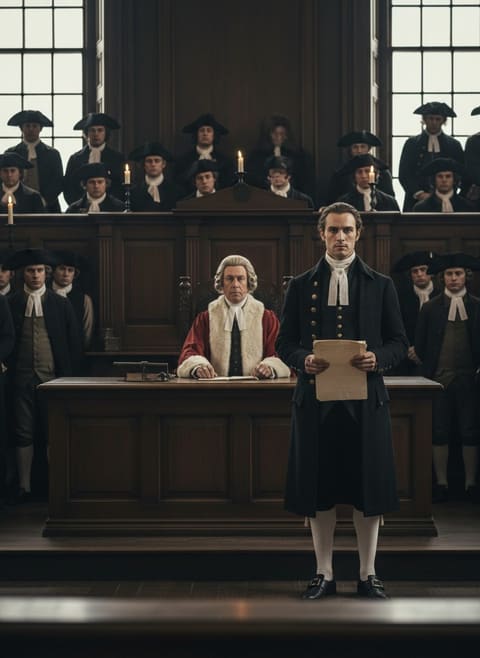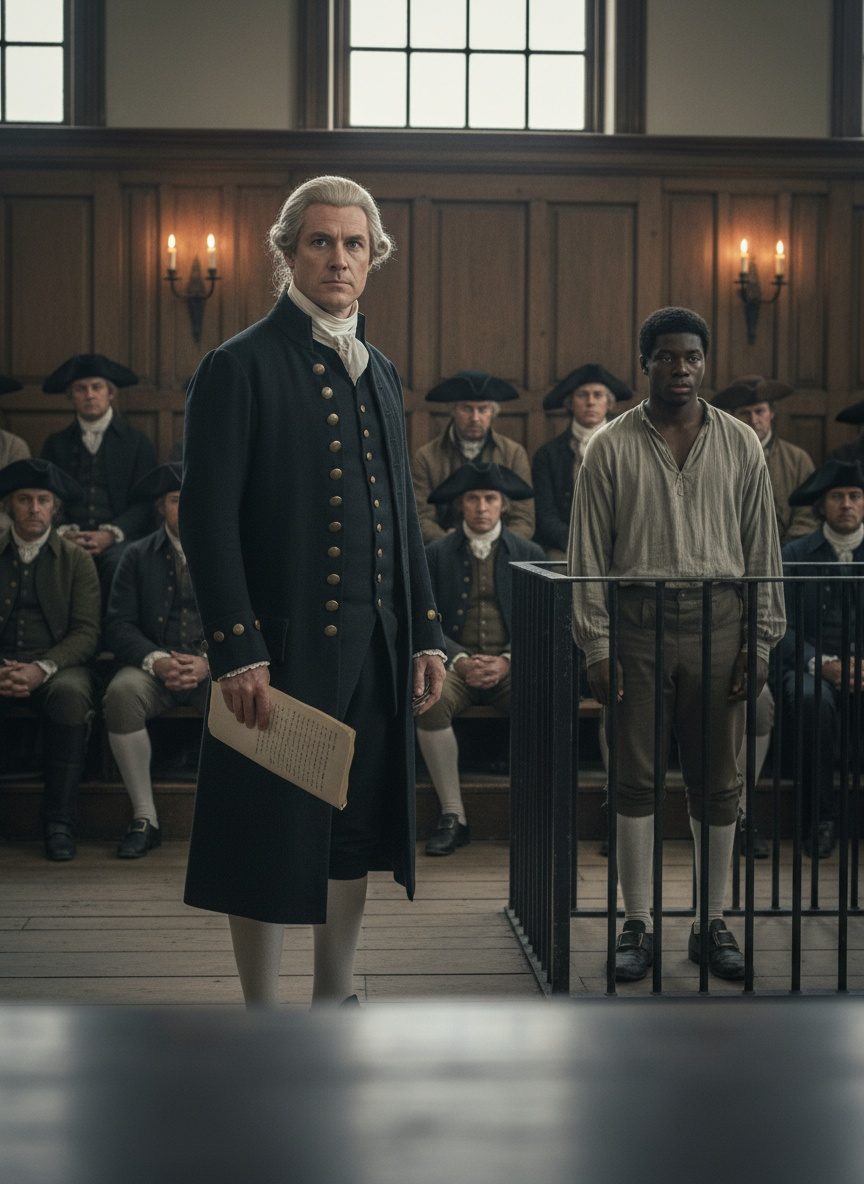
April 18, 1772. The sound of carriage wheels cutting through the cobblestone street echoed beneath the low, heavy clouds.
A Chance Encounter on Fetter Lane
In the bustling heart of Georgian London, where the shadowy narrow lanes of Fetter Lane could easily swallow a man, a most remarkable encounter took place. Granville Sharp, a clerk to the Ordnance Office, walked swiftly, his mind no doubt occupied with the day’s tasks. It was these very streets that had once seen the horrors of the slave trade in full swing, despite the growing undercurrent of abolitionist sentiment. Sharp was familiar with injustice, having already engaged in numerous legal battles championing the freedom of those unjustly claimed. Yet, nothing could prepare him for what lay ahead.
Jonathan Strong, a young black sailor, lay discarded much like refuse, the life nearly beaten out of him. His story was harrowing; having been brought to London by his master, Strong had been brutally mistreated and left for dead. Rescued by Sharp and his brother two years prior, Strong had found temporary solace — a new beginning that vanished when his former owner reared his head once more, claiming ownership and selling Strong back into the skeletal clutches of slavery. That very moment on Fetter Lane, as the grime of the city clung to the spring air, Sharp's resolve hardened. He would fight, and this time, the stakes were insurmountably high.
From the Tailor's Needle to the Courtroom's Edge
Granville Sharp was no lawyer. In fact, his realm was far removed from the pursuit of law; he was a humble clerk by trade and a passionate musician by inclination, often dedicating his free time to crafting instruments. Yet, it was his writings and searing will that illuminated the darkness of Britain's complicity in the slave trade, marking him a vanguard of social justice.
Read next: The Day a Cornish Surgeon Walked Into a Condemned Cell
This situation, however, required more than just the conviction of words. Sharp had fourteen days to ensure Strong would not be whisked away, shackled, and chained to a fate that Britain itself was beginning to question. The challenge was steep; Sharp stood against formidable opposition, battling through arcane legal statutes that seemed designed to entrench human suffering. His previous inklings and novice studies of English law would be tested to their limits. Arming himself with knowledge, he sought guidance from a precious few who dared aid his cause. The courtroom, a space where law and morality frequently diverged, would become Sharp's battleground.
The Day the Scales of Justice Wavered
On an overcast day, where the sun fought to breach the oppressive grey haze hanging over London, the courtroom was electric with tension. The case of Jonathan Strong had attracted attention, both from those who reveled in the spectacle and those who yearned for justice. The very bones of the building seemed to groan under the weight of generations of legal precedent that had sided against men like Strong.
The arguments were fierce. The crux of the debate lay in the understanding that no man in England could be legally sold — a notion both revolutionary and contentious. For Strong, and men like him, the outcome meant perhaps life, liberty, and a voice, or the stark silence of oppression.
Through the articulations laid by Sharp, despite his lack of formal legal training, his presentation of Strong’s prior condition, and his current status as a free man wrongfully captured, began to resonate within the walls. He drew upon the conscience of the court, the immutable spirit that smoldered beneath layers of law built to protect structures, not humanity.
Read next: The Day a Vicar's Son Walked Into a Debtor's Cell and Freed Them All
A Legacy Inscribed on the Law's Heart
The outcome, a beacon for abolitionists, resounded through history: the court ruled in favor of Jonathan Strong, decreeing that no man could make another his property on English soil. It was a monumental decision, an initial fracture in the institution of slavery, not only in Britain but across its vast empire. It was an ordinary act by a remarkable ordinary man that redefined what was legal within Britain’s borders.
This victory, however, was not the ultimate end but the beginning of a broader struggle that would ripple through the hearts and laws of a nation still grappling with the ghosts of its empire. Granville Sharp’s relentless pursuit for justice opened pathways his generation — and those after — would continue to traverse.
Yet, as spring would soon blossom over London, the impact of Sharp's action grew, leaving an indelible mark on a nation in transformation. Jonathan Strong’s story traverses the lines of history as a reminder that true justice demands vigilance, even from those who might seem like the most unlikely of heroes. It's a testament to the power of everyday resolve, sparking a movement that would forever alter the course of history.