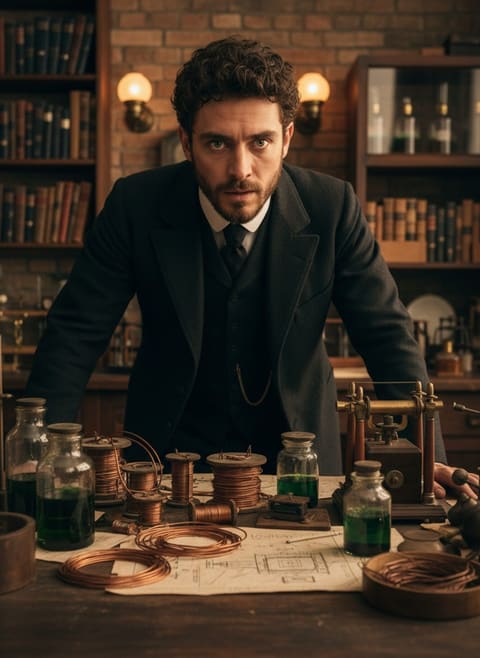
He was a potter’s son from York. Yet, John Snow would redefine how cities purify their drinking water.
In the Shadow of Death
By the mid-19th century, London was a bustling cauldron of industry and commerce, but beneath its advancement lurked a deadly predator: cholera. In 1854, the city was once more engulfed in an epidemic, claiming lives indiscriminately. As health authorities and the public alike clung to the miasma theory—the belief that diseases spread through "bad air"—one man dared to defy the orthodoxy with a radical proposition: water, not air, was the true culprit. This man, John Snow, meticulously observed and meticulously recorded the chaos unraveling around him, believing he could pinpoint the precise origins of this invisible plague.
Cholera spared no one, its symptoms manifesting within hours—racking the victim’s body with nausea, diarrhea, and dehydration until they were reduced to shadows of their former selves. The city’s inadequate sewage systems were overtaxed by a burgeoning population, sending waste into the very rivers that served as the main water source for London's residents. From the affluent boroughs to the slums, the city trembled under the disease's merciless grip.
The Cartographer of Catastrophe
John Snow approached the epidemic not as a mere physician, but as an investigator. He set out on foot, moving through the crowded streets of Soho, determined to chart every case of cholera—laboring over maps in the flickering light of his candlelit study. His efforts laid bare an unsettling pattern. Clusters of cholera victims all pointed to a single source: the public water pump on Broad Street. For Snow, each mark on his map was more than just ink; it represented a life cut short, a family in bereavement.
Read next: The Day a Weaver's Son Mapped the Invisible World
This painstaking cartography was unlike anything the world had seen. Snow's map transformed the way the authorities viewed disease, shifting the focus from odor to infrastructure. His work was a gamble against ignorance—a certainty within a haze of confusion. Yet, despite the clear evidence documented by his hand, his warnings were met with skepticism. The authorities dismissed his findings, entrenched in their belief that cholera was a product of foul-smelling air. Snow stood firm, his resolve anchored in a belief as pure as the water he sought to cleanse.
The Revolutionary Act
On a brisk day in September 1854, Snow took a bold step that would echo through history. With the support of a local reverend, he ventured once more to the pump on Broad Street. This time, he was neither observer nor theorist; he was an executor of change. Unceremoniously, he removed the pump handle, cutting off access to the contaminated water source. To many, this act was a temporary inconvenience; to Snow, it was a calculated strike against a silent killer.
Read next: The Day a Clockmaker's Son Rewired How We See the Stars
In the days that followed, the results were nothing short of miraculous. The death toll began to plummet with startling rapidity. The epidemic that had gripped the neighborhood lost its momentum. For Snow, this was more than just a victory against cholera—it was a validation of his scientific method, an affirmation that logic and reason could triumph over long-held traditions and misconceptions.
Legacy of the Silent Revolution
John Snow's decisive act of removing that pump handle may seem simple by today's standards, yet it marked a turning point in the annals of public health. His work laid the foundation for the understanding of disease transmission through contamination—a concept that would eventually inform the development of modern epidemiology. This quiet revolution forced the medical community to acknowledge waterborne diseases as a formidable threat, sparking transformations in water infrastructure and sanitation systems across Europe and beyond.
In challenging accepted wisdom and enduring ridicule for his views, Snow exemplified the unwavering spirit of a true scientific pioneer. His legacy serves as a poignant reminder of the importance of questioning the status quo and adhering to evidence, especially when lives hang in the balance. The echoes of Snow's footsteps still resonate through the streets of London, a testament to the potter's son whose actions turned the tides against death itself. Today, every glass of pure water consumed worldwide pays quiet tribute to the man who dared to say, "It’s in the water."