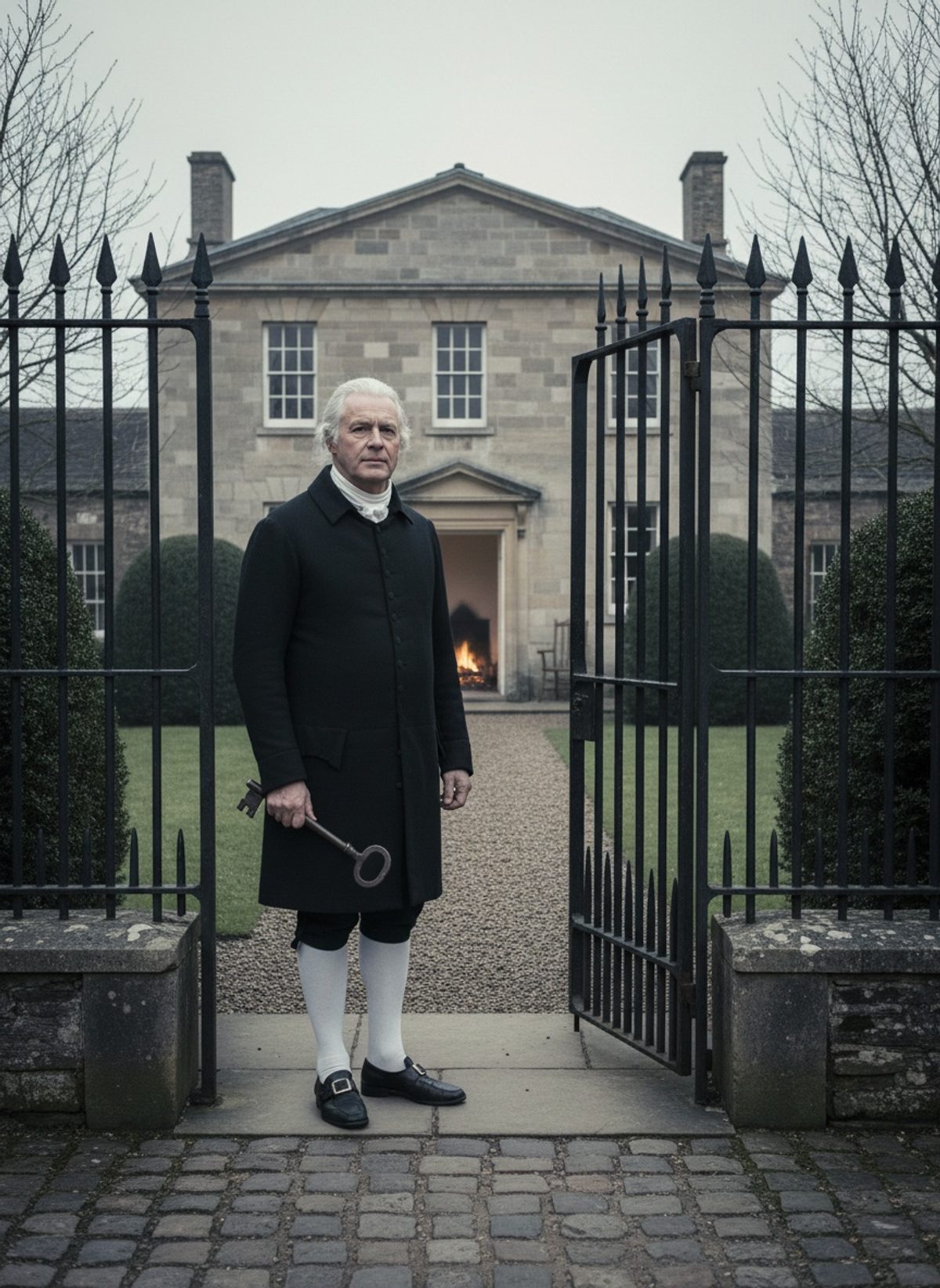
William Tuke was a mere tea merchant from York. Yet, under his unassuming exterior lay the heart of a reformer ready to challenge the darkness cloaking Georgian-era asylums.
Marked by a Tragedy
In 1791, William Tuke's life took an unexpected turn — one spurred not by commerce but by tragedy. A fellow Quaker woman was confined within the oppressive walls of a public asylum in York. Her fate was sealed long before Tuke heard of her plight, and her demise became the catalyst for his unexpected journey into the shadowy world of mental health care. Without the luxury of medical knowledge or political sway, Tuke felt an unshakable pull to delve deeper, spurred by the simple yet profound question: Why?
The formidable facade of the asylum belied its grim interior, a place brimming with the muffled echoes of the forgotten. Upon entering, Tuke found that the asylum's conditions were far from humane. Instead, it was a chamber of horrors hidden behind locked doors and barred windows. The pungent stench was the first to strike him, an overpowering mix that spoke of unventilated rooms and unwashed bodies.
As Tuke moved through the corridors, he saw the stark reality: dour, neglected souls huddling in corners or clinging to the iron bars. Patients, stripped of their dignity and humanity, bore the marks of systemic neglect. Tuke's heart wrestled with a mixture of compassion and outrage. These individuals, many stripped of their clothing and subjected to cruel restraints, were not deranged demons as society might have deemed them, but people in dire need of understanding and care.
Read next: The Day Britain Signed Away Thirteen Colonies in Paris
William Tuke returned to the outside world forever changed. He had borne witness to a system that was grotesque not by design, but by sheer indifference and ignorance. And though bereft of credentials or influence, Tuke felt a weight settle within him — a determination to create something different, something that could honor the memory of those lost within such walls.
The Beginning of a Vision
Fueled by his experiences, Tuke began crafting a vision that was revolutionary for its time: an asylum that treated its residents with compassion and humanity rather than fear and disregard. It was an audacious idea, but one that took root thanks to the support of his fellow Quakers. They shared an ideal — the belief in the inner light within each human being, regardless of their state of mind.
In pursuit of this vision, Tuke and the Quaker community established The Retreat, a haven designed to reflect their principles. Far from the squalid asylums of its day, The Retreat was set against the backdrop of serene countryside, a deliberate choice to provide a sense of calm and rejuvenation. Its philosophy was simple yet radical: respect, kindness, and patience were to replace the iron chains and dark cells. Instead of being restrained for their failures to adhere to a rigid social order, patients were to be gently encouraged, given the freedom to heal in an environment that emphasized dignity and peace.
Underpinning this progressive approach was a dedication to understanding mental illness as more than just a collection of symptoms to be suppressed. Tuke laid the foundation for a therapeutic community that respected the complexities of its residents. Nurses and caregivers were selected for their empathy and patience, creating an atmosphere where healing was fostered through connection and understanding. Tuke's approach, though starkly different from the norm, was imbued with the spiritual belief that all individuals deserved care and respect.
Through his work at The Retreat, William Tuke challenged an entire system. His revolutionary approach sowed the seeds of a transformation that would ripple across centuries, prompting discussions on what compassionate care should look like. But what Tuke accomplished went far beyond a single institution; it shifted perceptions and provided a model that carried implications for the future of mental health care.
A Legacy Written in Quiet Resolve
Tuke's endeavors spread beyond the walls of The Retreat, resonating with reformers and redefining the treatment of mental illness. His model became instrumental for others looking to reform an inadequate system, influencing both his contemporaries and generations that followed. The Retreat stood as a tangible rebuttal to the eras of brutal treatment. It whispered a promise of hope rather than despair.
The echoes of Tuke’s quiet revolution can be felt even today, as the principles he championed — empathy, respect, and understanding — continue to be cornerstones in the ongoing quest for improved mental health care. His legacy serves as a reminder that profound change sometimes stems from the simple decision to care. In a time when the systems designed to heal were themselves in need of healing, Tuke’s resolve offered a glimmer of humanity.
William Tuke is a name rarely found in ordinary history textbooks, overshadowed by grand political maneuvers and industrial advancements. Yet his contributions remain profound, influencing a field that so deeply impacts individual and collective well-being. The story of Tuke's compassionate rebellion in the heart of the Georgian era is one not just of humanitarian reform but of the quiet power held by those who dare to challenge the norms set before them. Today’s understanding of mental health care owes much to this unassuming tea merchant, whose journey into the heart of darkness resulted in a beacon of light for many.