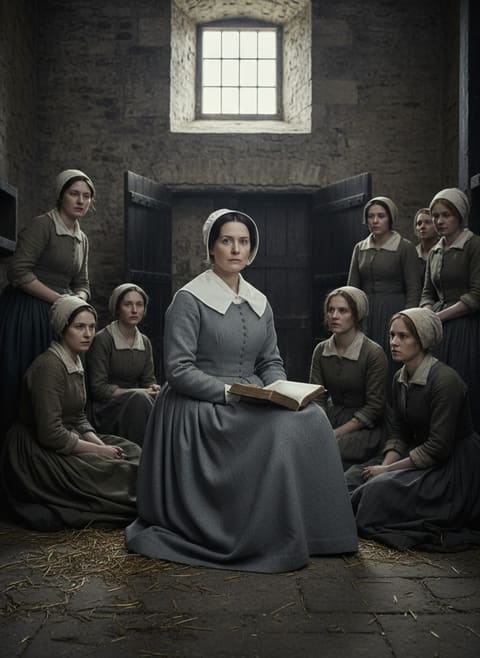
September 1, 1792. The air was stifling in the narrow corridors of Bethlem Royal Hospital, known dually as an asylum and as the grim visage of a madhouse.
The Chains of Bethlem
The infamous Bethlem Royal Hospital, often referred to simply as 'Bedlam', stood in London as a haunting reminder of society's uneasy relationship with mental illness. For centuries, it had been a curious attraction for the city’s populace, who would pay to observe its patients like animals displayed in a zoological park. The grim reality of the asylum surfaced through dimly lit rooms and cold iron chains. Men and women were shackled to the walls, often in filth, their cries lost amidst a cacophony of suffering and neglect. In 1792, Bethlem’s walls housed numerous tormented souls, trapped not just by physical restraints but by the era's profound lack of understanding and compassion.
Despite its fearsome reputation, for many, stepping into Bedlam invoked not reflection on societal failures but rather provided macabre entertainment. Merriment found on the backs of those forgotten by society echoed throughout its halls, making it a grim testament to humanity's darker curiosity.
A Vision from Yorkshire
While Bethlem continued its miserable legacy in London, a visionary figure was emerging far from its reach—William Tuke, a Yorkshire-born tea dealer and devout Quaker. Tuke’s compassion was deeply rooted in his faith and his belief in the profound dignity of every human being. Disturbed by reports of the cruel conditions endured by patients in asylums, particularly at Bethlem, Tuke felt an inner calling for change.
Read next: The Day a Black Sailor Walked Into Court and Freed Himself
The catalyst for Tuke’s resolve came when a fellow Quaker, Hannah Mills, died at the age of 29 after experiencing the grim realities of the asylum system. It was a pivotal moment that propelled Tuke into action. He envisioned a place of healing rather than punishment, where kindness replaced neglect, and understanding supplanted shame.
Tuke was not alone in his mission. The Quaker community rallied behind him, contributing to the establishment of what would become the York Retreat. It was a revolutionary concept at the time—an asylum that embraced moral treatment, respect, and compassion.
The York Retreat: A New Beginning
In 1796, Tuke opened the doors of the York Retreat, situated amidst tranquil countryside surroundings designed to promote healing and serenity. His approach was radically different from the institutional settings characteristic of the time. Here, the chains came off, both figuratively and literally.
At the Retreat, rooms were filled with light, and gardens provided spaces for reflection and connection with nature. Patients, who were referred to as 'guests', were treated with dignity and encouraged to interact with staff and each other in meaningful ways. The staff themselves were trained to foster an environment of understanding and empathy rather than dominance. This nurturing atmosphere promoted calmness and allowed individuals the chance to recover and reintegrate.
Read next: The Day a London Clerk Walked Into Court for a Dying Slave
Tuke’s methods stood in stark contrast to the prevailing belief that mental illness was a permanent condition, to be controlled by any means necessary. Instead, the Retreat’s approach was one rooted in belief in the potential for recovery through humane treatment and meaningful engagement.
Ripple Effects Across Time
The York Retreat did more than just challenge the status quo—it inspired a quiet revolution in mental health care. Physicians and reformers from across Europe and beyond came to see the success of Tuke's methods firsthand. His work set in motion what would eventually become the moral treatment movement, influencing asylums worldwide to rethink their approaches to mental healthcare.
More than 230 years later, Tuke's legacy remains a profound reminder of the power of compassion in healthcare. He demonstrated that individuals discarded by society for their difference could find peace and healing when treated with respect and humanity. Although approaches to mental health continue to evolve, the central tenet pioneered by Tuke endures—empathy and understanding create pathways where chains cannot.
As we reflect on the past, William Tuke's resolve in the face of indifference and cruelty sparked a beacon of change that acts as an enduring testament to the impact one individual can have. His determination to see the humanity in every soul inspired a transformation that reaches far beyond the quiet corridors of the York Retreat.