May 16, 1817. The chill of early morning clung to London, wrapping the city streets in a dense, damp haze. The stone edifice of Newgate Prison loomed like a grim sentinel against the encroaching dawn, its iron gates bristling with the menace of containment. Inside, the air was thick with an acrid mix of fear and rage; three hundred women, crammed into this squalid warren, shuffled restlessly in their overcrowded cells. Among them, whispers of violence bubbled just beneath the surface. The prison had long been a place feared by men and women alike, where the sound of breaking chains could still the hearts of the boldest souls.
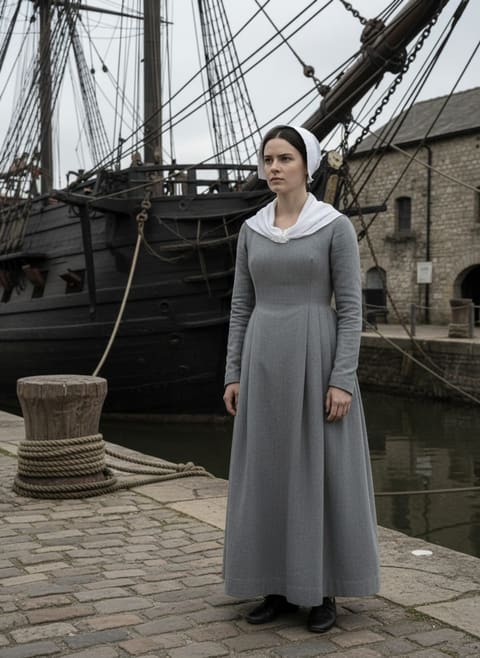
It was into this foreboding place that Elizabeth Fry, a kind-eyed Quaker born in 1780, bravely stepped alone. Clad in the simple garb of her faith, she carried no weapon but a Bible clutched to her chest. Fry was no stranger to unshakable conviction; she was raised in a family imbued with a sense of benevolent duty. The Quakers, known for their steadfast pacifism and equality among mankind, had undeniably shaped her worldview. Her lineage traced back to the heartland of Quaker origins; in the same spirit, her distant kin Jeremiah Warder had once owned the historic Quaker Manor House in Pennsylvania, a symbol of endurance amid revolutionary chaos. Yet, Fry’s journey to this day, standing before the grim threshold of Newgate, was carved from a reservoir of courage unique to her time.
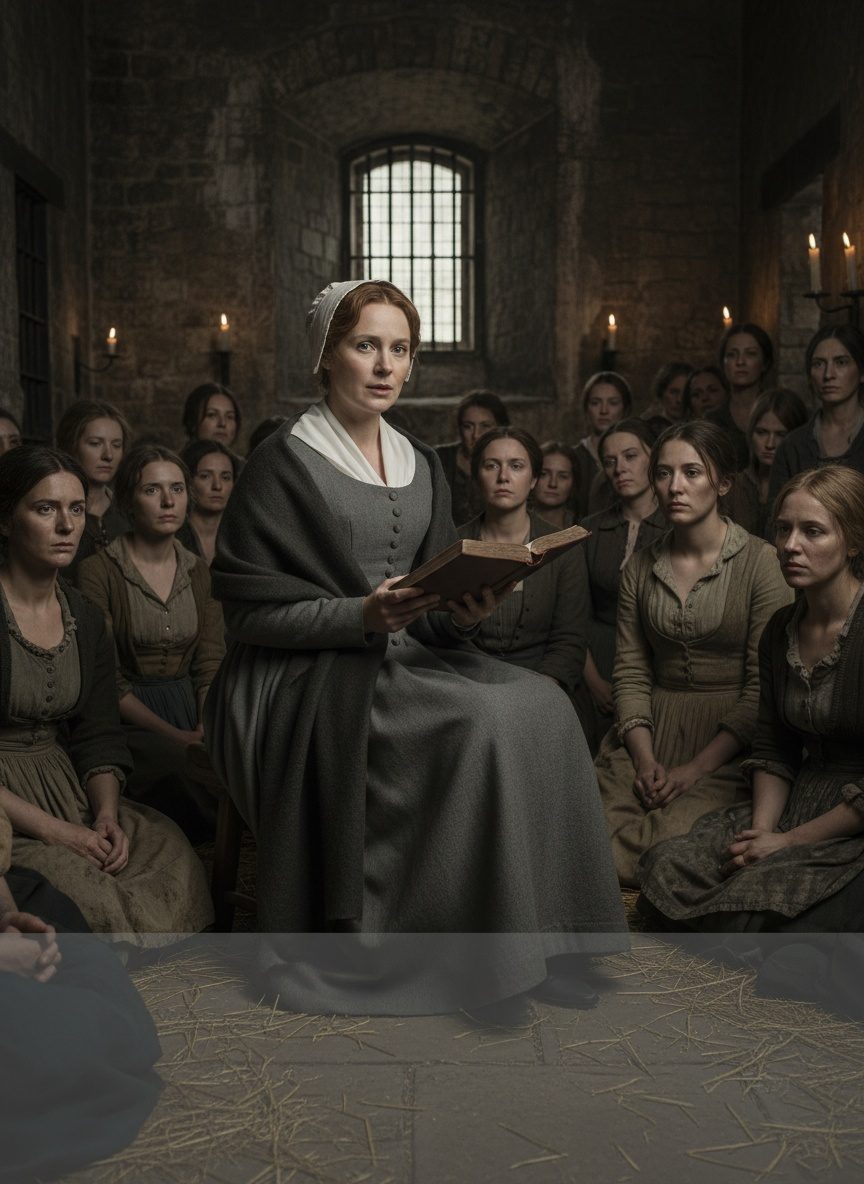
As she passed through those heavy iron doors and entered the penitentiary’s fetid depths, the chaos inside rose to meet her. Eyes, unused to gentleness, followed her every step; mouths, more accustomed to shouts of anger than words of wisdom, fell silent. Fry settled among them, her presence like an unexpected balm. These women, dismissed by society and abandoned in filth, grappled with their own demons, lost to the margins of a land teetering between progress and poverty.
Amidst the decay, Fry’s voice emerged, steady despite the oppressive air. As she opened her Bible and began to read, her words seemed to weave a spell of serenity. The women around her listened, caught in the cadence of hope and redemption. Here was an unfamiliar dialect—one of compassion and understanding—unleashing a silence that not even the guards could have commanded with brute force. This was a profound moment, a testament to the transformative power of empathy.
Read next: The Day a Cornish Surgeon Walked Into a Condemned Cell
The stark conditions of Newgate were notorious. The prison, a bulging magnum opus of suffering, had become so fiercely unmanageable that no official dared venture in without an armed escort. Disease ran rampant as the stench of neglected humanity affronted any who dared cross its threshold. Poor women, sentenced for crimes often stemming from sheer desperation, languished there. For some, it was not their proximity to freedom but to the gallows that made their bleak existence all the more intolerable.
What transpired that day defied expectation. Elizabeth Fry, inspired by her Quaker belief in the inner light within every person, found herself addressing an assembly more willing to hear than she had ever imagined. She proposed the impossible—a chance for education, for rehabilitation, for dignity. By sheer force of moral authority, Fry engaged these women in reformatory activities, crafting a fragile order within the chaos. She gifted them pieces of cloth to craft patches and garments, a small step towards self-sufficiency, and perhaps a metaphor for their own mending spirits.
Read next: The Day a Vicar's Son Walked Into a Debtor's Cell and Freed Them All
Fry's work at Newgate was, however, only the beginning. Her commitment to the welfare of prisoners stretched beyond the squalid walls of Newgate Prison. As word of her endeavors spread, she became a beacon for reformers worldwide. Her impassioned campaigns led to the establishment of schools within prisons and solidified her as a pivotal force behind the eventual creation of the Prison Reform Act of 1823. It’s with little wonder that the likes of Queen Victoria herself would hold Fry in great esteem, recognizing her contributions to humanity.
Yet, among the sepulchral bricks and oppressive spirits of Newgate, Fry's towering legacy was deeply personal. The prisons of Georgian England are long since silent, but the stories of their inmates—and of those who fought, like Elizabeth Fry, to humanize them—resonate across history’s pages. Her acts compelled society to reconsider its perception of justice, placing her forth as an “angel of prisons.” But even angels need wings, and it was her belief in second chances, planted that day in the shadow of Newgate’s towering gloom, that would lift her and countless others—utterly adrift in a world that had too often forgotten them.
Elizabeth Fry's solitary walk into the darkness was more than an act of bravery; it was a declaration. She stepped forth not merely to witness suffering, but to address it, to provide a kind yet persistent call to society’s better angels. Her life's work underscored a fundamental lesson: that, behind every wall of iron and stone, lies the capacity for change, buried within the human soul. As we reflect on her story, it invites us to consider how far justice is paved not just in verdicts and sentences but in opportunities for redemption and grace. In that dim, forgotten corner of Newgate, she reminded the world that even in places and situations most dire, hope could find a foothold and light could enter anew.