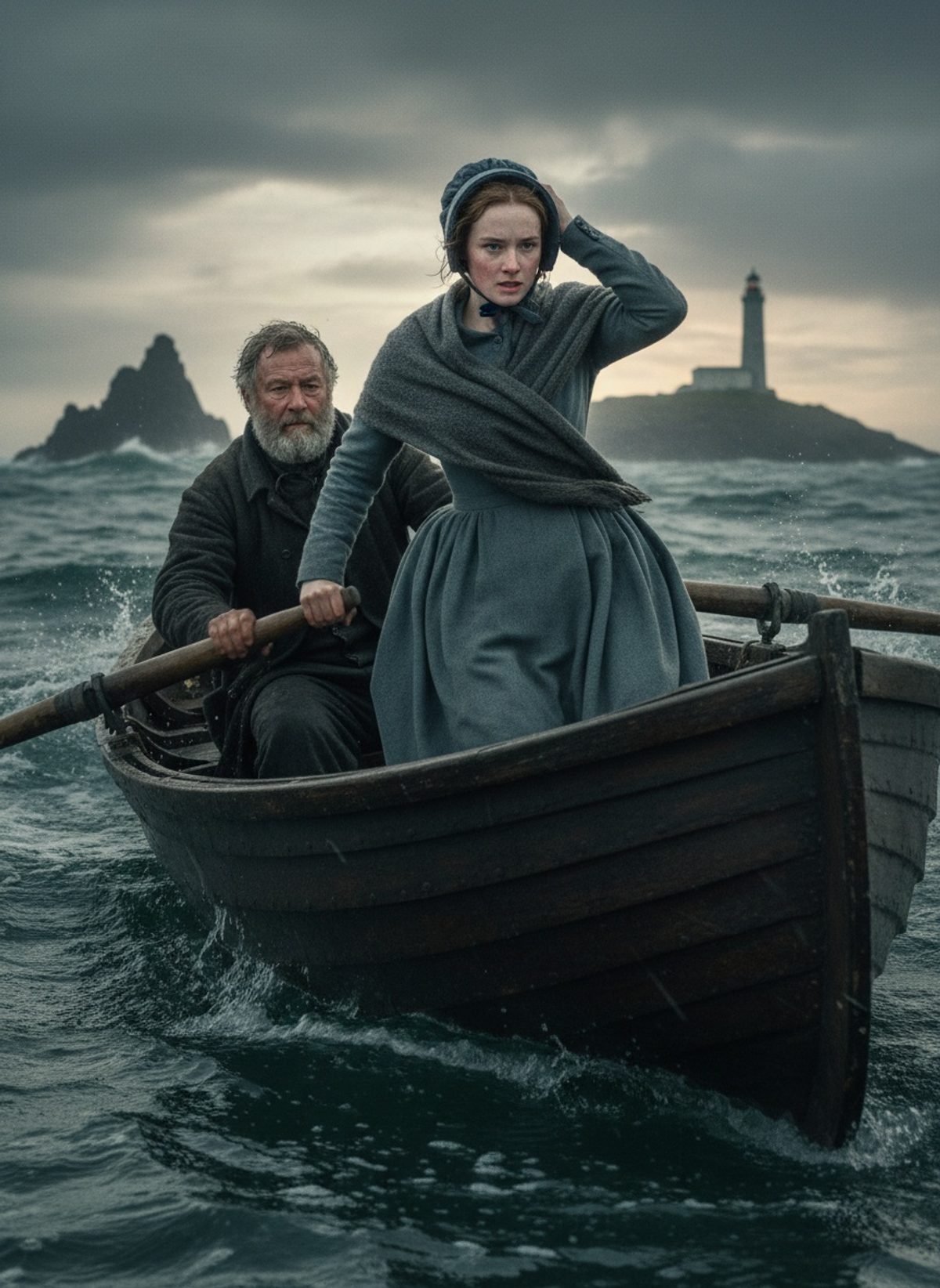
September 7, 1838. The wind howled mercilessly through the Farne Islands, driving the North Sea into a frenzy.
The Lightkeeper's Daughter
In the pale dawn light, one could barely distinguish the shifting horizon from the tumbling waves. The swirling turbulence mirrored the tempest brewing in the heart of Grace Darling, the twenty-two-year-old daughter of the Longstone Lighthouse keeper. Raised in the stern embrace of the sea, she had grown accustomed to its caprices, yet nothing had prepared her for what she glimpsed through the rain-streaked window on this fateful morning. There, perilously marooned on the jagged rocks known as Big Harcar, half a mile from the safety of the lighthouse, clung the battered remnants of the steamship Forfarshire and its desperate passengers.
A Tragedy Unfolds
The Forfarshire, bound for Dundee from Hull, was a testament to Victorian advancements in steamship design, a proud vessel compromised by equipment failure over unforgiving waters. As the storm surged, both machines and men were overpowered, and the great steamship was dashed against the rocks. In the shrouded night, it seemed the sea itself had opened a maw, claiming half the wreck and its passengers, leaving the remaining shipwrecked souls clutching with nothing more than hope to the precarious refuge the rocks offered.
Grace, peering through misted glass, discerned shadows moving frantically amidst the debris. The cacophony of wind and wave bore a chilling accompaniment: the cries of the shipwrecked, haunting echoes pealing across the water. It was in that keening darkness that Grace decided she could not stand idly by, a decision that would ripple through history.
Read next: The Day a Cornish Surgeon Walked Into a Condemned Cell
The Perilous Rescue
Massive swells and treacherous currents would dissuade even the hardiest of sailors from venturing out, yet the determination etched in Grace's spirit was stronger still. Persuading her father, William Darling, of their moral imperative to act, the two took to the lighthouse's humble rowing boat. With Grace at one oar and her father at the other, the petite frame of the boat sliced a tenuous path through the tumultuous sea, her heart hammering to the rhythm of every pull.
In those desperate moments, her mind remained fixed on those unseen faces rallying against despair. The journey was perilous, oars strained under crashing breakers, yet Grace's resolve never faltered. Reaching the stranded survivors was a triumph of willpower and endurance; the terrified thanks of the rescued must have been balm to the Darlings' labors. Embarking the survivors into the boat was nigh impossible in the violence of the sea, yet Grace and her father, buoyed by a shared humanity, succeeded.
Read next: The Day a Vicar's Son Walked Into a Debtor's Cell and Freed Them All
A Stir Across the Isles
Word of the rescue spread like wildfire, crossing social strata and stirring national admiration. Grace Darling, emblematic of courage and virtue, became a household name throughout the British Isles. Newspapers heralded her bravery, and poets immortalized her feat in verse. She was England’s own Joan of Arc, a paragon of selflessness in an era fascinated by tales of heroism and adventure. Portraits and commemorative memorabilia followed, forging a narrative that enshrined Grace in enduring memory.
Yet the woman behind the legendary story shied away from public adoration. Grace remained committed to her duties at the lighthouse, her fame a dissonance to the simplicity she treasured. Her story, though propelled by exceptional circumstances, resonated deeply because it was a tale of ordinariness—ordinary people acting under extraordinary situations, guided by their compasses of kinship and kindness.
The Lasting Echo
Grace Darling's heroism in the face of insurmountable odds evokes reflections not only on courage but on the often-overlooked figures whose silent acts of bravery illuminate the pages of our past. Her actions remind us of the irrepressible strength of the human spirit, how it can shine through the darkest of storms. This legacy surpasses the confines of her time, offering an inspiring narrative that endures, reminding us that heroism often surfaces where least expected—born not of grand design but of an unwavering resolve to do what is right.