Few people know the name William Perkin. His invention, however, colored an era.
The Alchemy of Innovation
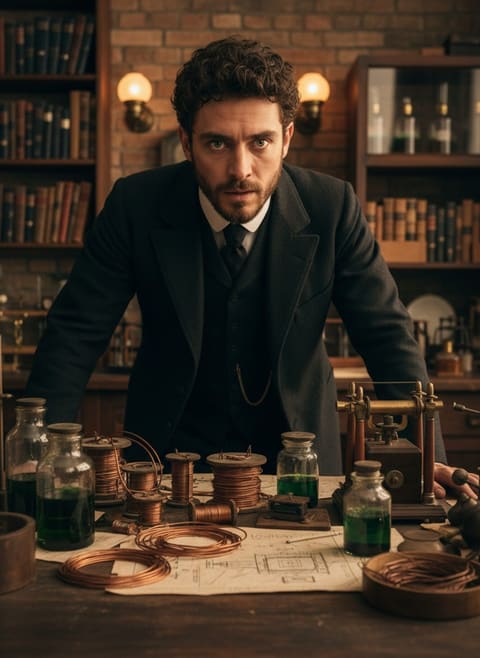
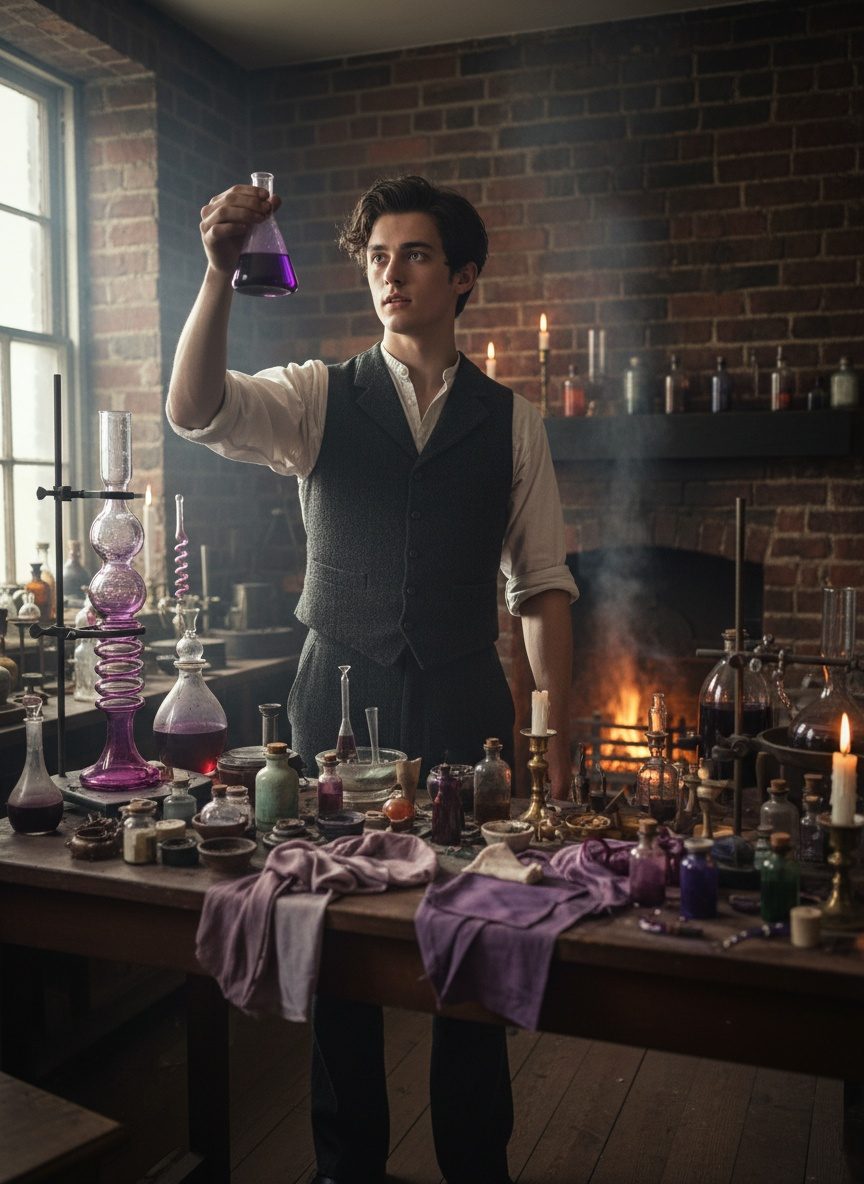
In the spring of 1856, an 18-year-old William Perkin returned to his family's home in London after a term at the Royal College of Chemistry. Perkin, the son of a modest Scottish weaver, was on a mission to advance human knowledge. His tutor, August Wilhelm von Hofmann, had tasked him with an ambitious project: producing synthetic quinine, a potential treatment for malaria afflicting Europe and its colonies. Perkin transformed a corner of his home into a makeshift laboratory, a space cluttered with beakers, tubes, and retorts, filled with the heady promise of discovery.
Perkin's journey into organic chemistry was as audacious as it was disorganized. Amidst the clutter and chaos of experimental trials, destiny took charge. In place of the medicine he sought, he found a deeply violet residue at the bottom of his flask. Any ordinary chemist might have discarded it as a failed attempt, but Perkin's curiosity led him down a different path. He saw potential in this unexpected residue.
The Birth of Mauve
What did Perkin do with this unremarkable residue? He applied it to silk, turning a swatch of drab fabric into a radiant masterpiece of purple—a color once reserved for royalty due to its rarity and costliness. This wasn't mere coincidence; it was an epiphany. The residue was a dye, and Perkin called it "mauve." Its vibrancy was unlike anything the world had seen—the first synthetic dye heralding a revolution in color.
Read next: The Day a Weaver's Son Mapped the Invisible World
Queen Victoria herself would later don a dress dyed in mauve, setting in motion a transformation that would ripple through the Victorian wardrobe and beyond. This serendipitous discovery by a solitary teenager was largely serendipitous, yet it held the power to democratize fashion, bringing hues previously unattainable to the masses. The dye industry bloomed as if overnight, bursting with color and creativity.
The Ripple Across Industries
Perkin patented his dye method in 1856 and launched a factory to manufacture the colour, establishing the world's first commercial synthetic dye production. This was the dawn of an entirely new industry—the modern chemical industry. Perkin's small start catalyzed chemical innovations in pharmaceuticals, explosives, and agriculture, reshaping each field's future. Synthetic dyes soon replaced the traditional, laborious methods of dyeing with natural pigments. Perkin's work catapulted technology and medicine into a new era.
The global dyestuff industry grew exponentially. By the late 19th century, new synthetics began to appear monthly, thanks to German chemists inspired by Perkin's pioneering spirit. This colorful revolution even influenced art movements; the bright pigments awakened the imagination of painters, heralding new styles that seemed to echo the palette of a bold and burgeoning world.
Vivid but Not Uncontested
This story of color was not without its darker hues. Across Europe, chemists filled the air with less romantic scents than one's favorite lilac-scented silk. The industrial bypollution of booming dye factories became a challenge, with waterways sometimes turning the colors of the rainbow. Communities around the world were forced to reckon with the environmental impacts of this chemical revolution that Perkin unwittingly sparked.
Read next: The Day a Clockmaker's Son Rewired How We See the Stars
Yet, even in shadows, Perkin's mauve left its indelible mark: by breaking free from nature's confinements, humanity could create chemical diversity heretofore unimaginable. A path blazed by curiosity and tenacity had societal consequences that outstretched the silent sparkle of a silken hue.
A Legacy Written in Color
In an age where innovation defines empires, Perkin’s story is a reminder that the most unforeseen discoveries can ignite seismic shifts. The young man’s failure to synthesize quinine opened the door to a world awash in color, one that even he could never have dreamed. His path underscores a timeless truth: often, it is the unintended consequence of ambition that creates revolutions.
William Perkin took a misstep on the path to quinine, yet unwittingly sculpted history with his artistry in likelihood. A Scots weaver’s son, working alone in a makeshift lab, altered not just the chemical industry, but the world itself. In doing so, he reminds us of the beauty in the accidental and the power that lies in trusting curiosity. His is a tale not taught in textbooks, though in every aspect, it remains emblazoned across the Victorian tapestry in shades of bold, unwavering purple.