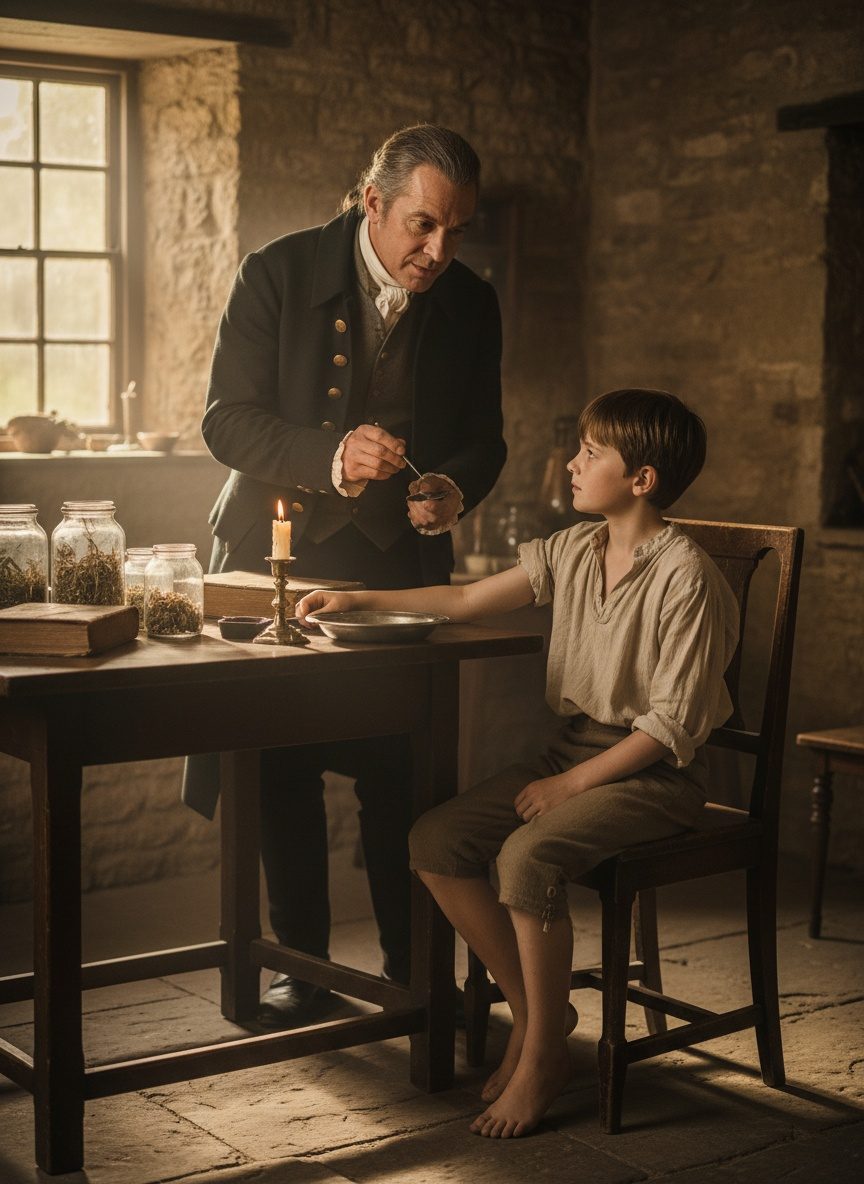
The cold steel of the needle glistened in the afternoon sun as Edward Jenner steadied his hand, his eyes fixed firmly on the oblivious young boy before him. The boy, James Phipps, just eight years old, sat in the courtyard of the Berkeley farmstead, surrounded by the dew-laden scent of English countryside. Calmly yet resolutely, Jenner prepared to change the course of medicine, armed with nothing but faith in a peculiar observation and undeterred by the scorn of his medical peers.
The Humble Beginnings of an Audacious Idea
Edward Jenner's journey to this moment began in the rambling fields of Gloucestershire. Born the son of a local vicar in 1749, Jenner’s early surroundings were ordinary, yet they sparked an insatiable curiosity about the natural world. Fascinated by the pastoral life, young Jenner observed every nook and cranny of his environment, noting peculiar patterns and behaviors—a curiosity that laid the foundation for his groundbreaking work.
During his apprenticeship as a doctor, a peculiar folk belief caught his attention. Local dairymaids, often in contact with cows, seemed blissfully unaffected by outbreaks of smallpox, the horrific disease that scarred—or killed—hundreds of thousands across Europe. Jenner began to ponder, his young mind weaving connections between the relatively benign cowpox and its deadly cousin, smallpox. Most dismissed these musings as the ramblings of an imaginative child, but for Jenner, it planted a seed of curiosity that would one day germinate into scientific revolution.
The Moment of Truth
May 14, 1796, dawned with a crispness that seemed unaware of the gravity it would bear on its shoulders. On this seemingly ordinary day, the atmosphere in the Berkeley farmhouse brimmed with tension as Jenner prepared for an experiment that could either end in triumph or tragedy. The courtyard was alive with the sounds of farm life, yet all noise seemed muted in the presence of Jenner's determined resolve.
Read next: The Day a Weaver's Son Mapped the Invisible World
With a swift, deliberate motion, Jenner made an incision on James Phipps’ arm and introduced matter taken from a lesion on Sarah Nelmes, a local milkmaid suffering from cowpox. The pale yellow pus, hardly more than a teaspoonful, was enough to stir dread amongst skeptics. Could this simple procedure shield Phipps from smallpox's ruthless grip? The gamble was immense, and the stakes could not have been higher.
As days stretched into weeks, Jenner watched Phipps closely. The boy developed a fever and discomfort but soon recovered, showing none of the perilous symptoms of smallpox. Weeks later, Jenner’s suspicions were put to the ultimate test when he deliberately exposed Phipps to smallpox. The boy remained unscathed, the deadly disease unable to breach the inexplicable shield Jenner had given him.
Facing Skepticism and Rejection
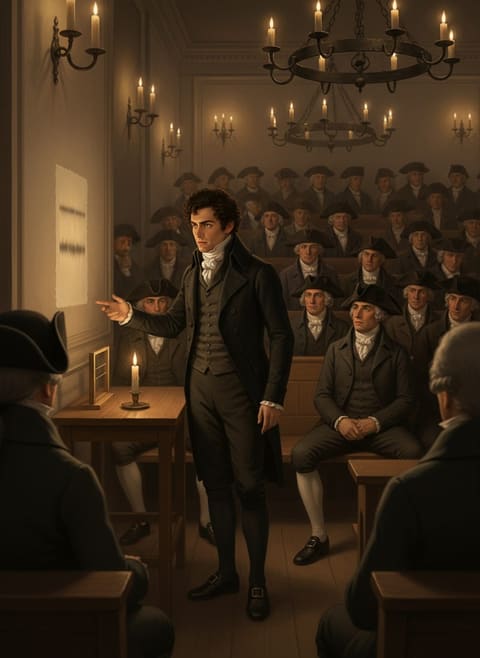
Though Jenner’s success was undeniable, the medical community bristled at his findings. The idea of inoculating against smallpox using cowpox was simple to the point of absurdity, dismissed by many of his contemporaries as rustic nonsense unfit for the halls of learned medicine. Physicians scoffed openly, clinging fiercely to traditional methods of variolation, which involved using small doses of live smallpox—a risky and often fatal endeavor.
Driven by conviction, Jenner detailed his experiment's outcomes in a pamphlet in 1798, meticulously recording the procedure and results. Slowly, the ripples of his radical idea spread beyond the isolated fields of Gloucestershire. As word of the procedure's efficacy circulated, it began to find clandestine allies among the wise skeptics who dared challenge entrenched norms.
Read next: The Day a Clockmaker's Son Rewired How We See the Stars
The shift was not instantaneous, nor did it come easily. Jenner worked tirelessly to amass evidence and convert the resistant masses, often financing follow-up studies out of his own pocket. Yet the resolve demonstrated by the tanner’s son was indomitable—a testament to unwavering belief in the potential of his discovery.
A Legacy Writ in Threads of Life
The humble experiment in a Berkley farmyard expanded into a legacy that would outlive its creator and reshape the trajectory of human health. What began as an inkling in the mind of a curious country doctor burgeoned into the vaccine as we know it today. His persistent efforts eventually won the battle against skepticism, earning Jenner a place as the "Father of Immunology." His vaccine laid the foundation for the eradication of smallpox, a feat declared in 1980 by the World Health Organization as one of the greatest public health achievements.
Jenner's story is more than a tale of scientific triumph; it exemplifies the power of observation, curiosity, and unyielding determination. His revolutionary idea, born of an observation in an English pasture, ultimately saved millions from the agony of smallpox and paved the way for modern vaccination techniques that protect humanity from a myriad of diseases today.
In considering the life and work of Edward Jenner, we're reminded of the value of challenging conventions and the importance of questioning accepted truths. It’s a narrative of how a seemingly modest idea, borne out of genuine curiosity and a willingness to confront ridicule, can ripple through time to create seismic shifts in human advancement. In the shadows of Gloucestershire's pastoral landscape, amidst the skeptical whispers and dismissive laughs, Edward Jenner quietly altered the fate of the world.