He was the son of a tanner, a craftsman of leather and the pungent scents of chemicals. Yet, he was destined to reshape the world of medicine profoundly. Joseph Lister was not content with observing suffering and death; he sought a solution amidst the unseen.
A Chance Observation
On a somber evening in London, 1858, Joseph Lister found himself watching the inevitable unfold yet again. A healthy, young man lay before him, victim not of his knife, but of the invisible enemy that shadowed every operation — infection. This tenacious killer penetrated even the cleanest of cuts, transforming recovery rooms into battlegrounds as doctors and nurses bore witness to patients lost at the hands of sepsis. It was a cruel irony, Lister thought, that hospitals designed to heal were in fact places where death took its toll most triumphantly.
As the son of a gifted tanner, Lister grew up surrounded by the necessity of precision. His father, Joseph Jackson Lister, was a pioneer in microscopy, a field that required patience and a keen eye for detail. Through the elder Lister, Joseph understood the importance of seeing the world with both clearer and imaginative eyes, learning that the smallest of components could lead to revolutionary insights. This was perhaps why young Joseph pursued the world of surgery with an intrinsic understanding that his father's methodological approach could be applied to his own field.
It was in Edinburgh, under the mentorship of James Syme, that Lister honed his skills. He was known not only for his surgical prowess but also for his introspective nature. His observations, often keenly recorded in extensive notes, began to weave narratives of their own, suggesting there were connections where his peers saw none. As prevailing theories pinned infection on bad air, miasma, Lister harbored a growing suspicion that something else was at play — something alive but unseen.
Read next: The Day a Weaver's Son Mapped the Invisible World
Invisible Allies
In Glasgow, 1865, a revelation occurred, a veritable spark in a city brimming with the chaos of emerging industrialism. Lister found an intellectual kinship with the groundbreaking work of French chemist Louis Pasteur, who discovered the role of microorganisms in fermentation. A wild notion took root as Lister dared to apply Pasteur's germ theory to the field of surgery. Could these invisible foes be silently killing his patients? While his peers dismissed the idea with laughter and condescension, an undeterred Lister searched for ways to prove his growing belief that germs were causing post-operative infections.
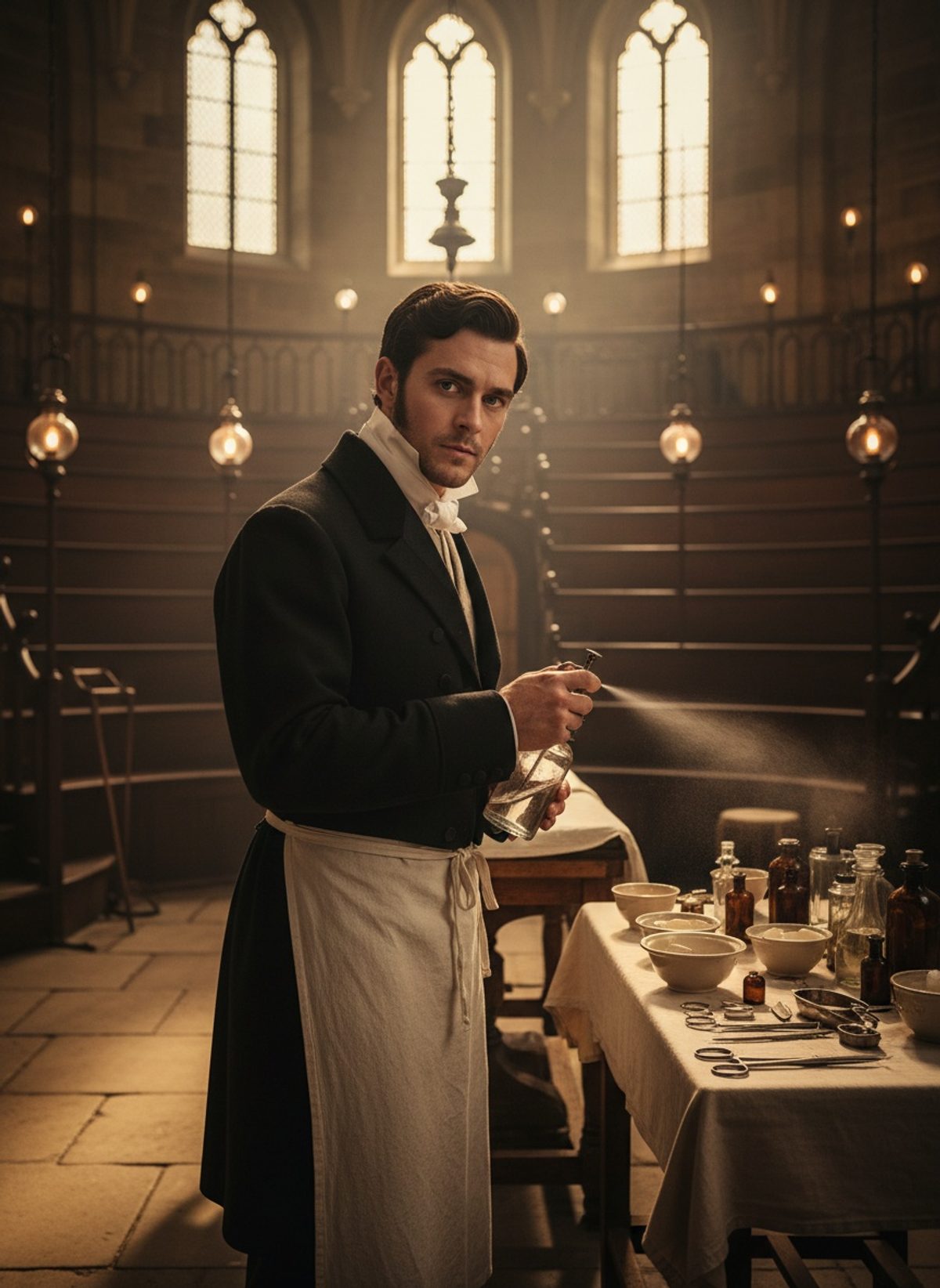
The skepticism of his colleagues could easily have quelled a lesser man's curiosity. However, Lister's upbringing in his father's workshop had instilled a perseverance that was as unyielding as the leather they worked with. He began treating surgical instruments, wounds, and dressings with carbolic acid, a technique inspired in part by the disinfectant properties of tar compounds used in the leather tanning process. While the distinct, acrid scent of carbolic acid was nearly unbearable, it marked the beginning of a transformation in operating theatres. Lister's experiments showed promise, with reduced infection rates and improved patient survival.
Word of Lister's methods began to spread beyond Glasgow, initially met with skepticism or outright rejection, particularly in the deeply entrenched medical establishments of London. Yet, in hospitals across Europe where his techniques were adopted, the evidence remained undeniable — infections plummeted, survival rates soared. The sounds of saws and screams began to be replaced by those of hope, health, and recovery. The battle against invisibility was turning in Lister's favor.
A New Dawn in Surgery
The once dim and death-riddled hospital wards of Victorian Britain began to illuminate with a newfound understanding. Lister’s vision for antiseptic surgery steadily gained traction, altering the course of medical history. His teachings reintroduced the essence of cleanliness that now permeates modern medicine. Surgeons began to wash their hands, sterilize equipment, and utilize sterile environments — measures we consider standard practice today but were once avant-garde.
Read next: The Day a Clockmaker's Son Rewired How We See the Stars
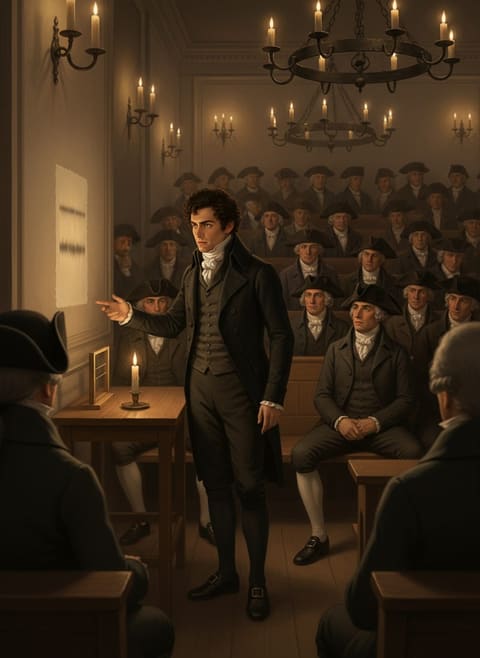
By 1877, Joseph Lister had returned to London to accept a prestigious post at King’s College Hospital. Here, his methods received the attentive ears they demanded as medical figures began to set aside skepticism in light of undeniable results. As antiseptic surgery gained momentum, Lister’s contributions became recognized with a vigor that matched the passion he had poured into his life's work. Hospitals across the world adopted his techniques. His lectures drew crowds eager to learn from the visionary reshaping their profession.
Joseph Lister’s relentless pursuit of a world beyond infection earned him a knighthood and a legacy documented not just in textbooks but woven through every procedure undertaken in operating theatres across the world. He did not merely treat wounds; he mapped the unseen machinations of the human body and forged a path where none existed. While microscopes now moved from the obscure to essential, Lister's broader legacy was the genuine understanding that the smallest elements, though unseen, could wield phenomenal impact.
Reflecting on Lister's journey urges us to revisit the ways unseen forces shape our existence, both within and beyond the realm of medicine. From the shadows, he delivered not just a revolution in surgical practice but a reminder of the pragmatic brilliance woven throughout human history. His pursuit was a testament to the capacity for human resilience and ingenuity, leaving an indelible mark, not just on surgery but on the very fabric of life as we know it.