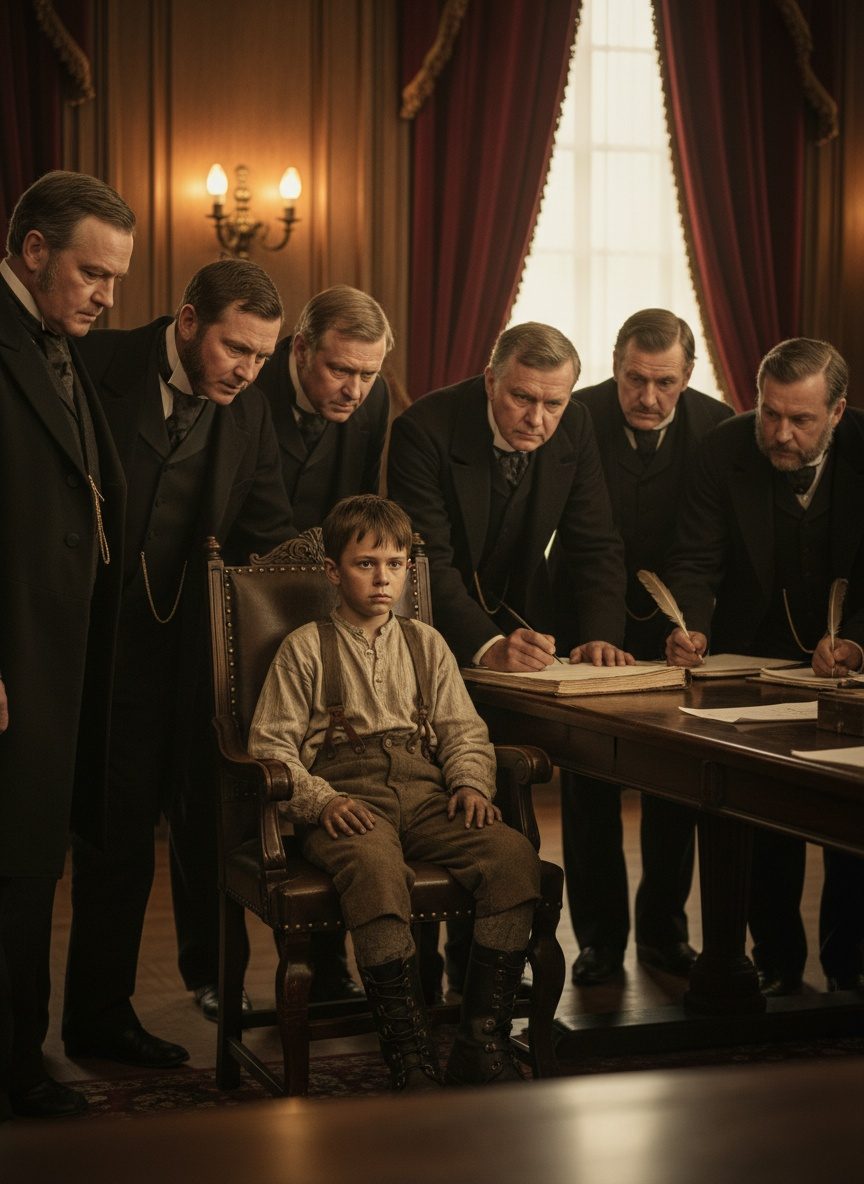
April 8, 1836. The air in the committee room was thick with expectation.
The Unlikely Witness
In the heart of Victorian London, on a day that history would not soon forget, the House of Commons found itself brought to a standstill by an unexpected guest. A thirteen-year-old chimney sweep sat before a parliamentary committee, his small, soot-streaked frame a stark contrast to the polished politicians around him. Wearing patched up clothing and bearing the countenance of someone who had lived a life far beyond his years, he was quickly and dismissively judged by many in the room, who expected little more than another rote account of the trials of chimney sweeping. Yet, in the echoes of his voice, they heard the truth of an intolerable practice that had been allowed to linger for far too long.
Children, as young as the boy who now looked earnestly at the men interrogating him, had for decades been employed as climbing boys. Small and lithe, they were the ideal tools for navigating the narrow and twisting flues of the industrial chimneys. But there was a painful cost: lungs blackened by soot, limbs twisted by forced contortions, burns, injuries, and often, a death cloaked in suffocating darkness. The task that fell upon this young apprentice was grim and perilous, enough to spark an unspoken weight of guilt that fell heavily upon the committee as his story unfolded.
The Dreaded Climb
As stories go, few could silence the room quite like the one this boy told. With articulate simplicity, he painted a picture of life beneath the soot and smoke—a tale of courage amidst grime. Every bruise was a testament to a survival instinct honed from climbing up scorching hot shafts and navigating perilous drops with nothing more than raw dexterity and the will to survive. These experiences were recounted with vivid clarity, his words colored by the heavy sighs and resigned nods of other boys who had shared his fate, present as living corroboration.
Read next: The Day a Cornish Surgeon Walked Into a Condemned Cell
The boy methodically described the life inside the flues—spaces no wider than a cancer-ridden throat, where light was a luxury and escape often a reward for the quick-footed alone. These young sweeps were expected to brush off the soot with scrapers and brushes, their ascent palpable with risk as older apprentices or sometimes cruel overseers waited impatiently below, oblivious or apathetic to their cries of pain. If they climbed too slow, a pricking brush from below was an all too common spur that cared little for the lacerations left behind.
Awakening Conscience
For an unbearably long moment, silence reigned. The members of the committee—men who had grown numb to the passionless recitation of statistics—found themselves faced with the raw human element of the industrial era’s dark underside. As each chilling detail emerged, it brought forth a sense of empathy and urgency previously unseen in the legislative halls. In front of them, through this boy’s account, stood every climbing boy, their unshared and unheard tales crying out for deliverance.
The committee room, typically a place of decorum and deliberation, was transformed into a chamber of unrestrained reflection. Here laid bare were the realities of lives brutally shaped by a burgeoning industry insensitive to the weight of human suffering it demanded. These children had once existed as mere numbers on reports, dehumanized by their once-believed insignificance. But now, the image had changed. Sentiment shifted heavily on the scales, tipping toward a call for reform.
Read next: The Day a Vicar's Son Walked Into a Debtor's Cell and Freed Them All
A Catalyst for Change
What followed in the wake of this haunting testimony was not mere sympathy, but a legislative whirl that gathered momentum like a gale over a bleak moor. This single moment of unguarded, gallant revelation was the catalyst, pushing Parliament towards enacting meaningful change. Eventually, these efforts paved the way for the Chimney Sweeps Act, designed to protect the vulnerable, to limit the work age, and to improve the conditions of these children whose plight seemed finally understood.
The dark legacy of the climbing boys served to illuminate a truth that Victorian society could no longer ignore: progress and humanity must walk hand in hand. Their liberation from the shadows of the chimneys would inspire further debates about child labor across the country, each discussion pushing the promise of industry forward on a wave of ethical reconsideration.
In recalling the words that silenced a committee and stirred the conscience of a nation, we remember not only a boy's brave testament but also the decisive, compassionate action that followed. Here stands a lesson from the past deeply resonant in today's challenges. As the soot scattered under questioning cleared, so too did the broader realization—some stories must be told, not just once or to a room, but echoed through policy, justice, and future generations.