The wind swept through Oxford on that fateful May evening in 1954, curling past the spires and steeples with a chilling insistence. As the sun dipped low in the sky, casting long shadows across the Iffley Road track, an air of anticipation crackled and hummed. Among the handful of spectators gathered, a teenage girl pressed herself against the railing, clutching her coat tighter. She wasn't there for history, not at first. She was there for a promise made between friends, the kind you make in the breathless thrill of youth. But there she stood, on the brink of witnessing an unparalleled athletic feat—the breaking of the four-minute mile by Roger Bannister. Yet, this was only the beginning of a narrative that games and medals wouldn’t recount, a tale that was nearly unmade in the most unexpected of ways.
Whispers in the Wind
The Iffley Road track stood as a venerable sentinel to the glories and heartbreaks it had seen. On this day, a storm brewed—not in clouds or rain, but in rumor and hesitations. For years, whispers spread a dangerous myth: run too fast, and your heart might burst; push too far, and the cost could be more than time—it could be life. Medical professionals, athletes, and even bystanders ventured into heated debates about the human limit. And in the midst of it all, this clandestine teenager lingered, staking her hopes on the audacity of friends.
Earlier in the week, she had threaded through the academic halls of Oxford, a flurry of bookish coats and bustling minds bustling around her. It was there she overheard it—idle chatter among some students about an attempt that dared to defy the edicts of science. A temerity that startled her into curiosity. Her resolve steeled not by fear but by fascination; she slipped through the doors and made her way towards the day's crescendo—a race against time itself.
In stepping onto the track that day, Bannister stood not in isolation but surrounded by a chorus of unspoken legacies—of runners who had tried, legacies of those who contested silently, and histories that blend into whispers of persistence. Throughout, our young spectator was oblivious to the grandeur, fixated only on a singular hope: to see what whispers said was impossible become a reality. Yet in the undercurrent ran a different narrative, one not of records, but of fate on the cusp of alteration, just one step away from diversion.
Read next: The Day a Cornish Surgeon Walked Into a Condemned Cell
Fates Intertwined
As the starting gun fired, a silence fell amongst the watchers—silent prayers intermingled with breaths held taut in ribcages. The teenage girl, heart pounding in tandem with the runners' strides, knew not of records but of the rawness of humanity. As Bannister turned the bends, she saw not a champion, but rather the grit of one chasing after myth and truth alike. Yet, her own presence on that day was an act in kismet as well.
What the history books omitted was the unraveling drama away from the finishing tape, not measured in seconds but by fleeting choices and unintended guardians. That morning, an error in scheduling, a simple misstep in communication, nearly stripped that day of its monumental wink in time. The visiting New Zealand team, comprising both challengers and comrades to Bannister's bid, was known to the girl—a chance friendship with a team member sparked by the incidental beauty of serendipity.
It was through her casual conversation, mere hours before the race, that the girl pieced together the fractured plans. The timing, the logistics all seemed amiss. Guided by nothing more than the fervor in her heart, she insisted a message be sent—a brisk assertion, fueled by the ignorance of youth and faith in the extraordinary. Her intervention, unnoticed yet vital, realigned untethered destinies. It pulled the scattered threads tight once more, not with force, but with an accidental grace.
Read next: The Day a Vicar's Son Walked Into a Debtor's Cell and Freed Them All
The Aftermath of Myth
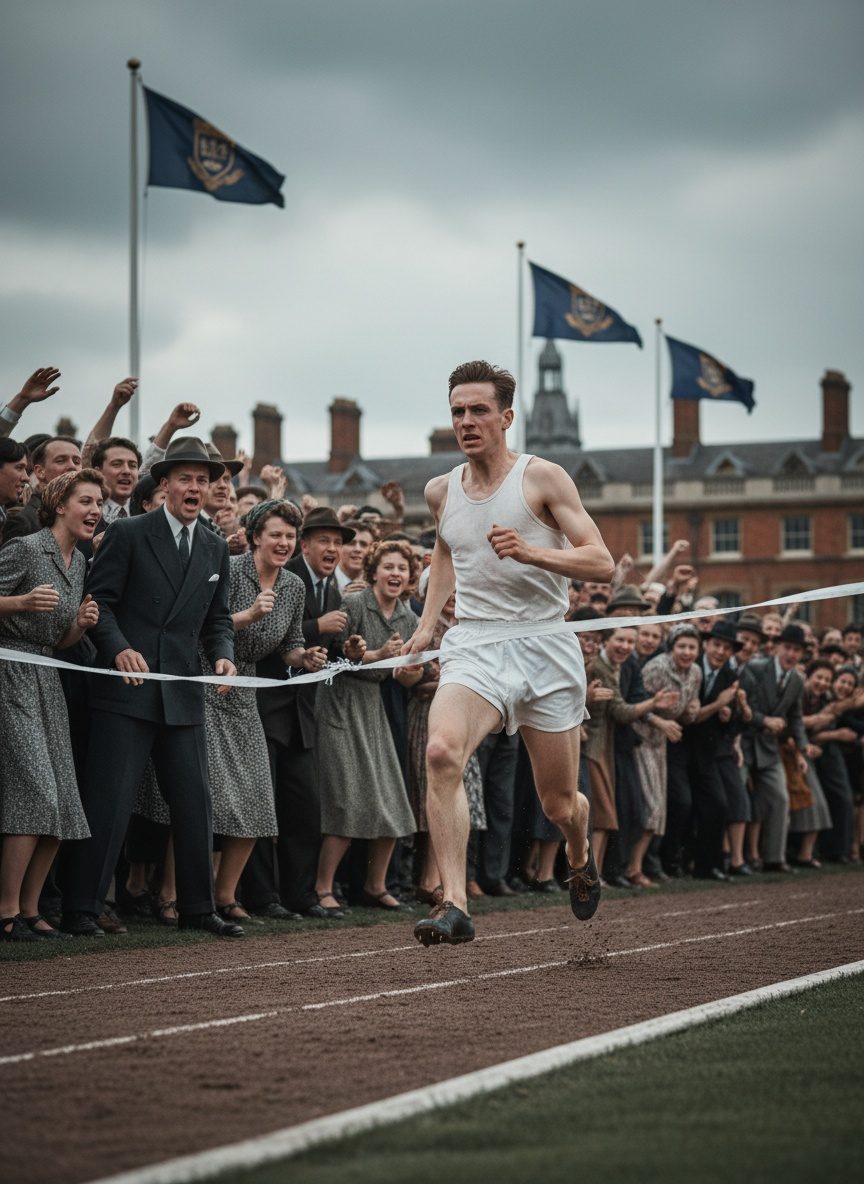
When Bannister crossed the finish line, time paused for a beat longer, sculpting a breathing monument of astonishment around him. For those seconds, and forever in retellings, the gaze turned singularly towards the runner, his name forever etched as the breaker of fetters. Cheers erupted, and amidst the euphoria, the girl stood in quietude—a witness to victory but holder of a different truth. Her story, interwoven with those minutes, existed as an untold harmony.
As the world latched onto Bannister's legacy, so too did it miss the subtleties that danced just out of reach. The girl, history would say, became inconsequential to the spotlight—not part of the narrative, merely an observer, an unbidden brush stroke on a grand canvas. Yet was she not, in her unwitting intervention, a sculptor of fate as well? In the privacy of her heart, she held a triumph unknown to the masses, a narrative of life’s delicate weavings where presence and absence waltz on the tether of chance.
Decades later, as annals speak glowingly of Bannister, the girl now older, reflects on a different race—a more personal chase against overlooked margins and specters of chance. Though her name faded amidst the noise of clamor and acclaim, her memory safeguarded even the most volatile transformations. She learned then, and we rediscover now, that history's untold legends belong not only to those we glorify but to those gentle, unseen currents shaping the vast ocean of human endeavor.