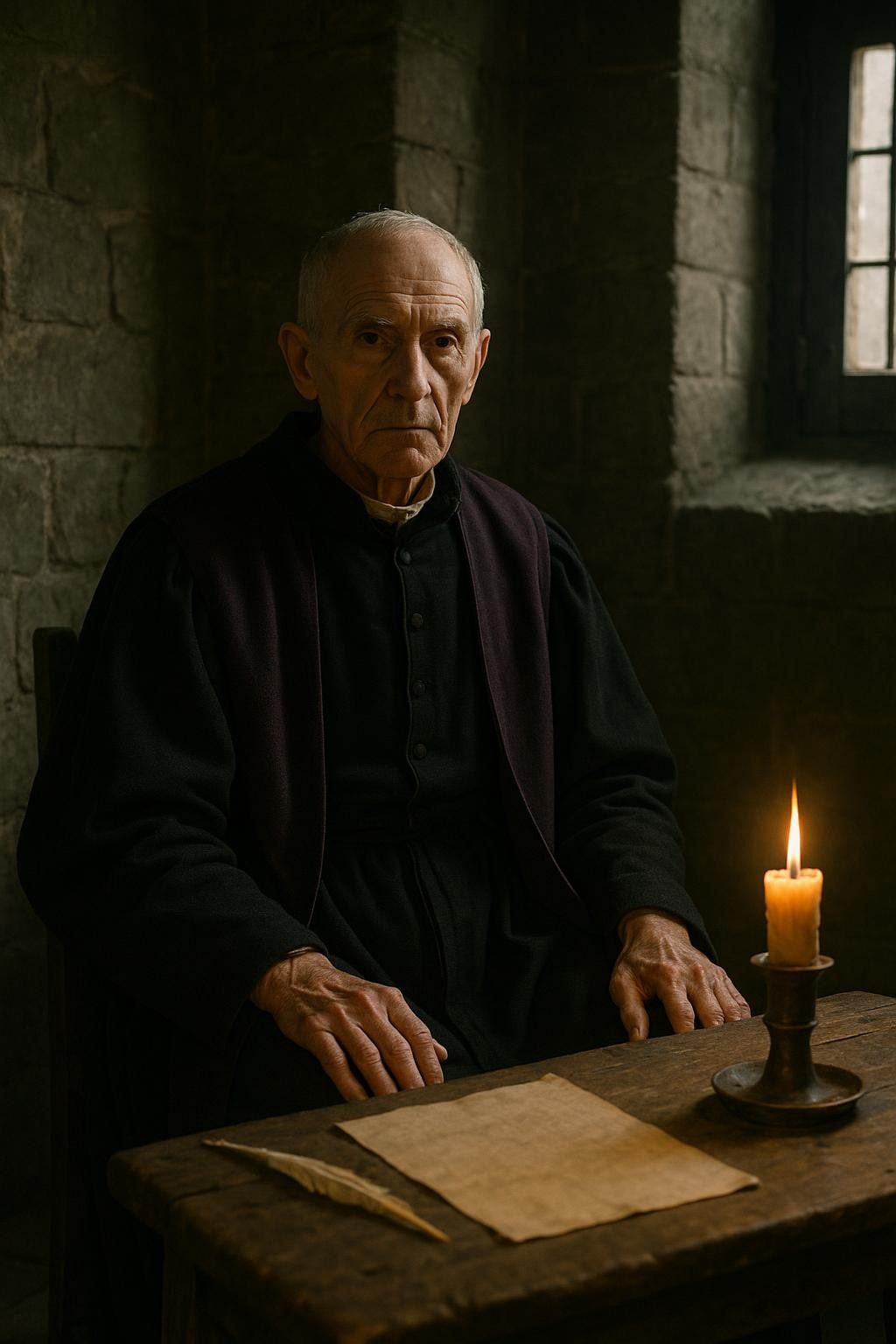
He was seventy-six, fragile and stooped with age, yet he stood unbroken against the king's demands. The man who defied Henry VIII had written books once celebrated across Europe.
The Intricate Tapestry of a Turbulent England
England in 1535 was a nation in upheaval. King Henry VIII, once the steadfast defender of the Catholic faith, had turned his back on Rome, declaring himself the supreme head of the Church of England. His quest for an heir and the ensuing marriage to Anne Boleyn led to the seismic split. To cement this new authority, the king demanded all who held religious sway sign the Act of Supremacy. This decree not only granted him religious control but symbolized his unfaltering will.
Many bishops, perhaps weighing their fragile destinies against the monarch's formidable wrath, complied without hesitation. England's ecclesiastical landscape was at a breaking point as loyalties were tested, and allegiance was often synonymous with survival. But not all fell in line. One, a solitary bishop, stood apart, unmoved by the tempest around him.
The Unyielding Spirit of John Fisher
John Fisher was more than just a bishop. He was a scholar of repute, a guiding light in religious education, and a devout servant across multiple English reigns. Cambridge University flourished under his patronage; he was a luminary of theological thought, a guiding influence for academia and church alike. Despite health that had begun to falter, his mind was sharp and unyielding. To him, the integrity of his faith was the cornerstone of his life.
Read next: The Day a Tudor Chancellor Chose Death Over a Royal Lie
The spectacle of a solitary figure in a cold, echoing cell, faced with the untenable choice of life or death, captured the imagination of those who knew Fisher. Although each could guess the inevitable conclusion, few would align themselves with such profound sacrifice. Fisher understood the might of the pen, but in this instance, it was his refusal to yield the ink that left a mark of defiance echoing through the ages.
The Trial of Resolve
Amidst the damp, oppressive confines of the Tower of London, John Fisher's resolve was tested. Month after lonely month, the weight of solitude sought to break him. Yet, each passing day seemed only to steel his purpose. The narrow windows offered glimpses of a world that would soon turn away from one of its stoutest champions of faith.
Fisher’s trial was not just of his adherence to faith but also of the courage to face the consequences of a king's fury. Henry's court might have preferred another voice of dissent silenced swiftly and quietly, yet Fisher's refusal had stirred something profound, something that could not simply be executed away. As he knelt, bowed by neither age nor threat, his defiance was an act of homage to conscience, pledging allegiance not to king but to an unshakable internal moral compass.
A Hushed Reverence Amid Betrayal
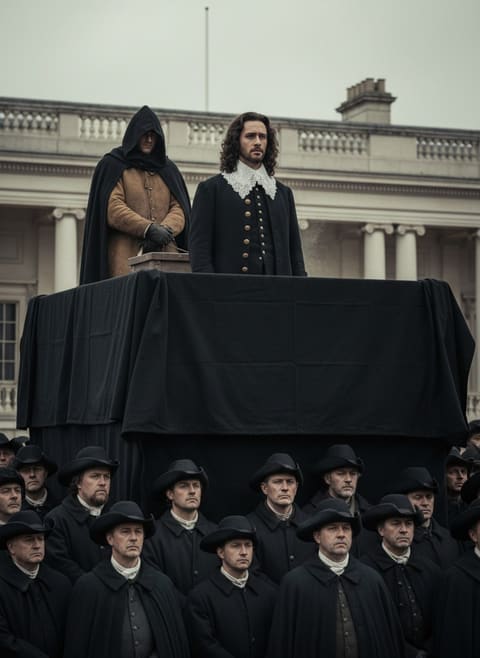
The act of taking Fisher's head was framed in formalities, a grim ceremony carried out with clinical precision. Yet beneath the apparent legality lay whispers of dissent among the Thames’s winding banks. No longer was it merely the removal of a defiant bishop; it was a fracture of the intellectual backbone of a transitioning nation.
Read next: The Day a Tudor Bishop Refused to Crown a Usurper
Among those witnessing the solemn act, there was an indescribable reverence intermixed with fear. These were dangerous times for resolute minds, where the price of conviction could be the chopping block. John Fisher’s steadfastness served as an emblem for the suppressed, his death a muted call to conscience for a part of England that would not go quietly into the new age charted by Henry.
Beyond the Veil of Time
The story of Bishop John Fisher needs no grand retelling to matter, for its essence lies in the simplicity of an old man’s choice between life and principle. Fisher's defiance speaks across five centuries to the universal struggle against tyranny and the courage it takes to maintain integrity amidst overwhelming pressure. Every detail, from the scholar’s pen to the echoing axe, carries a weight that shapes how history remembers resilience.
In our contemporary age, where voices often bow to the clamor of authority, Fisher's act of rebellion contributes a conduit for reflection. It prompts a necessary dialogue about the delicate balance between power and faith. The legacy of John Fisher survives not just in the stone of cathedrals or the pages of history books, but in the whisper of moral certitude he left in the hearts of those who choose to remember his solemn stand.