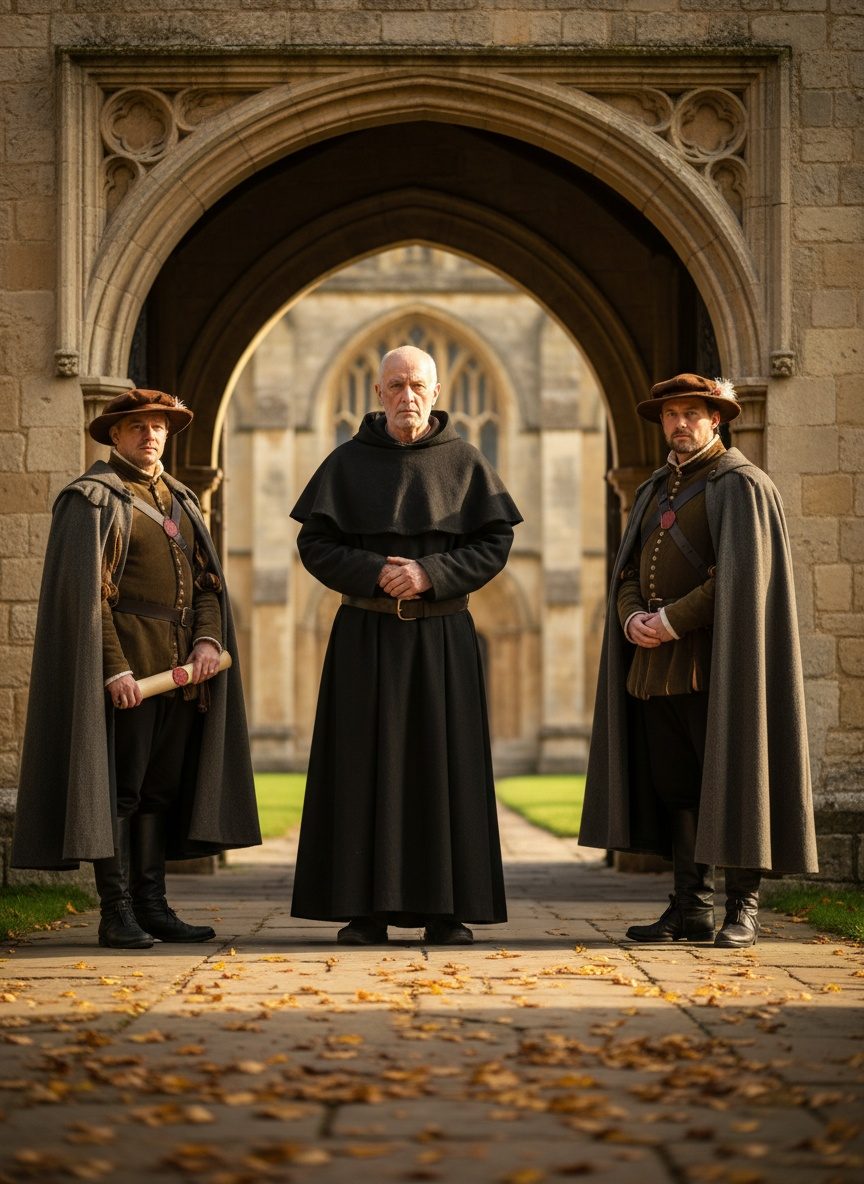
Richard Whiting was soft-spoken, even by monastic standards. Yet, when the fate of Glastonbury Abbey hung in the balance, he became a formidable voice against the purge sweeping the land.
The Monasteries' Last Stand
The year was 1535, and Henry VIII's England was steeped in a defining controversy that would reshape its spiritual landscape. Glastonbury Abbey, a beacon of religious and historical significance, found itself thrust into the thick of these turbulent changes. The king had declared a dissolution of monasteries, turning these sanctified places into casualties of reform aimed not just at ecclesiastical independence but political and financial control.
Ponder for a moment the irony: a monarch ensnared by the want of a male heir, promising ecclesiastical liberty from Rome’s grasp, in turn bound himself to a relentless campaign to control and redistribute the wealth of the church. Standing at the forefront of this ecclesiastical siege was Richard Whiting, the prior of Glastonbury Abbey, a man known for serene devotion rather than brash encounters.
Whiting's was no ordinary resistance; it was not driven by financial conservation or vain homage to tradition. Instead, it was a heartfelt plea to preserve a way of life that had fostered peace, learning, and service for centuries. As commissioners approached with Henry's decree, Whiting stood alone at Glastonbury’s gate, embodying a line drawn in the sand—one that spoke not of defiance but of guardianship over sacred heritage.
Read next: The Day a Cornish Surgeon Walked Into a Condemned Cell
The Silent Vigil
He faced them in silence, holding firm as a hundred vestiges of monastic life lingered behind him, unaware of their impending extinction. His entire adult life had been woven into the Abbey's gentle fabric. In the moments leading to the confrontation, Whiting's thoughts likely lingered on monks tending to their peaceful gardens, chant rising at dawn’s first light, and the timeless echo of prayer that resonated through stone—each a testament to a century-old sanctuary.
Onlookers may have viewed him as a relic of a bygone era, yet to those who understood the ancient significance of Glastonbury, he was a brave steward standing before the king’s might. The sudden stillness that enveloped the moment seemed to stretch eternity’s fabric, though it ended with Whiting’s simple resolve: *No*—he would not comply with the demand to surrender the keys.
The tale of Richard Whiting is more than one of defiance. It’s a story of courage fueled by conviction, of an unwavering belief in the integrity of his mission in the footsteps of generations that had come before him. Unknown to the public eye but vital in the annals of history, Whiting’s vocal stand that day reverberated beyond the Abbey’s gates, stirring souls across England.
Whispers of Retribution
In resisting Henry VIII's commissioners, Richard Whiting became an image burned into the national consciousness. His capture was not dramatic but marked a drastic turn in the rule of law; after all, standing against the crown was neither for the faint of heart nor without perilous consequences. What must have coursed through Whiting's mind as they arrested him could have been the near-echoes of a lifetime spent devoted to faith and the well-being of a community now left vulnerable.
The commissioners executed their orders with the king's ruthless determination. Whiting's arrest was quietly efficient, his calm demeanour a stark contrast to the furor of change enveloping the land. His disappearance soon after was shrouded in silence, leaving a lingering enigma at Glastonbury and questions that would echo through history.
Read next: The Day a Vicar's Son Walked Into a Debtor's Cell and Freed Them All
Despite his absence, the weight of his act of defiance remained a catalyst, stirring whispers of dissent and engaging the conscious unease of a populace grappling with the shifting normative landscape. Some viewed him as a martyr for the sanctity of past values, while others dismissed his stand as futile, albeit brave.
The Lasting Echo
Richard Whiting's final fate, though grim, speaks volumes about the uncertainty of Henry VIII's England—a landscape embroiled in the profound transformation of its religious and social identity. Threatened by change, Whiting's legacy lives on as a solemn testimony to how the unwavering spirit of individuals can defy the tides of power.
Yet, it is less Whiting's personal story and more his legacy that continues to infiltrate modern reflections on fairness, duty, and the sanctity of one's convictions. Whiting symbolized the sacrifice of those standing before the machinations of authority with moral resolve. This persona transcended itself, reaching beyond the physical confines of Glastonbury or the temporal boundaries of Tudor England.
As we look back on this obscure hero of everyday life, his story asks us to weigh the cost of standing in solitude against injustice and to consider the enduring value of courage. In Richard Whiting, we find a resonance that reminds us of the extraordinary potential nestled within ordinary individuals—the wisdom of knowing when a quiet voice makes the most profound impact.