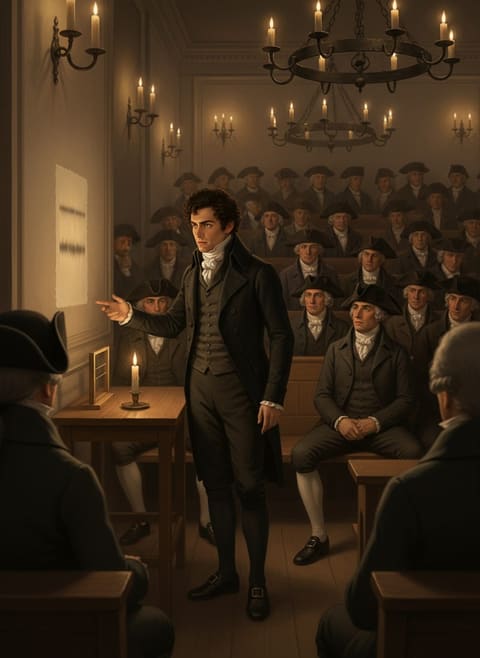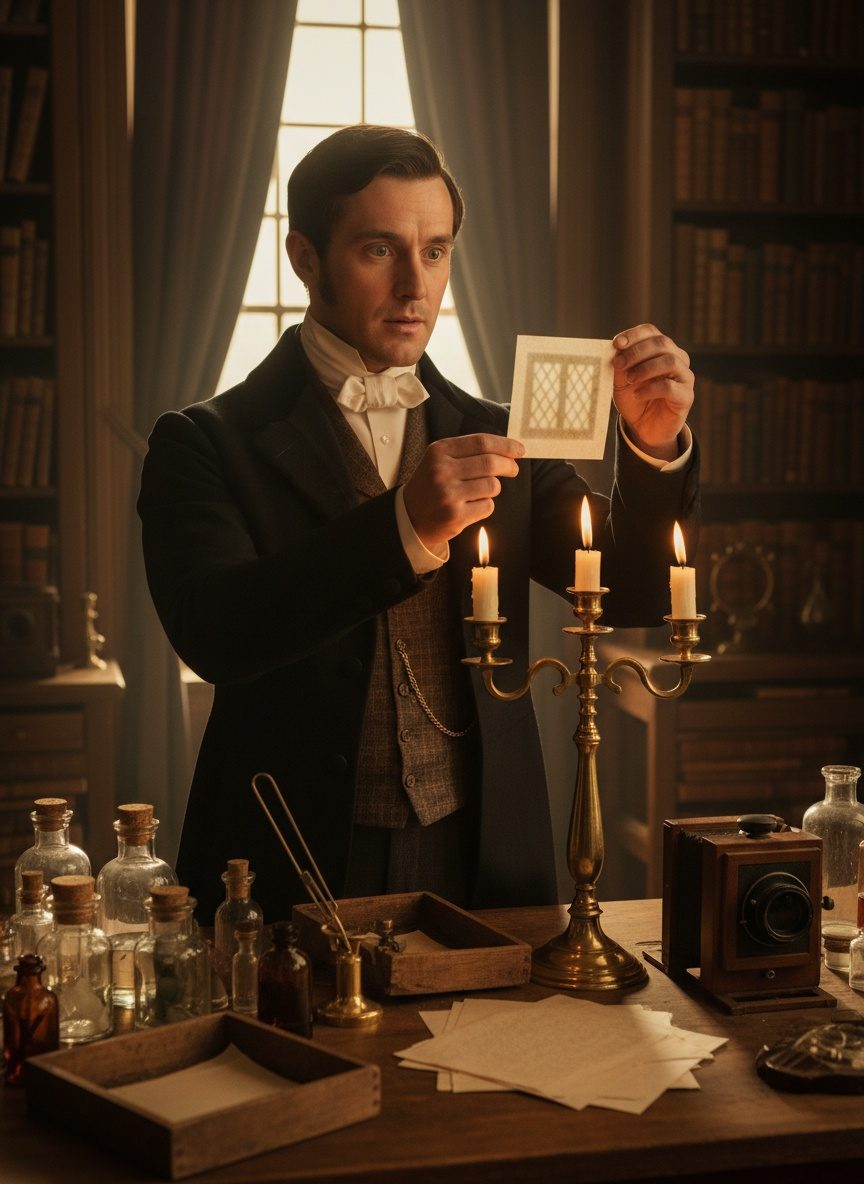
In 1835, a small sheet of paper changed the world. Yet, for years, the image on it stayed locked away from prying eyes.
The Wiltshire Experiment
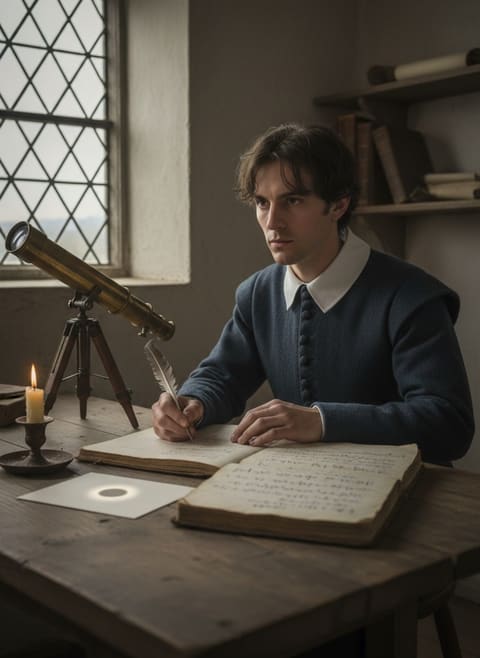
Willful, curious, and introspective, William Henry Fox Talbot was not the kind of man who stood aside as the Industrial Revolution roared through the nation. Born to privilege but enamored with discovery, Talbot found himself captivated by the emerging world of optics. In Lacock Abbey, Talbot’s home nestled in the rolling Wiltshire countryside, lush green fields hid the secrets of what would be revolutionary science. The year was 1835, and sunlight streamed through an intricately designed, lattice window. But this day was different.
In a moment filled with both precision and excitement, Talbot placed a small sheet of paper, sensitized with silver chloride, before the sunlit window. What emerged was a breakthrough—his paper bore the image of the window, complete with its delicate leaded panes and textured glass. The image wasn’t a sketch or a painting. It was a direct capture of the light, a likeness that could now be shared or hidden away for an eternity.
The Weaver’s Son
William’s interest in sciences and the arts had been nurtured from childhood. His father, though financially secure, connected his family’s fortune back to the weaver trades—a lineage entangled with innovation. But it wasn’t the bustling world of textiles that captivated William’s imagination. Instead, it was science’s power to unlock nature’s secrets that drew him in. An autodidact, he explored chemistry and optics, fields that occupied much of his scholarly pursuits.
Read next: The Day a Weaver's Son Mapped the Invisible World
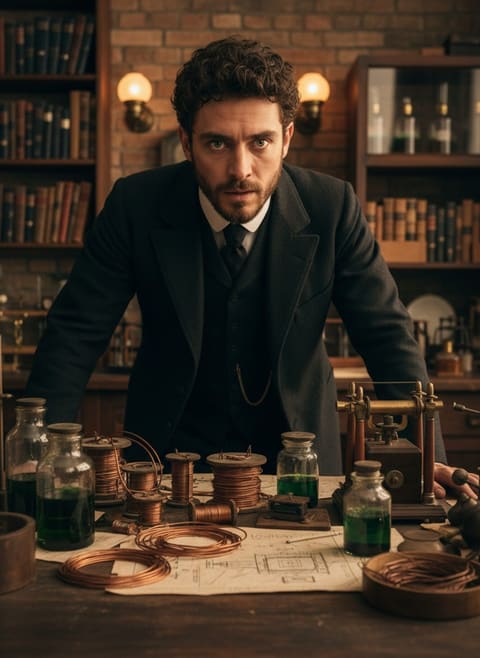
In the precision of his new process lay a harmonious convergence; photography was an art form fashioned by science’s exacting hand. Unlike contemporaries, Talbot's methods relied on the availability of ready materials, demonstrating ingenuity in improvisation. He utilized household items like salt, paper, and even tablecloths as part of his experimental apparatus. With an instinctual curiosity and relentless determination, Talbot was about to change not only the direction of his life but the future of human expression.
What the Camera Lucida Saw
Before that fateful day in 1835, Talbot had grappled with frustration over the elusive nature of keeping images. On vacation at Lake Como, he had painstakingly worked with a camera lucida—a tool designed to aid in drawing—that still required the labor of his unsteady hand. He longed to fix scenes quickly, to distill the wonders of the world into something palpable and true. The limitations of that instrument did not deter him but fueled a fervent resolve to explore uncharted realms of visual capture.
By casting aside traditional hand-drawn methods in favor of chemical processes, Talbot was trailblazing an entirely new approach. This drive to capture light more authentically led him to develop what he called "photogenic drawing". Unlike the fleeting influence of light-sensitive techniques employed by predecessors, Talbot’s method resulted in an image both intricate and remarkably stable, one resistant to the ravages of time and exposure.
A Moment Held in Silver
The day's work in 1835 left Talbot holding a miracle. What the world might have deemed impossible just moments before had now become tangible. Lacock Abbey was but one piece of Talbot’s cherished landscape. Even in isolation, the single image hinted at infinite possibilities—snapshots of a larger tapestry the world was yet to envision.
Read next: The Day a Clockmaker's Son Rewired How We See the Stars
Yet, Talbot was not one for immediate fortune or fame. His invention grew slowly in reputation, sharing its birthright with other pioneers across England and France who heralded similar breakthroughs. It wasn’t until later exhibitions and published materials that the significance of Talbot's contributions to the discipline became apparent. Still, many marveled at how an elegant lattice window became the keyhole through which future generations would gaze upon the past.
When Light Remembers
The year 1835 marked the beginning of a democratization of visual history that irrevocably altered communication and culture. From the humble experiment of a privileged recluse sprang a medium that would capture triumph and tragedy, mundane moments, and the sublime. Today, billions of photographs populate the virtual galleries of our digital age, each echoing back to that laconic window in Wiltshire.
The invention of photography was less about preserving the passage of time and more about capturing its essence. In allowing light to speak, Talbot forged a bridge between art and technology, forever altering humanity's capacity to remember. While many may never know of Talbot's quiet triumph at Lacock Abbey, every image shared is an unspoken tribute to the weaver’s son who first dared to hold light in his hands.