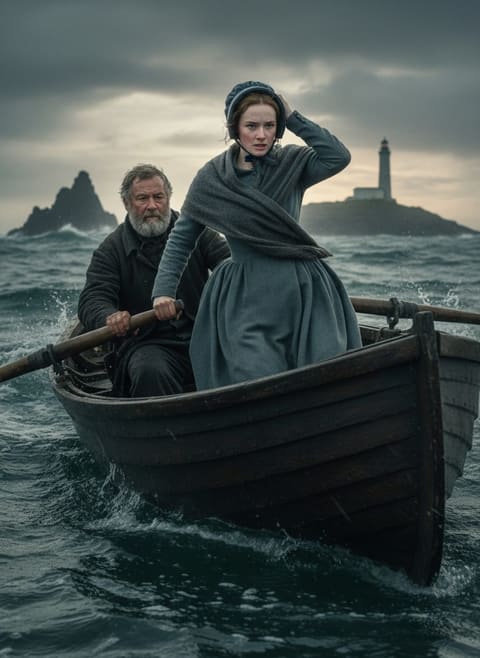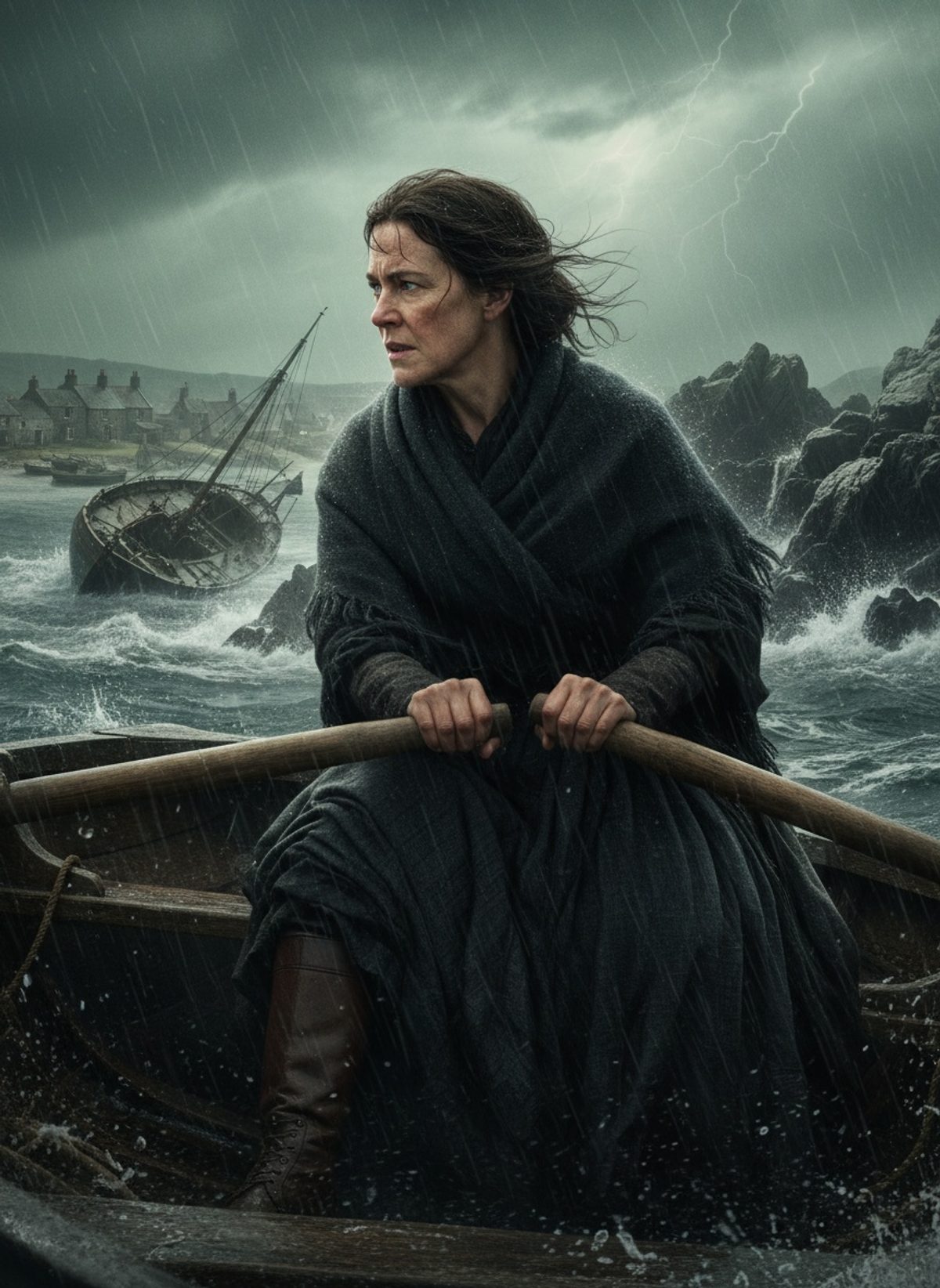
Wind howled like a banshee over the rugged Cornish coastline, whipping up white-capped waves that smashed furiously against the rocks. Mary Kelynack braced herself against the gale as she guided her small boat through the churning water, her hands raw from gripping the oars. Salt spray lashed her face, but her eyes never left the dark silhouette of the beleaguered ship, perilously close to being claimed by the sea. Eleven men clung to its splintering frame, their cries for help nearly drowned by the tempest.
The Storm's Wrath
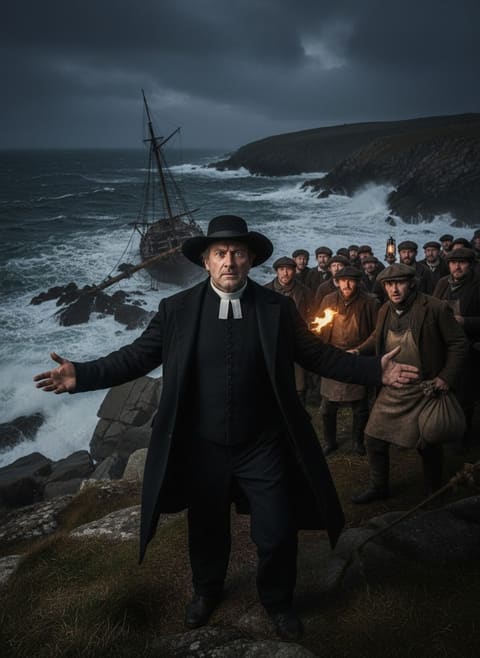
It was January 1865, and the Cornish coast was under siege by one of the fiercest storms to hit the region in decades. The Atlantic gales barrelled in with relentless force, wreaking havoc on any vessel caught in its path. The local lifeboat crew had already spent countless hours battling the elements, rescuing those ships unfortunate enough to drift too close to Cornwall’s rugged embrace. Exhausted and spent, they could do little more when yet another ship, tossed helplessly by the storm, struck the jagged rocks near Newlyn.
In this quaint fishing village, where every family owed its livelihood and legacy to the sea, the news of the wreck spread swiftly. But as fear and helplessness threatened to take root, one person refused to surrender to despair. Mary Kelynack, the wife of a fisherman and a woman indomitable in spirit, watched the clouds and listened to the wind. She had lived her entire life by the fickle sea, and she knew its moods better than most. With the cries of stranded souls echoing across the water, Mary wasted no time. Where others saw hopelessness, she saw a call to action.
Drawing on years of nautical intuition and steely resolve, Mary prepared her modest fishing boat, designed for calmer days and lighter tasks. Neighbours watched, some in awe, others in doubt, as she pushed off into the maelstrom. Her heart raced, not from fear but a fiery determination. Alone, she rowed against nature’s fury, each pull of the oars a testament to her grit, every stroke a defiance of destiny.
Read next: The Day a Quaker Tailor Walked Into Court and Freed a Man
An Unlikely Guardian
Mary Kelynack was not easily defined by the conventions of her time. In an era when a woman’s place was deemed to be well away from the perilous pursuits of men, Mary charged headlong into the kind of danger that stopped even seasoned sailors in their tracks. For the folk of Newlyn, her courage was singular—a story passed among local lips with an almost mythical reverence.
Her journey was perilous. The small boat bobbed violently, rhythms dictated by the storm, but Mary remained unshaken. Her eyes bore the focus of someone who had spent a lifetime discerning the sea’s myriad whispers. With each heaving wave, she drew closer to that desperate, fractured ship now pitching heavily beneath the leaden sky. The faces of the stranded crew, etched with the horror of men who had stared into the abyss, slowly came into view.
As she neared, Mary deftly manoeuvred her craft alongside the wreck. The struggle against the sea was far from over—if anything, it was beginning anew, with lives hanging precariously in the balance. She reached out, her voice cutting through the wind more powerfully than the storm itself, urging the men to grasp the wild chance she offered them. One by one, they clambered from the remnants of their forlorn shelter, driven not just by survival instinct but by the palpable hope kindled by her audacity.
Despite the odds, despite the weight of water and despair, she pulled them from chaos to safety. Her determination was not theirs alone; it was for the families silently praying on land, it was for the dignity and pride inherent in every wind-battered soul that called Cornwall home. And as the last sailor fell into her boat, disbelief mingled with relief, the line between life and death mysteriously redrawn.
Read next: The Swindon Song That Became a Generation's Grief
The Legacy of Courage
Mary Kelynack’s return to Newlyn was heralded by jubilance, the kind reserved for miracles. The villagers lined the shore, faces aglow with risen spirits, the earlier dread supplanted by relief and admiration. Word spread quickly; tales of Mary’s heroism rippled through the community, her name whispered with newfound reverence. What she had done was not just remarkable—it was transformative, a rare act of courage that defied not only nature but the limitations of societal expectations.
For years, the story of Mary Kelynack’s act of bravery would be recounted, an inspiring tale shared among fishermen, passed down through generations as a beacon of what sheer will could achieve. It was an emblem of human resilience against nature’s harshest trials, a shared narrative that spoke to Cornwall’s enduring relationship with the sea. Her tale evoked a respect for the inherent risks woven into the daily lives of those who drew their livelihoods from the water—a reminder that heroes often emerge not in grand displays but quiet, singular acts of defiance.
Mary’s legacy endures as a testament to the power of individual agency, anchoring history with an unsung valor that textbooks often overlook. Her choice to act, driven by empathy and an unyielding spirit, challenges the boundaries of what society considered possible. It compels us to reflect on the unassuming heroes who, throughout history, have defied the tides of fate. As long as there are storms and souls willing to brave them, Mary Kelynack’s story will echo, a reminder that heroism thrives in the most ordinary of hearts.