September 14, 1794. A crisp autumn wind rustled through the streets of Manchester, carrying with it a scent of fallen leaves and damp earth.
The Unassuming Pioneer
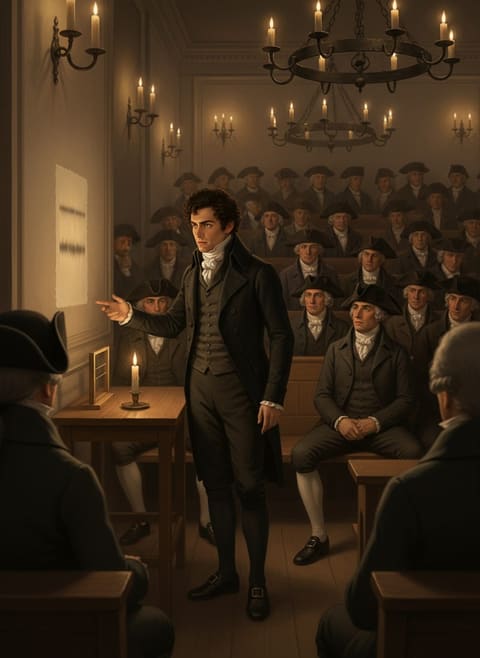
In the unlikeliest of places, a modest gathering at the Manchester Literary and Philosophical Society was set to witness a revelation that would alter the course of scientific understanding. Among the attendees, a sturdy figure of middle height and understated presence stood out — John Dalton, a Quaker schoolteacher hailing from the rural landscapes of Cumberland. Known for his unwavering dedication to scientific inquiry, Dalton approached the podium with a demeanor as unassuming as the worn grey stockinged feet that trod the path through Manchester's wet cobblestones. Yet those stockings, unbeknownst to him, were not grey at all; they were a vivid scarlet.
See the World Differently
Dalton’s presentation that day was unlike any other. It did not delve into the chemical compositions or algebraic equations that his peers had come to expect. Instead, it offered a glimpse into a world filtered through Dalton’s own unique lens, quite literally. He described how, from his earliest years, his vision seemed to betray him, distorting familiar hues into anomalous shades. What others recognized as vibrant reds and greens appeared to him in muted tones, indistinguishable from the mix of shadows and sunlight that danced along the stone facades of the city.
In a society where normalcy was rarely questioned, Dalton's admission was extraordinary. He articulated a condition lived but never named, drawing the audience into a world where colours shifted and merged. For many in attendance, it was the first time they considered that others might not see the colours they had taken for granted. With this admission, Dalton planted the first seed of awareness for what would eventually be known as colour blindness.
Read next: The Day a Weaver's Son Mapped the Invisible World
The Stocking Incident
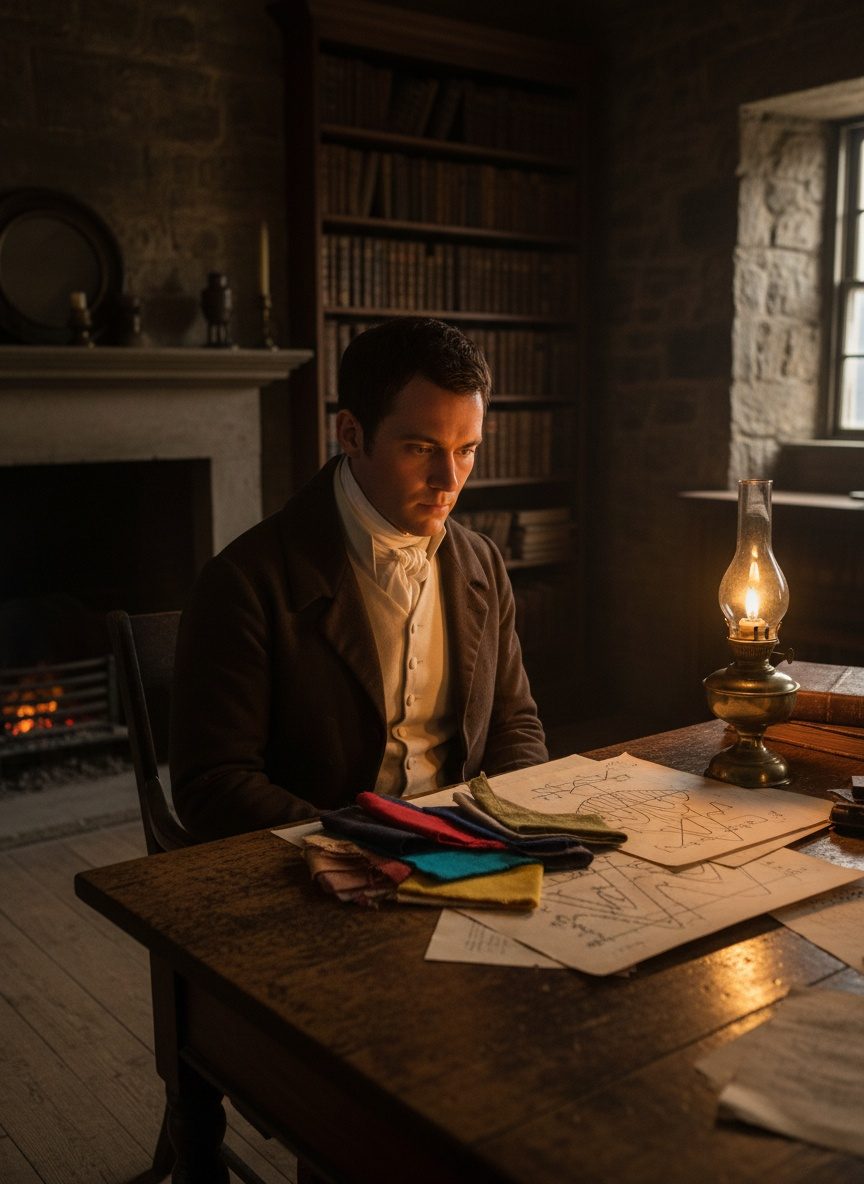
The origin of Dalton's insight into his condition was as markedly mundane as it was revealing. Throughout his life, he believed he donned sober, grey stockings. It was only a chance remark by a pair of observant eyes that corrected him — they were scarlet. This simple sartorial misjudgment led Dalton to ponder a fundamental question: could his perception of the world be so drastically skewed? This query propelled him into a period of introspection and experimentation, involving his brother, who shared his visual peculiarities.
In their pursuit to understand their vision, the Daltons engaged in comparison tests, holding everyday objects to the light, seeking patterns in their colour discrepancies. These initial amateur experiments marked an essential first step in recognising that vision was not uniform across individuals, a thought that had resisted formulation until that scarlet revelation.
The Quest for Understanding
Dalton’s investigations into his condition laid foundational stones for the burgeoning field of ophthalmology. What began as a self-examination evolved into a broader inquiry within the scientific community. His continued work underscored his theory that a transparent liquid blue-stained material in the eye was responsible for his colour perception — a hypothesis later proven incorrect but pivotal nonetheless. Despite his mistaken belief, Dalton ignited an academic curiosity that encouraged further research and elevated the dialogue around human physiology and perception.
Read next: The Day a Clockmaker's Son Rewired How We See the Stars
Fascination with colour vision anomalies spread beyond the narrow focus on Dalton himself. It sparked conversations in the nascent psychological and physiological discussions of the era, adding dimension to how individuals thought about perception. Dalton’s courage to vocalize his experiences debunked the notion of ‘normal’ human vision, ushering a new understanding that such common maladies could possess scientific significance.
Legacy of Perspective
Dalton would never solve the mystery of his colour blindness in his lifetime, yet his contribution to the field was profound. His unwavering quest to comprehend the world from his distinct point of view offered more than scientific insight. It provided a symbolic gesture of self-awareness and acceptance that has reverberated through centuries. What John Dalton accomplished on that autumn day in Manchester was not just an identification of a personal defect but a bold assertion that our understanding of the senses could embrace diversity and nuance.
He crafted the narrative of colour blindness not as an impediment but as a variant that enriched human experience, laying the groundwork for future explorations into the human mind and body. In the end, Dalton's life serves as a reminder that even the simplest facets of existence, like donning a pair of vividly coloured stockings, can lead to groundbreaking revelations about the way we perceive our world and each other.