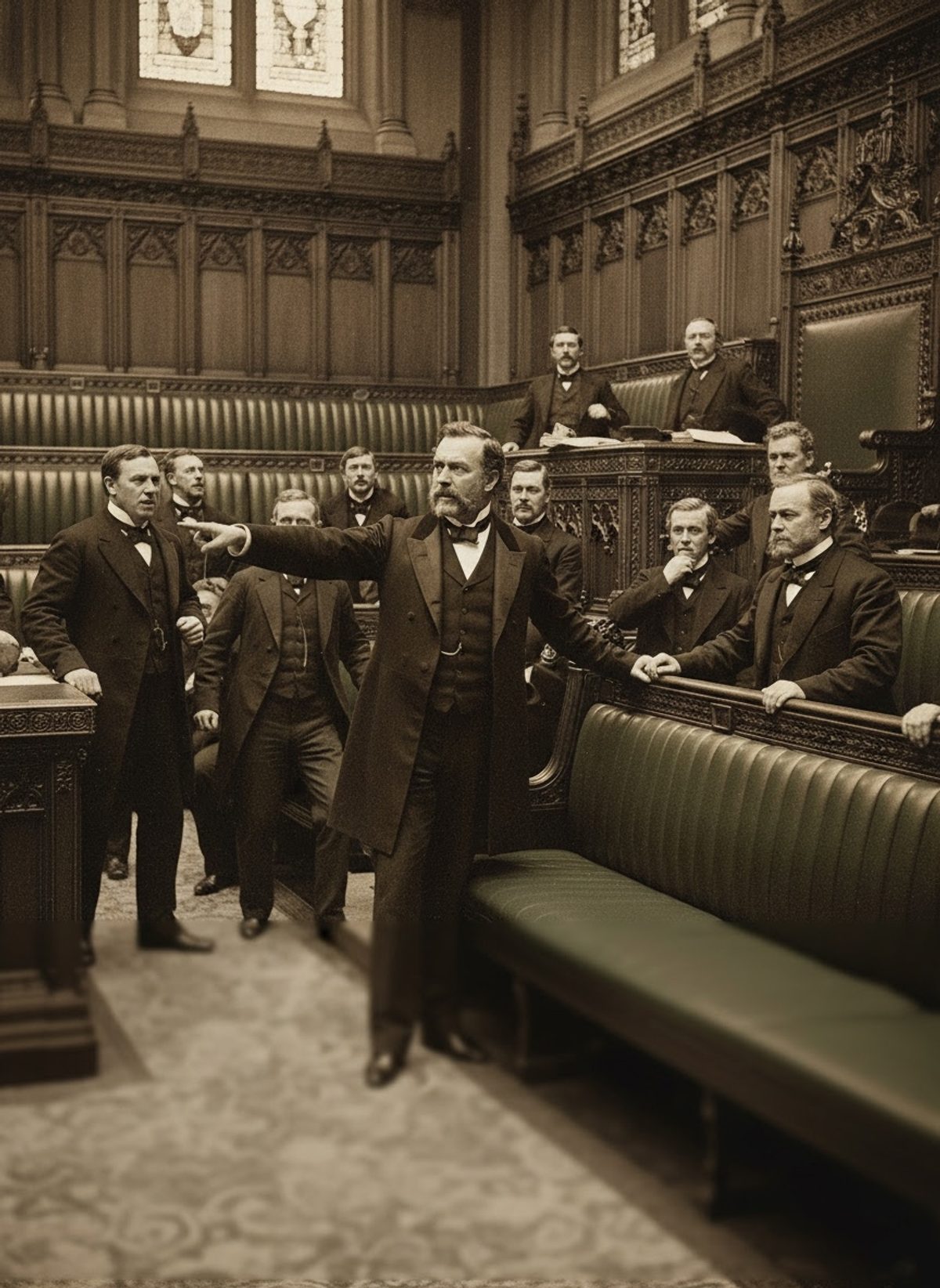
The air in the House of Commons was stuffy, carrying whispers of scandal and expectation. Samuel Plimsoll stood trembling slightly, not from fear but from fury. His voice cut through the air like a blade, "I tell you, they are murderers, every one!"
A shocked murmur swept the chamber, for an MP to accuse shipping magnates of such heinous crimes was unthinkable. But Plimsoll refused to back down. His eyes burned with conviction; he was a man making a stand against a deadly injustice that had claimed the lives of countless sailors.
Storms on the Sea and in the Chamber
By the summer of 1875, Samuel Plimsoll had spent nearly a decade fighting a losing battle. British merchant ships were routinely overloaded, sailing to their graves with grisly predictability. This wasn't just bad seamanship; it was cold economics. Greedy shipowners laden vessels beyond their limits, knowing insurance payouts would far exceed the value of the actual ships. Human lives—skilled sailors, husbands, fathers—became expendable casualties in the pursuit of profit.
Plimsoll, himself once an aspiring coal merchant, empathized deeply with these men. The perils of the sea were meant to be the dangers of nature, not avarice. He gathered data tirelessly, compiling a notorious "Black List" of owners whose ships were notoriously overburdened, like phantom ships setting sail under false pretenses with doomed men aboard.
Read next: The Lido That a Seaside Town Built to Beat the Depression
Despite clear evidence, his proposals in Parliament faced derision. The House was dominated by men who prospered within the same system that guaranteed the sowing of white caps with the souls of sailors. They dismissed his pleas with jeers and jibes about the impracticality of his suggestions. But Plimsoll's persistence made him a thorn in their side. He had toured ports, spoken with widows, collected stories of despair. His determination forged an unrelenting force of moral pressure.
Yet, for a long time, progress was stagnant. Bills were blocked, committees delayed, and inquiries evaporated into bureaucratic smoke. Little did they know that the summer of 1875 would set ablaze a firestorm even the cold waters of big business could not put out. That fateful day, his voice in the Commons was both a declaration of battle and an unquenchable cry for justice.
The Turning Tide
An expelling shock reverberated after Plimsoll's vehement accusation in Parliament. The Speaker demanded his removal, all the while cameras of public opinion slowly pivoted towards the real horror—thousands of sailors sacrificed each year to financial greed. On the rare occasion, the churning of history can be attributed to the actions of pivotal individuals. Plimsoll’s voice echoed far beyond the walls of Parliament, into pubs, homes, and the hearts of the British populace.
Press coverage brought the outrage into homes nationwide. Sketches of weeping families and scuttling ships were emblazoned on the pages of papers. A growing clamor from the citizenry fueled non-stop debates and forced complacent officials to confront their complicity. The maritime heart of Britain pounded in unison; public pressure became irrefutable.
Plimsoll was not deterred by official reprimands nor by the ignobility of forced silence. Instead, he spent his own resources to escalate his crusade. He penned pamphlets and commissioned speeches, extending a platform to the voices of the long-suffering sea hands and their families. His very name became synonymous with an earnest fight against systemic malpractice. Parliament could no longer ignore the tide that threatened their own legitimacy.
As the weather of British politics calmed, its turbulence stirred by Plimsoll's intervention, it became impossible to overlook a nation’s growing resolve. Change was inevitable.
Read next: The Day a Deptford Surgeon Gave London's Poorest Free Medicine
The Plimsoll Mark Sets Sail
The relentless journey culminated in victory when Parliament established legislation that enshrined safety rules which were both practical and enforced. Ships were now branded with the Plimsoll Line—a mark etched into their hulls, dictating maximum depth to which they could be loaded. This was more than a mere technical regulation; it was a beacon of necessity turned into legislation, speaking volumes about humanity against callous avarice.
This mark, appearing on ships worldwide, made a profound statement. It was a testament to those who had perished—a mark drawn by the unswayed compassion of one man for many. Shipping accidents diminished, replaced by secure voyages, a tribute to the tears and blood of those who would never return home.
Samuel Plimsoll’s dogged determination, his unwavering confrontation of powerful adversaries, and his moral victory rescued thousands of sailors from the bleakness of watery graves. What began as a solitary man’s innermost cry against injustice blossomed into a widespread movement that forced accountability and redefined respect for life. These acts remain etched not only in maritime law but in the collective conscience of the nation.
Today, the Plimsoll line insists upon a reminder that profit must never outweigh the value of a human life. It underscores a universal principle—justice, though delayed, can and must prevail. In an age swirling with challenges, perhaps this reminder is most timely: one voice of reason can indeed herald a tide of change, even in the most unyielding of institutions.