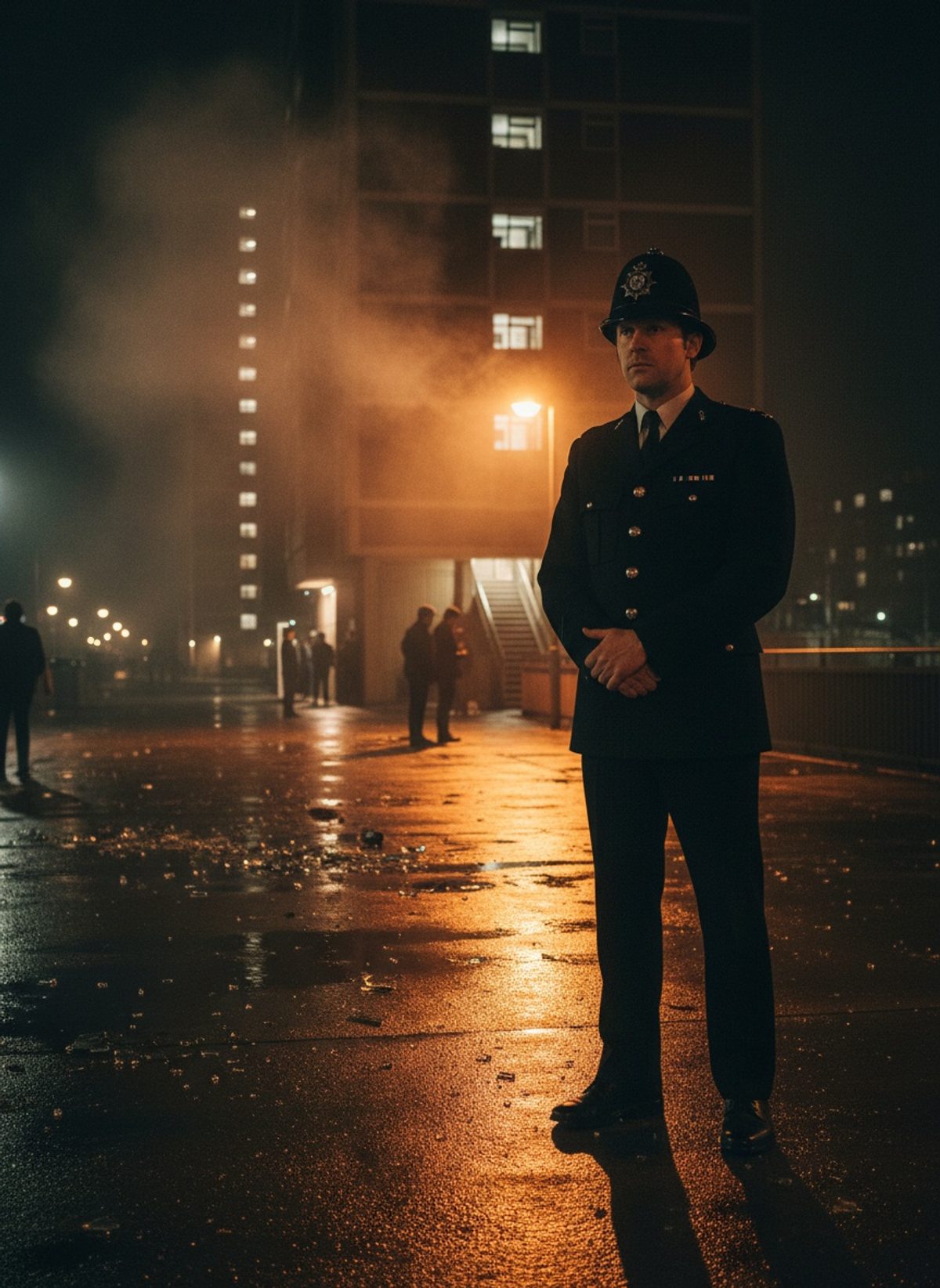
The crackle of flames illuminated the night as riot shields clashed against shards of glass, and voices—angry, defiant, and desperate—rose like an unyielding tide against the backdrop of Broadwater Farm's towering estates. What began as a simmering discontent ignited into a full-blown inferno on October 6, 1985, gripping the Tottenham community, and beyond, in its tumultuous grasp. Amidst the chaos, the life of PC Keith Blakelock was brutally cut short—a stark symbol of the violence and division that had developed under the surface of British society.
The Spark Ignites
The scene that erupted in Broadwater Farm was catalyzed by the tragic death of Cynthia Jarrett—a Black woman who suffered a fatal heart attack during a police raid on her Tottenham residence just three weeks prior. Her death, striking a raw nerve within the community, exposed a seething undercurrent of racism and mistrust towards the police that had been bubbling under the surface for decades. It was not merely the event itself but the atmosphere it underscored that compelled Britain to confront its neglected urban pressures.
Cynthia Jarrett's death was a seamless addition to a string of incidents that underscored systemic failure and repeated injustices endured by Black Britons. This was an era when "sus" laws enabled arbitrary stop-and-search practices that disproportionately targeted Black youth, sowing seeds of resentment and conflict. The helpless grief of losing Jarrett inflamed the residents' sorrow into a potent catalyst for collective action at Broadwater Farm.
From Ashes to Action
The evening of October 6 was more than an explosion of pent-up anger; it was the culmination of neglect, misunderstanding, and economic deprivation that plagued Broadwater Farm and similar communities. Days of build-up saw palpable tension rippling through the estate's concrete corridors. When the proverbial fuse was finally lit, the residents responded not by choice, but by an insidious feeling that their cries for change had been met with deaf ears.
Read next: The Day a Cornish Fisherwoman Rowed Out and Saved 11 Lives
Years of climbing unemployment rates had left families struggling to survive while government policies seemed indifferent to their plight. Tower blocks, once heralded as modern marvels of housing, became symbols of urban adversity, their dilapidated state serving as daily reminders of neglect. The structural failures mirrored the socioeconomic ones, breeding a sense of abandonment that haunted its residents. The riots, though violent, signified a battle against invisibility—not only grappling against a world outside but claiming space within it.
Ground Zero: The Day After
The events of that night left Britain reeling; the death of PC Keith Blakelock was the first of its kind on the British mainland since the last vestiges of imperial police operations came to a close. The weight of such a loss was not lost on the nation, but it further highlighted the chasm into which Britain had fallen. The streets of Tottenham may have quieted by dawn, but an inescapable question lingered: How did a nation priding itself on fairness and civility spiral into such turmoil?
History became a lens, examining why Britain had nurtured the circumstances that allowed such tensions to flourish unchecked. While official responses bandied terms like "thuggery" to describe the unrest, a more profound evaluation considered the systemic conditions that had catalyzed the discontent. Leaking from this introspection were narratives intermixed with anger and hope, grief and solidarity—stories shuttling from council estates to the heart of Westminster, demanding attention, prompt action, and deep-seated change.
Read next: The Yorkshire Boy Who Became One of Britain's Greatest Knights
Re-Valuing a Nation
In the tempest's aftermath, Broadwater Farm stood as much a warning as a lament—a dire call for examination and engagement that the country could no longer ignore. Across Britain, conversations grappled with the raw truths of racial inequality, urban deprivation, and systemic injustice. These reflections were not acts of the incident's perpetrators but collective acknowledgment of a legacy long-overdue for reckoning.
The events of October 1985 thus stirred more than parliamentary debates; they prompted a wider societal inquiry into the values Britain held dear versus those it enacted. Strides toward meaningful reconciliation and reform, though painfully incremental, emerged from the ashes—the resounding echoes of October 6, persisting into Britain's contemporary conscience.
In revisiting that historic inflection point, we unearth questions around identity and justice that resonate today, testifying to the unfinished narrative of progress towards equality. Broadwater Farm was not an endpoint, but a resurgence—reminding us that complacency bears consequences and that understanding, above all, is as much a refuge as a pathway forward.