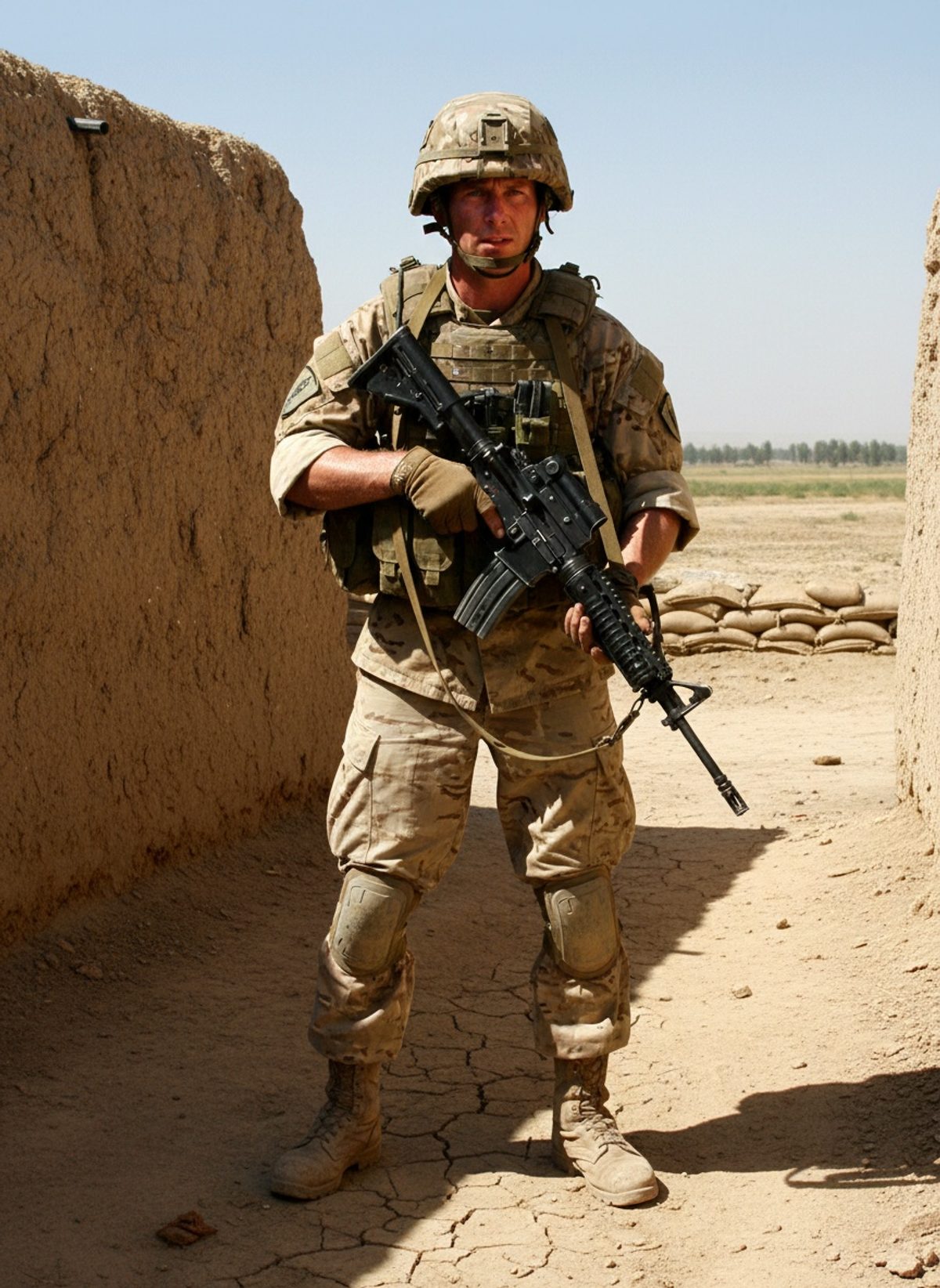
The Helmand River, shimmering under the relentless Afghan sun, snakes through a landscape where time seems to stand still. Dusty plains give way to jagged mountains; the air is thick with the heat of midsummer and the distant hum of cicadas. It is a setting that whispers of ancient conflicts and empires long gone. In the summer of 2006, this starkly beautiful, inhospitable region became the crucible for a small British battalion cloaked in unexpected peril. What commenced as a mission of reconstruction rapidly escalated into one of survival, as 3rd Battalion, the Parachute Regiment — 3 Para — found themselves engulfed in Helmand's deadliest summer.
They had arrived with grand designs of building schools and reducing poverty, backpacks brimming with the tools of peace. Those noble intentions were quickly overshadowed by a brutal reality unseen by most back in the UK. Within weeks of deploying, 3 Para fell into the fray, engaging in a staggering 475 separate contacts during their six-month tour. It was a deployment that eviscerated initial expectations — one platoon alone expended more ammunition than the British forces had during the entirety of the Falklands conflict in 1982.
For these men, the compound walls of Sangin, Musa Qala, and Now Zad offered scant protection. These villages, seldom touched by Western presence since the Soviet invasion two decades prior, became bloody arenas. The walls whispered stories of war in a most unforgiving tongue. Battles were often fought at night, under a starlit dome so clear that it seemed to mock the turmoil below. The pop of gunfire and the low thrum of helicopters became a constant cacophony, puncturing the silence of an Afghan night.
On the ground, young men quickly matured into seasoned veterans. Lieutenant Colonel Stuart Tootal, commanding officer of 3 Para, faced formidable challenges in an environment where the nature of warfare was in perpetual flux. Adapting to guerrilla tactics in a foreign land, where the enemy blended seamlessly with civilians, demanded more than just strategic acumen—it required resilience and an indomitable spirit.
Read next: The Day a Racing Son Inherited a Champion's Broken Name
The ferocity of the fighting was staggering. Each engagement was a test of endurance and skill. Tales abound of soldiers who, despite exhaustion and the ever-present specter of death, displayed extraordinary ingenuity and courage. A junior non-commissioned officer once transformed a humble agricultural vehicle into an improvised 'Warrior' to fend off enemy ambushes—testament to the creativity sparked by dire circumstances.
Yet, amid the chaos of combat, moments of humanity shone through. The soldiers’ respect for local customs and genuine attempts to engage with villagers helped forge the kind of fragile understanding that can transcend the brutality of war, if only for a moment. Such gestures often went unseen and unreported, overshadowed by the cloud of conflict.
Even as the summer waned, the heat of battle did not. For the men of 3 Para, each day became a reiteration of their precarious situation. The statistics tell only part of the story—16 of their number did not return home, a grim reminder of the lethal stakes in Helmand. But within these chilling figures lay countless untold tales of sacrifice and bravery, moments captured only in the memories of those who lived them.
Read next: The Day a Coventry Allotment Changed How Britain Rested
Of course, the shadow of Afghanistan extends beyond that summer. The repercussions of the British involvement, particularly in a role initially intended as non-combatant, reverberate through military and political discussions today. The shift from builders to warriors in the blink of an eye encapsulates the unpredictable nature of modern conflicts.
This story, of 3 Para holding their ground in Helmand, underscores a crucial truth—the face of warfare has evolved, becoming an entangled web where lines blur between soldier and peacekeeper, between victory and survival. It is a narrative reflecting the tenacity of those who walked into the furnace with the intent to sow peace, only to reap war.
As the dust settles over Helmand, where the scars of battle pockmark more than just the landscape, the events of 2006 remind us of the constant tension between hopes for peace and the harshness of reality. The summer 3 Para endured in Helmand might not be enshrined in textbooks, but it lingers in the minds of those who witnessed its ferocity—a testament to the resilience of soldiers thrust into the crucible of unforeseen conflict, armed with the weighty expectation to hold a line drawn in the sands of war.