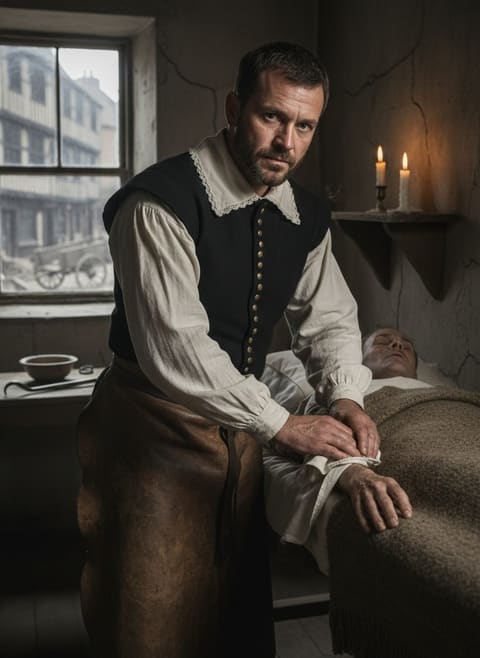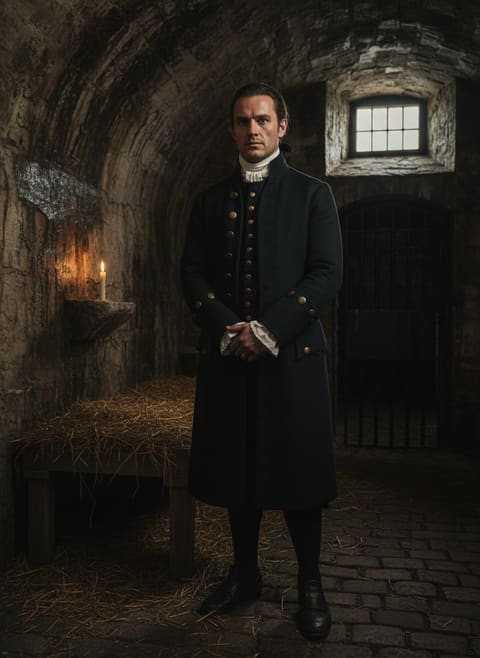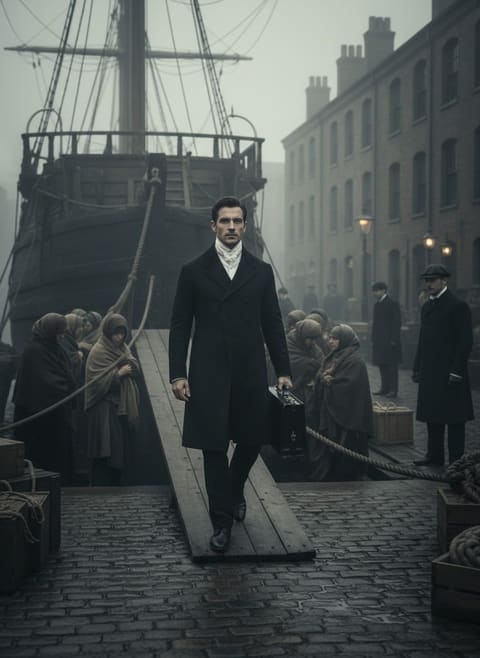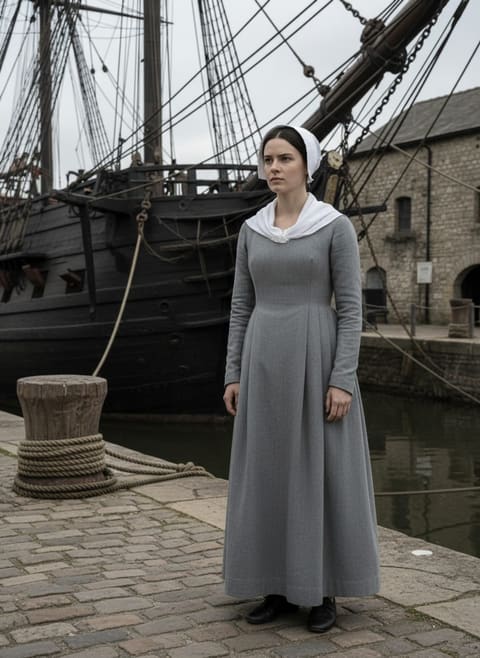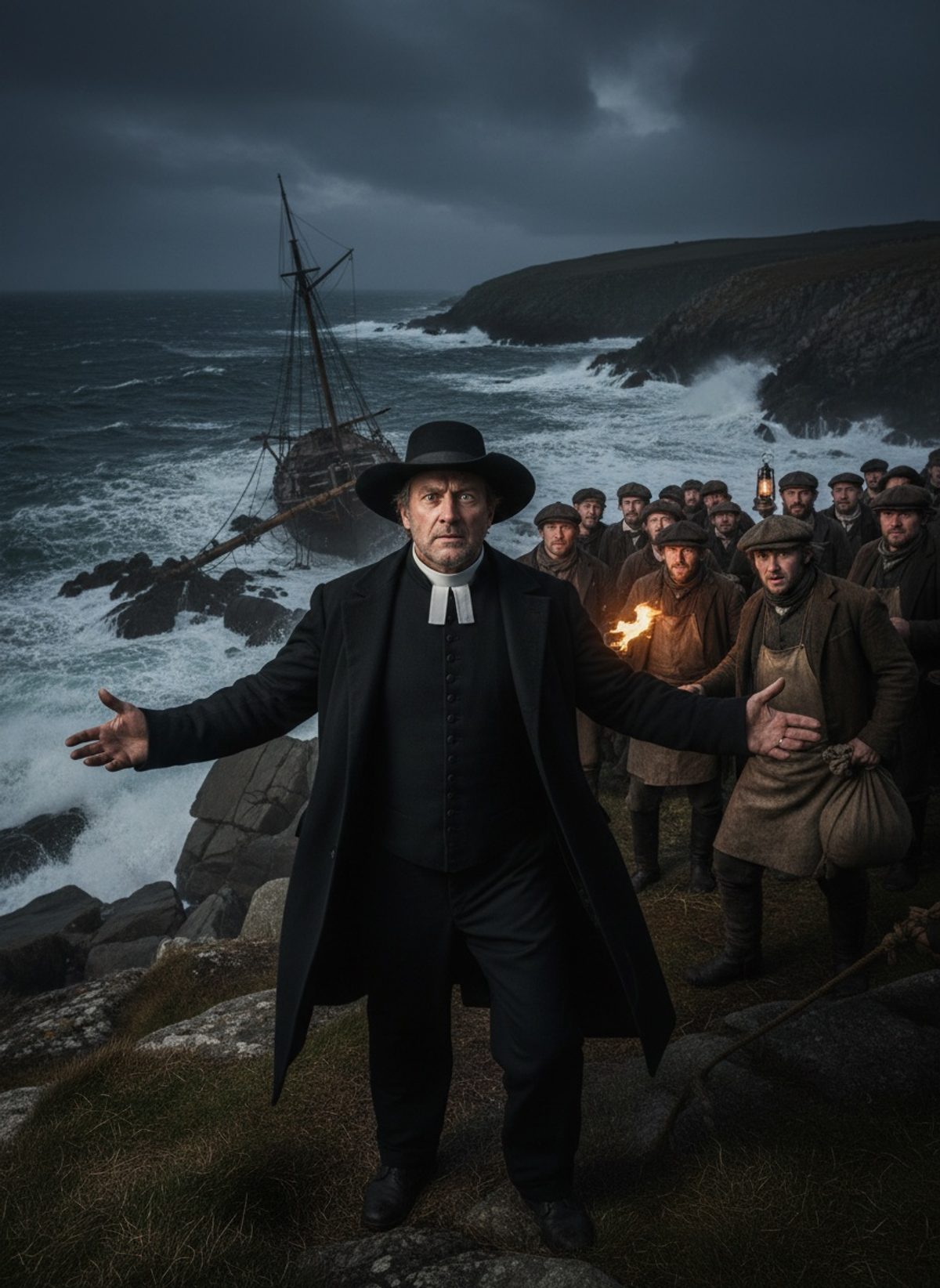
Night hung heavy over the jagged Cornish coast as the roar of the tempest battered the cliffs. Sudden bursts of lightning illuminated the chaos of the sea, revealing fragments of a wrecked merchant vessel, splintered and groaning under the merciless waves. A cacophony of voices, shouts mixed with laughter, carried over the wind as figures emerged from the shadows, eyes glinting with opportunism.
Tempest and Temptation
It was January 1807, and the coast of Morwenstow lay under the grip of a vicious gale. The unfortunate ship, an anonymous casualty in the litany of maritime disasters, had met its sorry fate against the unforgiving Cornish rocks. The tormented cries of the sea seemed to beckon to the villagers who, like moths to flame, were drawn not by charity but by the siren call of spoils scattered along the shore.
Wrecking, the act of plundering shipwrecks, was a grim tradition older than memory along these coasts. In many a heart lay the unspoken understanding that the sea’s wrath bore gifts for the living. Lights bobbed erratically through the darkness as men, women, and even children picked their way towards the wreckage. The chance of salvage was not only expected but relied upon as a harsh supplement to their meager existences.
But standing alone in the frigid embrace of the storm was the solitary figure of Vicar Robert Hawker. No more than forty years old, the vicar had made Morwenstow his parish some years prior, bringing with him a reputation as a man deeply kindhearted yet unwaveringly firm in his principles. Frequently clad in his characteristic clergyman’s gown, Hawker’s convictions were as resounding as the church bells, and tonight, they would face their sternest trial.
Read next: The Day a Coventry Allotment Changed How Britain Rested
A Defiant Sentinel
Hawker’s eyes were steely as he confronted the approaching mob. Torches flickered, casting ethereal halos that danced against the salt-laden mist. To many of these folk, he was the man who had presided over baptisms, weddings, and funerals, their confidant in matters spiritual and secular. Yet here, in this crucible of greed’s temptation, their relationship was about to be tested.
“Stand down!” Hawker’s voice carved through the din — it was neither a plea nor a command but a humble stone of resolution hurled into the torrent of avarice. He threatened no fire and brimstone, offered no quarter to shades of gray. Instead, with the spine of a righteous man, he appealed to something more elemental, more profound within each onlooker — humanity.
The vicar’s presence held an unexpected, almost bewildering power. While once the wave of plunderers would sweep forward without heed, the impassable figure in his path was not what they had anticipated. Robert Hawker’s courage was not in gesture but in this immovable resolve, challenging each man and woman to weigh the wreckage of their souls more heavily than the goods strewn across the rocks.
His defiance was potent enough to slow the villagers’ advance. A tension in the air sizzled, partly charged by the storm and partly by the vicar’s daring stance. Here stood a man determined to exert mercy and decency over a people whose desperation was deeply entrenched by circumstance.
Turning the Tide
It wasn’t long before the weight of Hawker’s resolve began to seep into the collective consciousness of the crowd. Faces flushed and lights lowered, the mob reluctantly fractured, the greed of the moment dissipating like mist under the sun’s eventual rise. Murmurs of dissent lingered briefly before the cold penetrated deeper, reminding them of the warmth of their homes and the sternness of their better angels.
Read next: The Day a Scots Girl Rowed Through a Storm to Save 13 Lives
Hawker’s vigil continued into the wan hours of the night as the wreckage lay scattered across the shore, a haunted battlefield of flotsam and jetsam. When at last he turned back towards the village, the dawn’s gentle hues framing the horizon, Robert Hawker knew he had nurtured a seed of change, fragile yet hopeful.
The true measure of Hawker’s heroism was not only in his solitary stand but in the lessons he imparted through action. It wasn't mere rhetoric that swayed the outcome; it was the embodiment of integrity in a time when moral compasses wavered under the weight of desperation. To his parishioners, this was a new testament inscribed not in pages but in the fabric of human decency.
As stories of his stand spread, Hawker’s name became synonymous with the vicar of stubborn virtue, the man who had reminded a storm-battered village of their shared humanity amidst hardship. His legacy lingered along the shores of history, a quiet insistence on the power of conscience over impulse.
In recounting the day a Cornish vicar stood between a mob and a wreck, we unearth more than a tale of singular bravery. This narrative whispers to us across time — it challenges us to consider how often the selfless acts of everyday individuals go untold, yet hold the capacity to reshape communities profoundly. In moments of crisis, when the tide rages and moralities flounder, sometimes all it takes is one person planting their feet firmly in the sand to remind us all of what it means to truly be human.