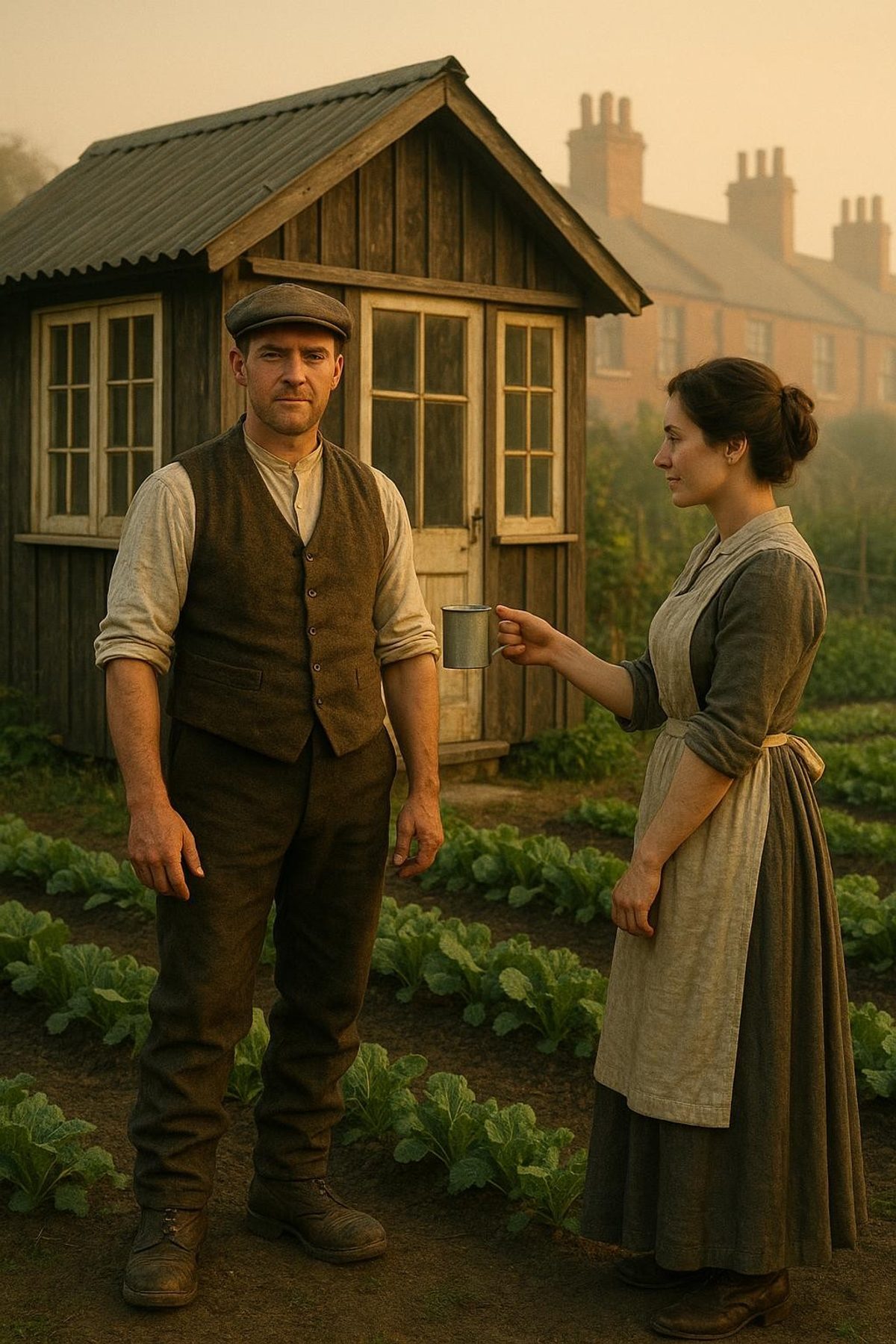
The soil felt cool and forgiving beneath William’s calloused fingers as he worked the earth of his small allotment on the outskirts of Coventry. The air buzzed faintly with the hopeful hum of a nearby bee, and the scent of rich loam mingled with the musty whisper of cabbage leaves. For William, as for many of his fellow city dwellers, this patch of land was more than a garden; it was an oasis, a place where the industrial smoke of the city was a distant blur on the horizon.
The Gentle Revolution of Gardening
By 1914, some 600,000 British workers had claimed their right to tend an allotment, a quiet but profound revolution sprouting in the heart of Britain’s bustling towns. This was no mere pastime. In a rapidly industrializing nation, where men were cogs in vast machines and women too often invisible in the shadow of smoke-belching factories, the allotment was an act of personal agency. It was as if the ground itself whispered to each laborer, “Here stands England, and here is a piece of it that belongs to you.”
Granted under the Allotments Act of 1908, these plots were more than practical. Originally envisioned to ensure the supply of fresh produce amidst burgeoning urban populations, allotments unexpectedly became havens of peace and creativity. Amidst rows of sturdy vegetables, all manner of modest wooden structures started to rise. These were not mere sheds but tiny handmade sanctuaries where a weary worker might rest, read, or simply sit with family under the soft warmth of a British summer afternoon.
A Handcrafted Haven
The Coventry allotments were a testament to human ingenuity. Modest summerhouses built with discarded timber and corrugated iron, these miniature retreats were crafted deftly on precious free days. Each structure, unique in its imperfections, mirrored the personality of its creator. It was here, amid the cabbage and carrot rows, that the idea of a personal retreat for the common man took root.
Read next: The Day a London Barber Walked Into a Plague Ward
Families poured their spare hours into these allotments, seasons measured less by the ticking of clocks and more by the ripening of peas or the first budding of a currant bush. The allotments became a multi-generational gathering place, a stage where old gardening wisdom was handed down along with hand tools, from weather-beaten fathers to eager sons.
Amid the murmur of bees and the rustle of leaves, these humble estates offered a radical idea: that ordinary folk were entitled not just to work, but to rest. To reclaim a gentle corner of nature was to assert, without words, that all people deserved living spaces that sustained both body and soul.
The Growing of Communities
These allotments weren’t merely personal retreats; they bred a new kind of kinship among neighbors. Paths beaten between plots gave way to conversations, to sharing seeds and stories. Innovations blossomed alongside gardens. Horticultural shows became annual highlights, fostering friendly competition and community pride.
The world beyond Coventry—and many towns like it—was changing fast. The first World War loomed on the horizon, economic uncertainties casting long shadows. Yet within the borders of each plot, there was solace and stability. Allotment owners became local heroes, their surplus produce often gracing the tables of less fortunate neighbors.
Read next: The Day a Cornish Surgeon Walked Into a Condemned Cell
Through digging, planting, and harvesting, city dwellers experienced a rare sense of accomplishment and belonging. It mattered little that their refuges were fashioned out of salvaged scraps. In those humble constructions lay a symbol of resilience—and transcendence.
The Legacy That Grows
In a landscape defined by industry, the allotments whispered of other possibilities. For many who walked the neat paths between rhubarb crowns and bean poles, these quarter-acre slices were the very first taste of private property, of the idea that they could own something in a nation where such luxury was reserved for the privileged.
To a modern observer, seeking a shaded sanctuary within these pocket paradises carried more than nostalgia—it came bundled with the story of a people steadily reclaiming their right to simplicity amidst complexity. In time, as suburbanization swept like a restless tide and city blocks began to eat into England’s green lungs, the legacy of the allotment’s quiet revolution called into question the very fabric of urban planning itself.
Though years have passed and the original intrepid gardeners have long since put aside their spades, the seeds they sowed continue to inspire. As each new generation turns to earth for respite or harvests its first bumper crop, the allotments stand firm—a reminder that within the tangled roots is the promise of personal freedom and enduring peace.