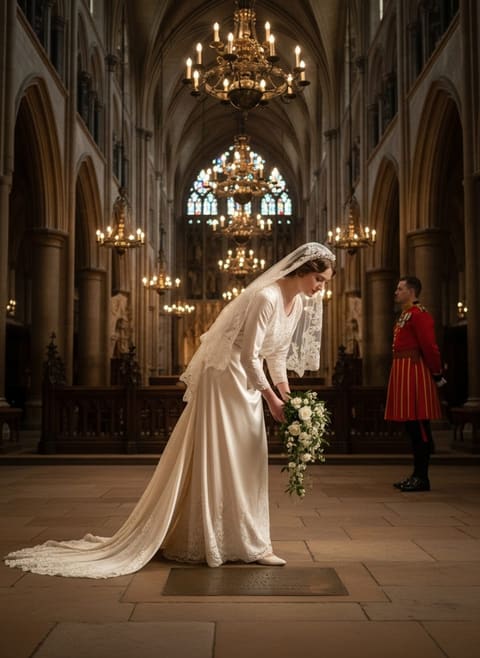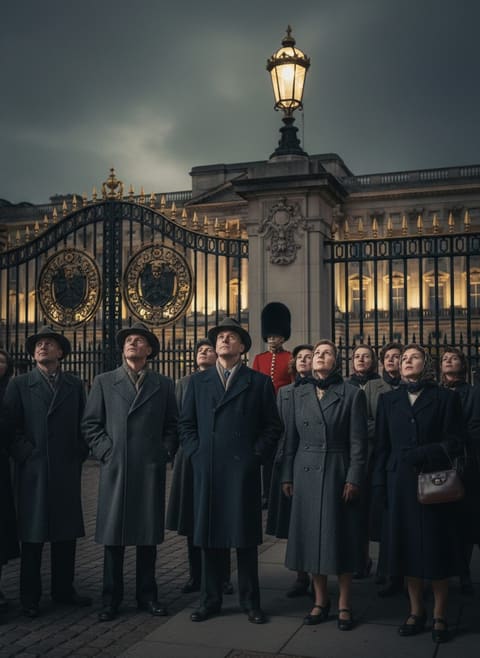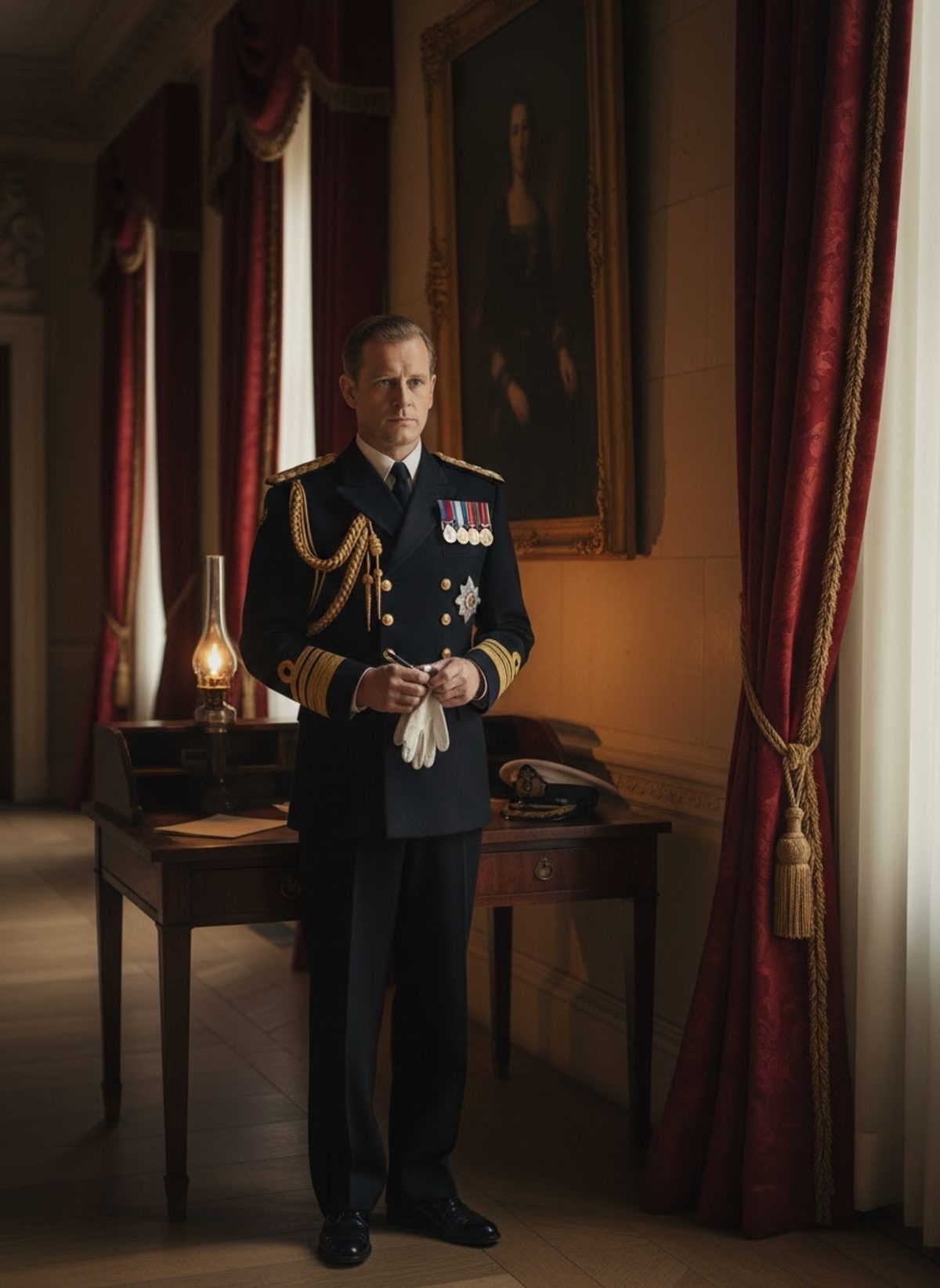
November 20, 1947. The Westminster Abbey bells echoed over a jubilant London.
A Night of Celebration
As the world emerged from the bleak aftermath of World War II, rejoicing in the unexpected beacon of hope that was the royal wedding of Princess Elizabeth and Lieutenant Philip Mountbatten. Inside the Gothic grandeur of Westminster Abbey, the ceremony unfolded with regal precision. Outside, the streets were alive with waving crowds, their spirits lifted by the union of Britain's beloved princess and her dashing sailor.
For Philip, though, the day was more than just a public spectacle; it marked the beginning of an arduous personal journey fraught with both love and complexity. On that night, he penned a heartfelt letter to his new mother-in-law, Queen Elizabeth, expressing feelings beyond any words in his vocabulary. This missive, brimming with sincerity and hope, would become a touchstone for the years ahead.
Few knew the depth of emotion and the undercurrents of sacrifice that the letter hinted at. Philip, once a promising naval officer, was about to learn the true weight of his decision to marry into the House of Windsor.
Read next: The Hostess Who Left Half Her Fortune to a Queen
The Anchors of Duty
Philip’s life before the crown was one of relentless ambition and promise. Born into the Greek and Danish royal families, his early years were marked by instability. His naval career was not just a professional choice but a personal passion, a means to forge his own identity. By 1947, he had made a name for himself, a rising star on the horizon of British naval leadership.
However, duty to his new role as the royal consort soon demanded that he relinquish his naval career. The decision was not purely voluntary; it came with the realization that he had traded one kind of service for another. In walking behind the Queen, Philip was expected to embody the ideals of silent support and duty, a role unsuited to his nature but one he grew to inhabit with dignity.
The world watched as he navigated his first year of marriage under intense public scrutiny. It was a time of adjustment, not only to marital life but to a new public identity. Even within the royal household, he found himself outpaced by tradition and protocol, often chafing against the restraints they imposed.
Adrift on a Royal Sea
By early 1952, the landscape of Philip's life shifted drastically. King George VI’s untimely death elevated Elizabeth to the throne, transforming her from princess to sovereign. Overnight, Philip's status changed immeasurably. The naval uniform he had adorned for years was packed away for ceremonies and parades, replaced by the constant and invisible demands of being the Queen's consort.
The overarching need for a stable monarchy meant Philip had to recalibrate his life's compass. What many did not see was how close he came to leaving royal duties entirely. Known for his forthrightness, Philip frequently expressed dissatisfaction with the limitations imposed by his position. The passion that had fired his naval career did not lend itself easily to a life in another's shadow.
Read next: The Christening That Made a Nation Godfather to a Prince
The question of identity and purpose loomed large, with Philip wrestling internally with a sense of inadequacy and confinement, while externally projecting a composed facade. He was no mere appendage, yet the complexity of his role demanded a discreet recalibration of expectations and self-understanding.
Legacy of Letters
Despite these challenges, Philip channeled his energy into numerous projects, supporting charities, modernizing the monarchy, and carving out a unique place within the royal apparatus. While the transformation was not without its friction, he found creative outlets that aligned with his personal ethos, like founding The Duke of Edinburgh’s Award to assist young people in personal development and community involvement.
The royal marriage that began with an uncontainable sense of love and admiration evolved into a partnership characterized by fortitude and shared purpose. Philip’s journey was marked by public duty but moved by private devotion—it was a balance of the extraordinary and the mundane, a life lived in service both to country and queen.
Philip’s unyielding devotion is perhaps best encapsulated in the letter he wrote that November night—one filled with words that transcended traditional expressions of love. His life mission became one of unwavering support and quiet ambition, a testament to the enduring and often unsung role of those who walk a step behind the spotlight.