Sunday, July 29, 1821. The sun peered through grey London clouds as a dazzling procession commenced.
The Diamond Diadem's Quieter Star
On this momentous day, George IV processed to Westminster Hall for his coronation, his presence as regal as the carriage that bore him. While the public's eye was largely drawn to his resplendent regalia, including the crown coated in the fiery sparkle of diamonds, rubies, and sapphire, one understated gem rested quietly in its place of honour.
Nestled at the heart of a front cross, above the brim of his velvet hat, sat a pale yellow diamond. This four-carat wonder, despite its modesty, had a tale worth telling. It was destined to sit upon the heads of queens, gracing them with a subtle shimmer that belied its extraordinary journey to the British crown.
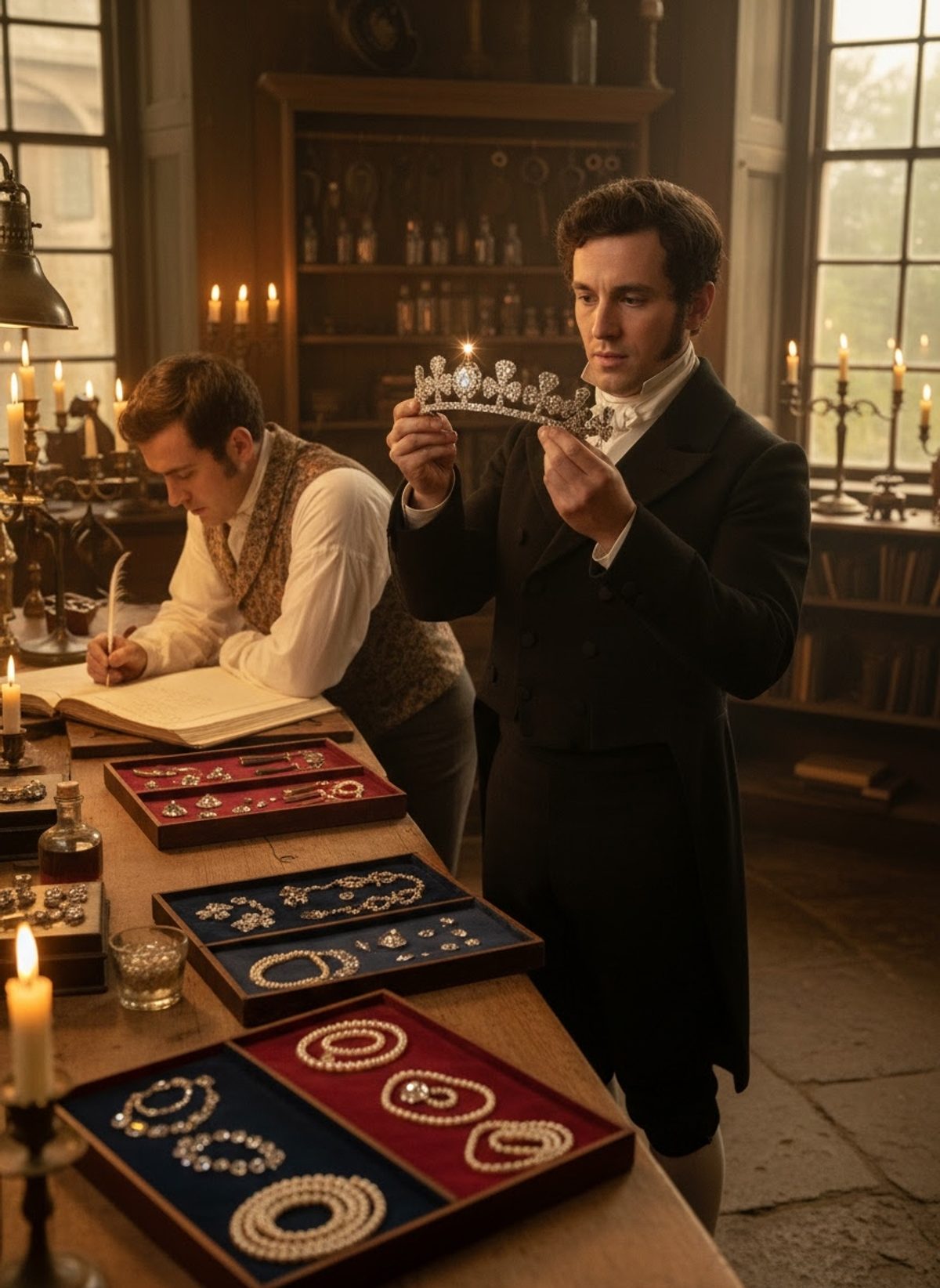
The creation of the Diamond Diadem by Rundell, Bridge and Rundell was as much a craft of artistry as it was triumph of royal indulgence. Its delivery in 1820 marked a lavish chapter, one wherein George IV spared no expense to establish his regal image.
Read next: The Christening That Made a Nation Godfather to a Prince
Though most focus rested on the grandeur of the overall piece, the pale yellow diamond at its center quietly asserted itself. In its soft glow lay a blend of opulence and subtlety, a symbol of a crown that would endure beyond George's reign and into the annals of British history.
A Velvet Crown for a Changing Nation
George IV’s lavish tastes were legendary, and his coronation was the zenith of his penchant for splendour. The velvet hat upon which the diadem rested was more than mere royal accessory; it was a statement.
Its rich, deep fabric complemented by the weave of silver held on the delicate frame seamlessly blended royalty with the exquisite craft. However, beyond the immediate opulence, it mirrored an era of transition and turmoil as Britain pivoted from the Regency period into the burgeoning industrial age.
This diamond and its diadem were not just about the glorification of one man. They encapsulated a nation's emotional landscape, reflecting an era that craved stability and tradition amidst rapid change. The yellow diamond connected the dots between monarchy and modernity, offering continuity through its enduring presence on the diadem, long after George IV’s own reign dimmed in the historical memory.
The Stone That's Always There
The yellow diamond’s lesser-known journey perhaps owes itself to the regal queens who made it iconic in their own right. From Queen Victoria to the present day, each queen has allowed this gem to retain its position above her brow during ceremonial occasions, respecting the quiet legacy it has built.
Read next: The Antiques Dealer Who Smuggled a Fortune Out of Revolution
Unlike its more flamboyant companions, the diamond had an enduring presence that connected generations of royals. Often outshone but never overshadowed, its consistent appearance spoke to its intrinsic place within the detailed diadem.
This gem became a part of a narrative that no queen has sought to rewrite, a continuity barely noticed but deeply significant. In its consistent place in history, the diamond proved that sometimes the quietest players are those who bear witness to the most profound stories.
Silent Watcher of History
As we pause to consider this unassuming diamond, the stories it could tell weave a rich tapestry beyond gemstones and royalty. It is about a symbol that, though seemingly minor, plays a major role in linking the past with the present. The pale yellow diamond bridges not only the reigns of numerous monarchs but also historical epochs, rooted in tradition and yet always progressing forward with the monarchy itself.
In the quiet brilliance of the yellow diamond, we see the enduring allure of history's subtle players. While grand narratives focus on the flamboyant and renowned, it is often the understated and consistent elements like this stone that offer a truer glimpse of resilience and continuity. As the present spills into the future, this gem will remain, high above a velvet hat—or perhaps beneath the glint of yet another crown—a silent observer of times yet to unfold.