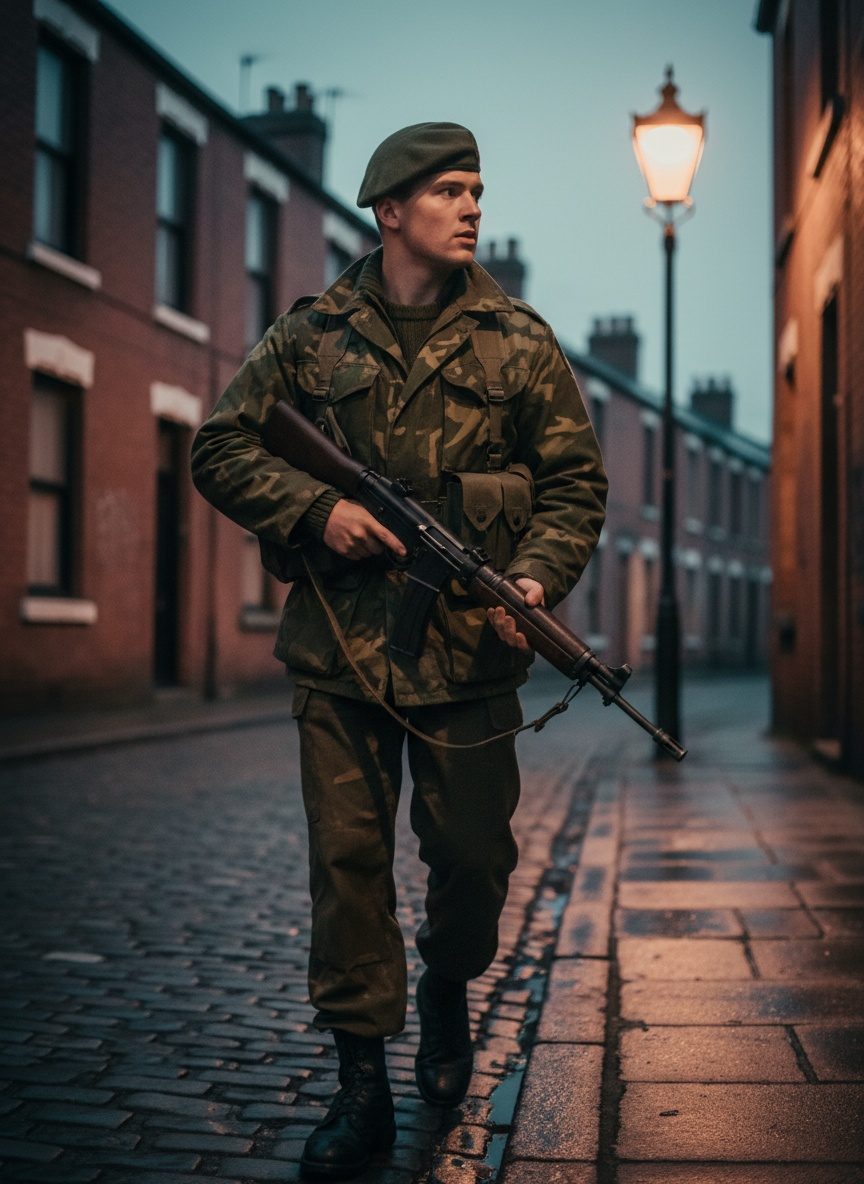
March 12, 1981. The streetlamps barely pierced the night, casting long, tremulous shadows on the rain-slick pavement.
In the heart of Belfast, amid the hum of a city that never truly rests, a young British soldier stood his lonely vigil. Here in Northern Ireland, amidst the ongoing turmoil of Operation Banner, countless young soldiers found themselves tasked with duties that would seem mundane, if not for the lurking danger that shadowed their every move. These young men, some barely out of their teens, were called upon to patrol the streets of a city tense with the threat of violence — a city that spoke the same language as their own, harboring streets and houses that bore a passing resemblance to those back home. Yet here, in the depths of the night, every shadow concealed a potential threat.
Operation Banner, the British Army's longest continuous deployment, was more than just a prolonged military engagement; it was a complex exercise in attempting to maintain peace in a region where old resentments simmered just beneath the surface. To the soldiers who stood watch, it wasn't just a job — it was an unyielding reality, a far cry from the training fields and manuals they had studied. In Belfast, every corner could be an ambush, every innocent-seeming street could erupt into chaos. The city's neutral facades whispered of danger and conflict, the invisible line between watchful peace and sudden violence perpetually thin.
The soldier’s senses were honed, his ears finely tuned to the sound of footsteps, the distant echo of laughter, and — always — the unnerving silence that often descended like a shroud, stifling and oppressive. In places like this, where the ordinary morphed into the extraordinary, the mind was given little reprieve, thoughts constantly dissecting each flicker of movement, each soft rustle of the wind. Stationed at his post, he could taste the nervous tension that permeated the air, like a heavy fog that would descend without warning, eliciting anxiety and the space to only imagine the worst.
Read next: The Day a Cornish Surgeon Walked Into a Condemned Cell
There were no grand battles here, no heady tales of heroism that were destined for the pages of history textbooks. Instead, there were moments of quiet bravery — the poignant kind that requires a soldier to confront his own fears and the piercing loneliness of the night alone. As the hours stretched on, the dark was somehow comforting and intimidating all at once, a paradox he had grown to understand all too well. The cold air was sharp, biting through the fabric of his uniform, a constant reminder of the vigil he had sworn to keep.
On some nights, snippets of life flickered past him. Families breaking bread behind warm, yellow-lit windows, taxi drivers ferrying travelers with their own stories, bits of laughter like shards of light in the dark. These glimpses of life provided a tether to normalcy, moments of humanity amidst the harsh reality of duty. Yet, within those walls, allegiance and animosity could live side by side, neighbors harboring diverse histories and loyalties stretching back generations. Here, trust was a commodity scarce as daylight in the heart of midnight.
In these unrelenting hours, each soldier bore witness to the weight of decisions made far from the blood and bone of the frontline. From Westminster came orders detached from the human lives they governed. But it was in the streets of Belfast, the echo of footsteps and harsh sound of hoarse whispers, where these orders took form, gritty and raw. For the young tommy watching the night unfold, this was a landscape carved by both politics and pride, a complex web that enveloped him in its entangled arms.
The young soldier's diary entries, if they existed, might have read like accounts from a surreal play with blurred boundaries between choreography and chaos. He would note the varying cadence of car engines, the erratic rhythms of footsteps, seeking patterns in the noise. He was, in essence, both actor and audience, imprinted with a sensory map as complex as the environment he surveyed.
Read next: The Day a Vicar's Son Walked Into a Debtor's Cell and Freed Them All
When dawn broke, spilling light over the city like a painter's wash, it bathed everything in an ethereal glow, and the depth of the night receded. By the time the streetlights flickered off, life resumed its rhythm, welcoming the hustle of day. New soldiers would take over the watch, their relief not marked by medals or fanfare but the exchange of a simple nod — a silent acknowledgment of a job done, another night survived.
Their tales are often left untold in history's broad canvas. Yet, in each night watched, each street patrolled, they carved their legacy with footsteps steady and hearts steeled against fear. Amidst the unresolved struggles and unhealed scars of Northern Ireland's perennially painful past, these young men stood firm, not for accolades or acclaim, but because duty demanded it. In this commitment to resolve, devoid of trumpet and ceremony, exists a quiet testament to the resilience of spirit against the darkness that comes from both within and without.
Today, as Northern Ireland continues to navigate its complex terrain towards peace, it leaves behind the echoes of these untold stories. The significance lies not in the disruption they witnessed, but in the tenacity to carry on despite it — ordinary heroes who, through nights held hard and days chased, exemplify the unwavering thread of endurance. Their stories may never light the pages of textbooks, yet they remind us of the filial twinships formed in the silence of the night and the sacrifices etched in shadow. For this, if nothing else, shines through the complex narrative of history — the unsung dignity of those who stood watch and refused to falter.