She wasn't born Dusty, nor was she naturally Springfield. Most surprisingly, her real name was Mary.
From Hampstead Beginnings to Dusty Dreams
On a blustery April day in 1939, a legend was unknowingly born in the leafy suburb of Hampstead, London. Mary O'Brien was her given name, but she would be known to the world as Dusty Springfield — a moniker that, much like her evocative voice, seemed destined to transcend the mundane. The transformation from Mary to Dusty began in the 1950s, a time when post-war Britain was awakening anew to a wealth of musical influences from across the Atlantic. Inspired by the melodies of Motown and soul, Mary yearned to reinvent herself, to become a bridge between the rhythm and blues she adored and the tradition-rooted music scene of her homeland.
Dusty's journey into stardom was anything but conventional. In 1958, she joined forces with her brother Tom and a friend to form The Springfields, a folk-pop trio that found modest success with their harmonious blend. Yet, it was Dusty's yearning for something deeper, something richer, that led her towards a solo career, marking the beginning of her true transformation. She cast off her Mary O'Brien persona, adopting the sparkling Dusty Springfield, a name that would soon resonate from the streets of London to studios in New York.
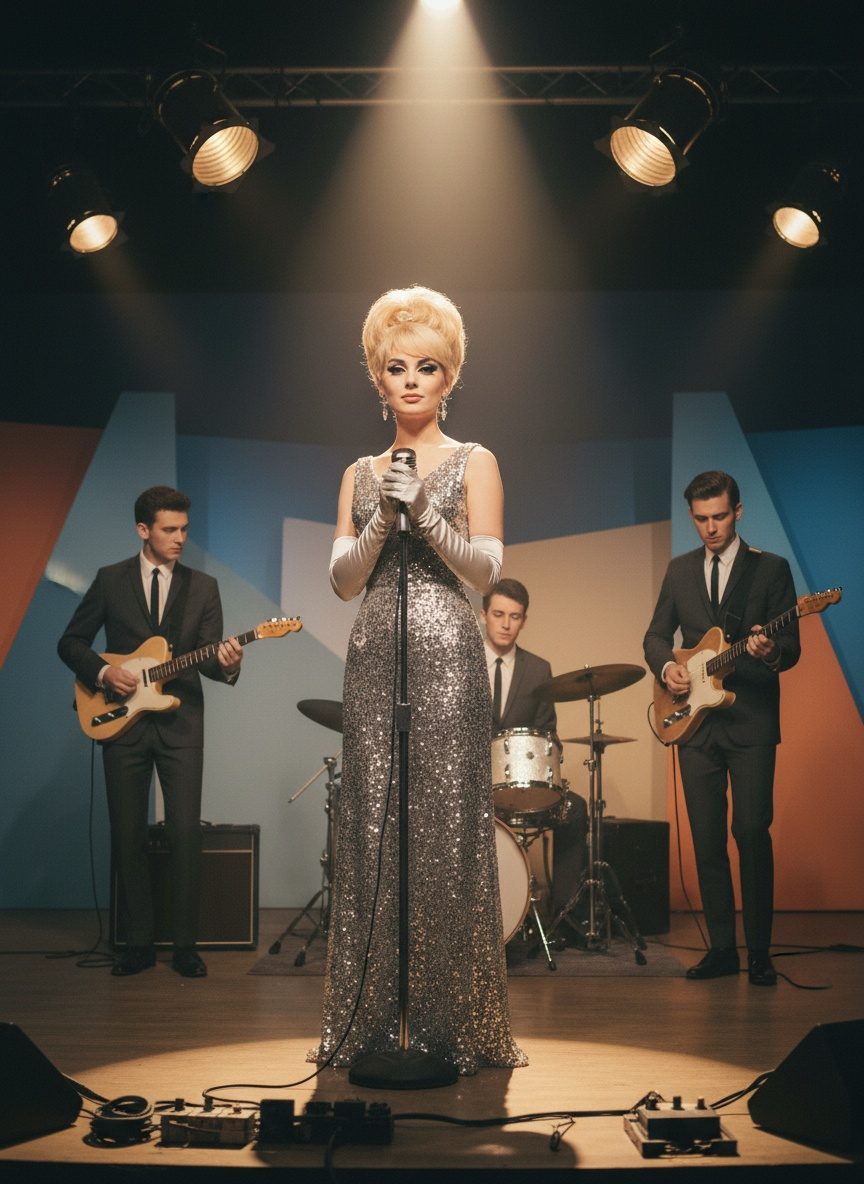
By the time 1963 rolled around, Dusty was captivating audiences not only with her voice but with her unique style. Her beehive hair, extravagant makeup, and dramatic stage presence were as much a part of her allure as the raw emotion she infused into every note. Her 1964 hit "I Just Don't Know What to Do With Myself" ascended through the charts, showcasing her ability to meld the sounds of American soul with the British pop scene. But despite her talents, Dusty Springfield was still teetering on the brink of true stardom, waiting for the moment when her voice would capture not just hearts, but history itself.
Read next: The Day a Cornish Surgeon Walked Into a Condemned Cell
The Night 'You Don't Have to Say You Love Me' Dazzled Britain
April 28, 1966, was a night like no other. Dusty Springfield stood at the precipice of music greatness as her hauntingly passionate rendition of "You Don't Have to Say You Love Me" soared to the zenith of the British charts. The song, with its stirring orchestration and heart-wrenching lyrics, encapsulated Dusty's ability to convey vulnerability and strength in equal measure. It was the pinnacle of her career in Britain, bringing soul into the very fabric of British pop music.
A chance encounter had led to Dusty recording this song, originally an Italian ballad titled "Io che non vivo (senza te)." Hearing it performed at a music festival in Sanremo, Italy, she was moved to tears. Dusty was convinced that English lyrics could capture the same essence of longing. With her characteristic determination, she adapted it alongside two British songwriters, Vicki Wickham and Simon Napier-Bell. The result was nothing short of alchemy, transforming a foreign melody into a chart-topping treasure sung in her uniquely soulful style.
Read next: The Day a Vicar's Son Walked Into a Debtor's Cell and Freed Them All
Under the bright lights of television sets, millions witnessed Dusty in her element, casting a spell with a voice that refused to be constrained by a singular genre. Her performance on this fateful night imprinted her indelibly on the cultural consciousness. Though this would be her only song to reach Number One, it cemented her legacy as more than just a pop sensation; she was an artist capable of transforming the familiar into something transcendently new.
Legacy Beyond a Single Chart
In the wake of her Number One hit, Dusty Springfield could have rested on her laurels, but she was nothing if not a relentless innovator. Her path over the subsequent years was marked by forays into vastly different musical territories. By collaborating with contemporary artists and contributing to the then-emerging blue-eyed soul genre, she continued to influence a legion of musicians. Though chart-topping singles would elude her, the essence of soul she injected into British music culture ensured that her voice would never fade from relevance.
The world of music during the 1960s was male-dominated, an arena where female artists were often pigeonholed into safe, sanitized roles. But Dusty Springfield boldly defied these conventions, crafting a legacy built on emotional authenticity and artistic bravery. Her willingness to immerse herself in the depths of soul music was a radical proclamation of her identity, one that inspired future generations to carve identities of their own.
Dusty's final years were a far cry from her chart-topping days, marked by struggles and eventual quietude. Yet, it was in Henley-on-Thames that she found a semblance of peace. When she passed away in 1999, the world mourned the loss of not just a singer but a conduit for genuine emotion. Dusty Springfield's story matters not because she once reached the top of the charts, but because she dared to infuse soulful honesty into every melody she touched. Hers was a voice that could never be silenced, a transformative force that continues to echo through the annals of music history. Her story, in essence, reminds us of the enduring power of authenticity and the indelible impact of forging one's unique path.