The crowded street in London thrummed with energy as passersby stopped to marvel at the unusual spectacle outside a shopfront. A lock, larger than life and crafted with the care of a master artisan, gleamed in the midday sun. The murmurs of hushed conversations mingled with the sounds of clattering horses and street vendors as everyone tried to grasp the boldness of the challenge before them.
A wooden sign dangled near the lock, its message simple yet astounding: 200 guineas to anyone who could open this defiant contraption. In that moment, one man's reputation—not just his fortune—hung in the balance.
The Mastermind Behind the Mechanism
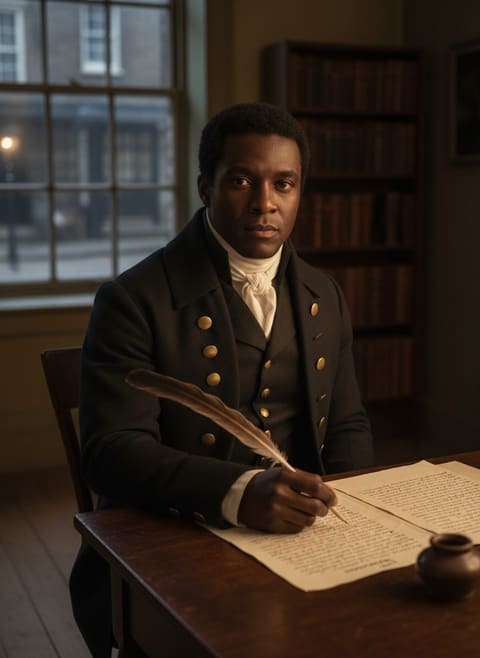
Joseph Bramah was not just any locksmith. Born the son of a Yorkshire blacksmith, his journey from rural obscurity to engineering fame is the stuff of legends. Bramah's hands, once familiar with the rough heat of the forge, had guided him through an unconventional path. Self-taught and driven, he possessed an innovative spirit that defied the expectations of his humble beginnings. By the time he displayed his lock, Bramah was not a man easily dismissed.
In the burgeoning Industrial Revolution, the stakes were high for inventors like him. London was a city caught between the past and the throes of rapid change, where the value of one's word was backed by the strength of one’s inventions. Bramah needed to prove the integrity of his latest creation, a lock so tenacious that it mocked the skill of any would-be cracksman. But in a city teeming with clever charlatans and desperate engineers, could his claim hold true?
Read next: The Tax on Bricks That Quietly Reshaped the English Countryside
The Challenge That Captivated the Public
The lock, bolted to Bramah’s shop in Piccadilly, became a sensation overnight. The challenge wasn’t just a test of skill; it was an invitation to dream and dare. Anyone with the imagination and nerve could attempt to unpick what had been declared unbeatable. Word spread across the city, from taverns to drawing rooms, of the lock that no one could tame.
The prize of 200 guineas was no small bounty, equivalent to a significant sum by contemporary standards. For some, it was a fortune; for others, it was the recognition and glory that could redefine their careers. Yet, despite the myriad of minds drawn to the challenge, none succeeded. Unclaimed the prize sat, and the gilt-edged promise of untold riches remained untouched, quietly asserting the supremacy of Bramah’s craftsmanship.
An Era of Inventive Ingenuity
During Joseph Bramah’s time, innovation was infectious, and the city of London was alive with the hum of progress. As the Georgian Era unfurled, alongside it flourished the age of mechanical invention, where every street seemed to birth an engineering marvel. Locks were part of the vital machinery of urban life, protecting everything from private treasures to public vaults.
Significantly, Bramah's lock employed a revolutionary mechanism. Unlike anything before, it utilized a cylindrical key and complex sliders, presenting a formidable challenge to any who dared to crack it. This was not merely a tool of security but a symbol of the age’s advancing technical feats. Yet Bramah was driven by more than protection; he was driven by the pursuit of mastery and the insatiable quest to challenge perceptions of limits and possibilities.
Read next: The Night a Bristol Merchant Stood Up and Freed 130 Slaves
Decades Untouched, A Legend Never Broken
As the decades rolled by, Bramah’s lock remained an unsolved enigma, its impenetrability unwavering year after year. The dusty streets of Piccadilly witnessed change after change, yet the challenge endured steadfastly. Those who once crouched before it, tools in hand and minds afire, faded from memory—or emerged humbled, having failed against its contrived complexity.
Joseph Bramah’s creation transcended the function of a mere lock. It became a monument to human ingenuity and determination. His bold wager, presented in full view of a skeptical public, was a personal testament to the power of persistence and the unyielding belief in one’s skills. Over 67 years, it held its ground as a quiet triumph, unnoticed in the great whirl of history yet unforgettable to those who learned its tale.
The story of Joseph Bramah and his indomitable lock serves as a reminder that the most profound victories aren't always the ones that reveal themselves in grand narratives but rather in the steadfast endurance of an unassuming artifact that guarded its secrets diligently. In a world relentlessly gauging possibilities, Bramah dared to draw the line on what was achievable, capturing the imagination and awe of generations in the simplicity of an unyielding lock.