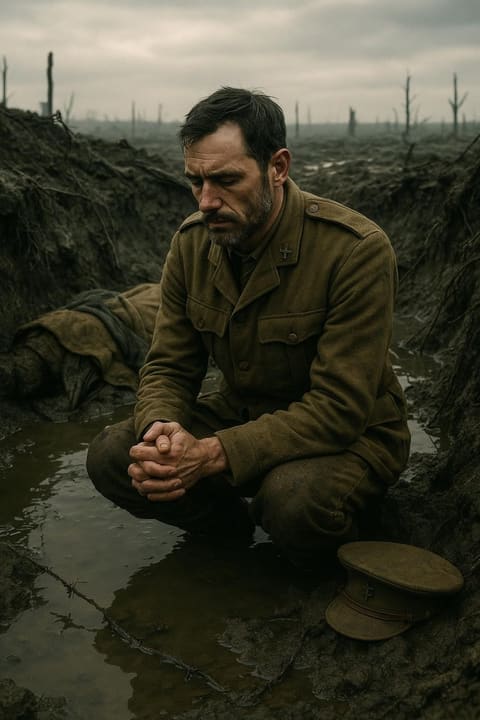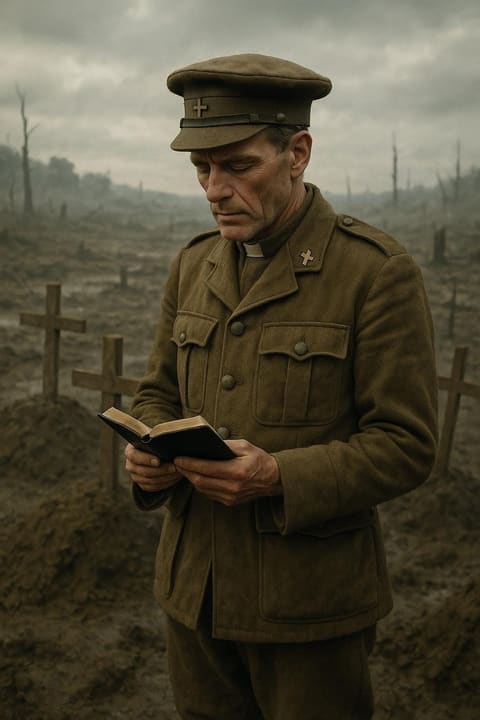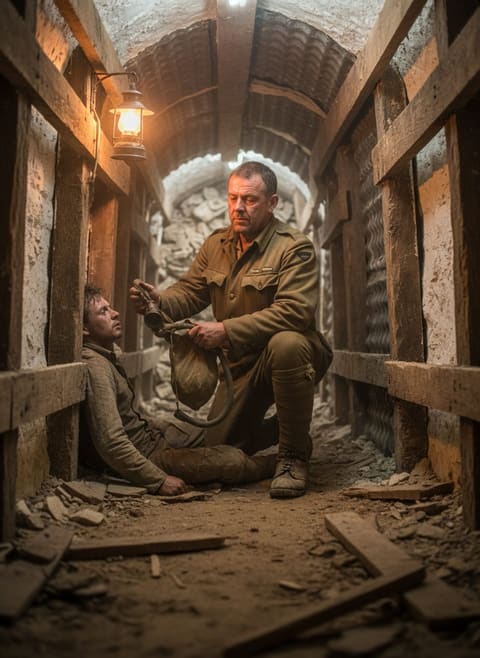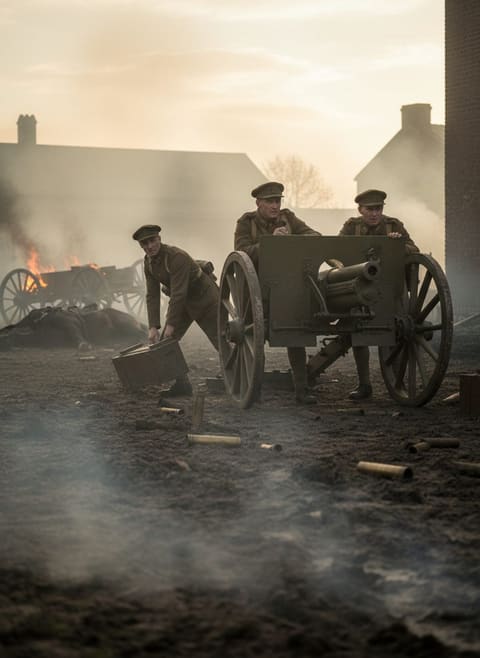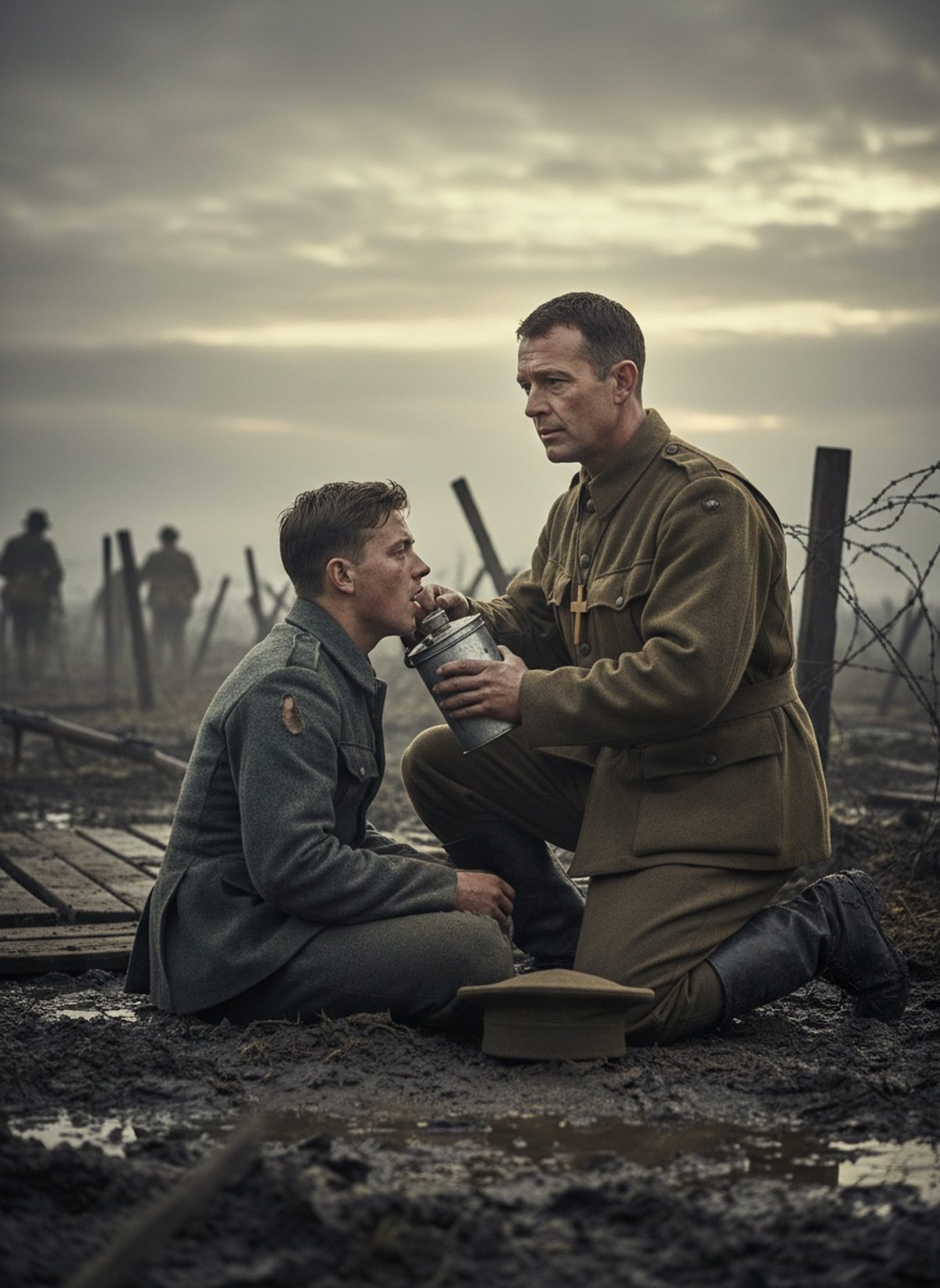
The bitter chill of autumn hung heavy in the air, an unwelcome companion to the torn landscape of the Western Front. The silence that followed the artillery barrage was almost eerie, a stark contrast to the cacophony of war that had filled the air just moments before. Mud clutched at his boots with every step, but Father William Doyle moved with purpose, his eyes fixed not on the familiar khaki of his comrades, but on the grey-clad figures lying in the churned-up earth ahead.
Through the Fog of War
No man's land, that dreadful stretch of desolation, wore the scars of conflict like a badge of despair. Here, amidst the twisted remnants of nature and humanity, Father Doyle found himself driven not by duty to the Crown, but by an unwavering conviction to the call of the human spirit. The cries he heard were in German, the language of the enemy, yet for him, it was not the sound of foes but the unmistakable wail of suffering that reached his ears.
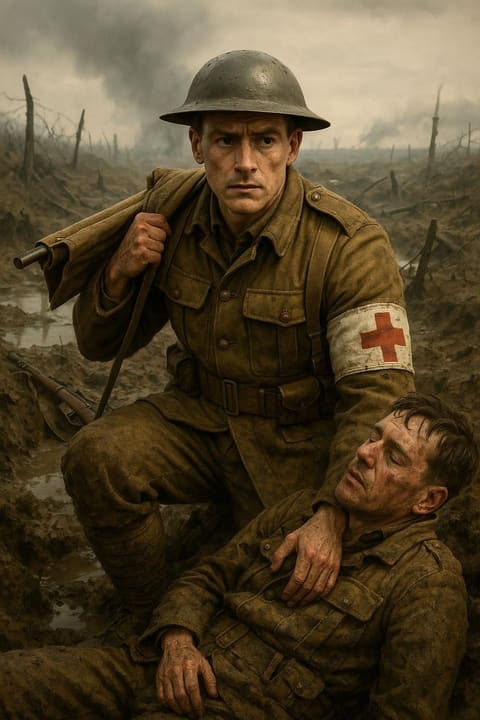
Approaching a young German soldier, barely a man, Father Doyle knelt in the mud beside him. The soldier's eyes, wide with pain and fear, locked onto his. In those eyes, Doyle found the common thread of humanity that transcended nationality and allegiance. Murmuring words of comfort, he offered the man water from his canteen, watching as parched lips parted to accept the gift.
As he moved among them, administering what aid he could, Doyle was oblivious to the astonished gazes of his own troops who watched from the trenches beyond. Mercy, in the theatre of war, was often a forgotten act, yet here it was, embodied by a single man who dared to listen to the better angels of his nature. The padre's faith was not confined to the walls of a chapel; it was alive, manifest in the muddy fields of Belgium.
Read next: The Day 55,000 British Troops Trained for a War That Never Came
The Courage to Stand Alone
Father Doyle's act was more than a humanitarian gesture; it was a declaration of courage in a world where lines were clearly drawn. In the strict military hierarchy of the time, compassion for the enemy was often seen as treachery. Orders were orders, and those who strayed from duty found little sympathy. Yet Doyle, guided by a higher calling, stepped beyond the barbed wire and into a moral liminality where few dared to venture.
Born and raised in Ireland, Doyle's vocation had always been one of service. His decision to accompany British forces as a chaplain was met with mixed feelings back home, where anti-British sentiment simmered amidst calls for Irish independence. Yet for Doyle, his mission was clear: where soldiers fought, he would bring solace. His dedication to the wounded and dying, irrespective of their origin, spoke volumes of the man whose faith transcended politics.
His actions on that battlefield might have been met with disapproval from some corners, but for those who witnessed it, it was a stirring display of courage. Doyle's presence bespoke of a deep-seated belief that faith could bridge the chasm of war, that courage and compassion could co-exist even in the heart of combat. The men he comforted, the prayers he offered — all pointed to a truth that defied the cannon fire and bayonets.
Read next: The Day a British Doctor Refused to Let His Enemy Die
The Legacy of Compassion
As news of Father Doyle's actions spread, whispers of his defiant mercy reached beyond the trenches. To his fellow soldiers, his unwavering conviction served as a reminder of the values that war too often obscured. Mercy knew no boundaries; it belonged to all, from the Irish chaplain to the German conscript.
Long after the guns of the Great War fell silent, the legacy of men like Father Doyle lived on, a testament to the enduring power of humanity in the face of adversity. His story, though perhaps absent from the pages of grand historical tomes, formed an invisible thread of compassion in the tapestry of history. For those who took the time to listen, it served as a gentle nudge toward the notion that even amidst the horrors of war, echoes of hope and empathy could endure.
In a century that has seen the fallout of two global conflicts and countless acts of violence, the actions of men like Father William Doyle remind us of the strength found in acts of kindness. As we look back at history's battlefield, we are gently urged to remember that sometimes, the smallest gestures of humanity are what truly define our legacy. The mud of Belgium, soaked in blood and sacrifice, also witnessed the seeds of mercy — sown by a humble priest who dared to feed the enemy first.