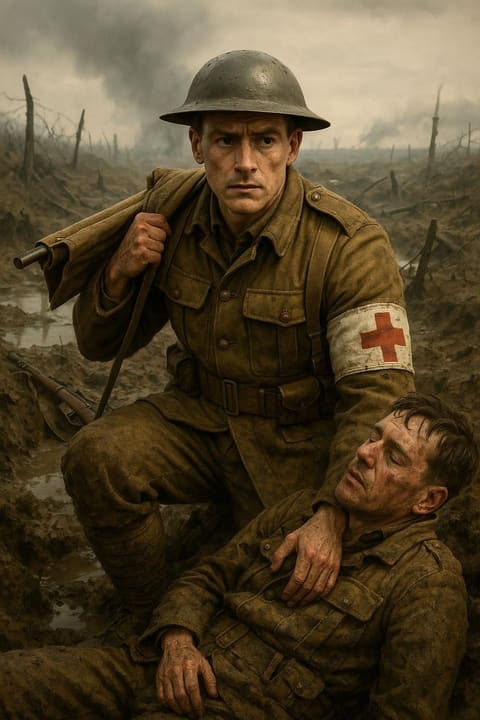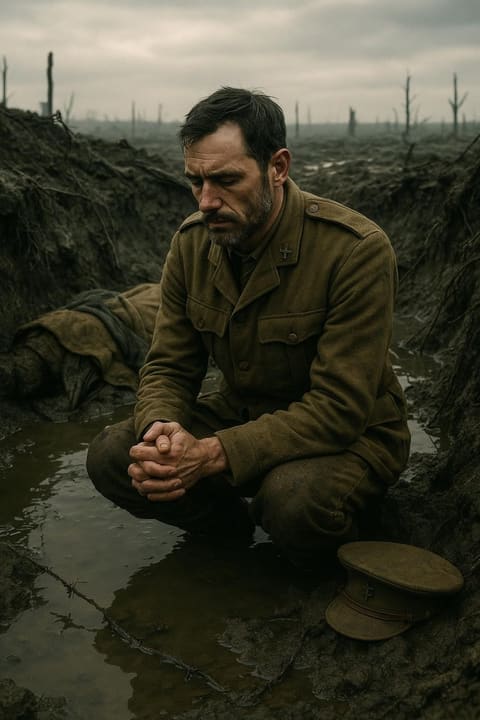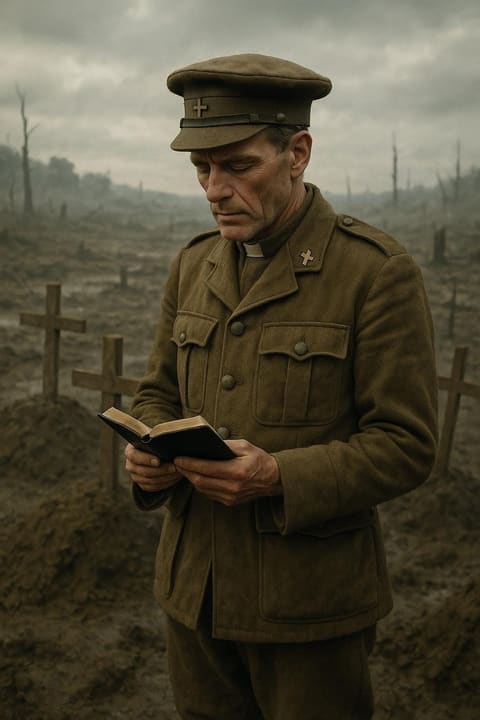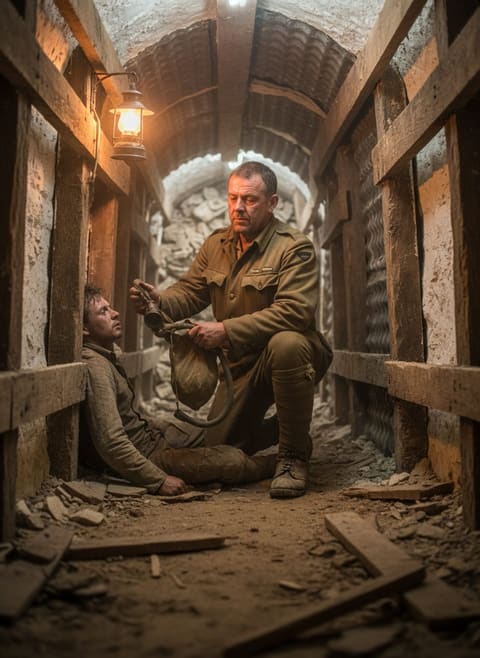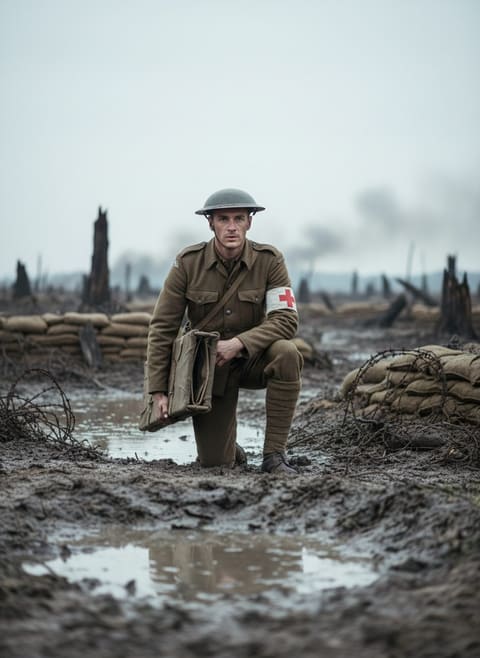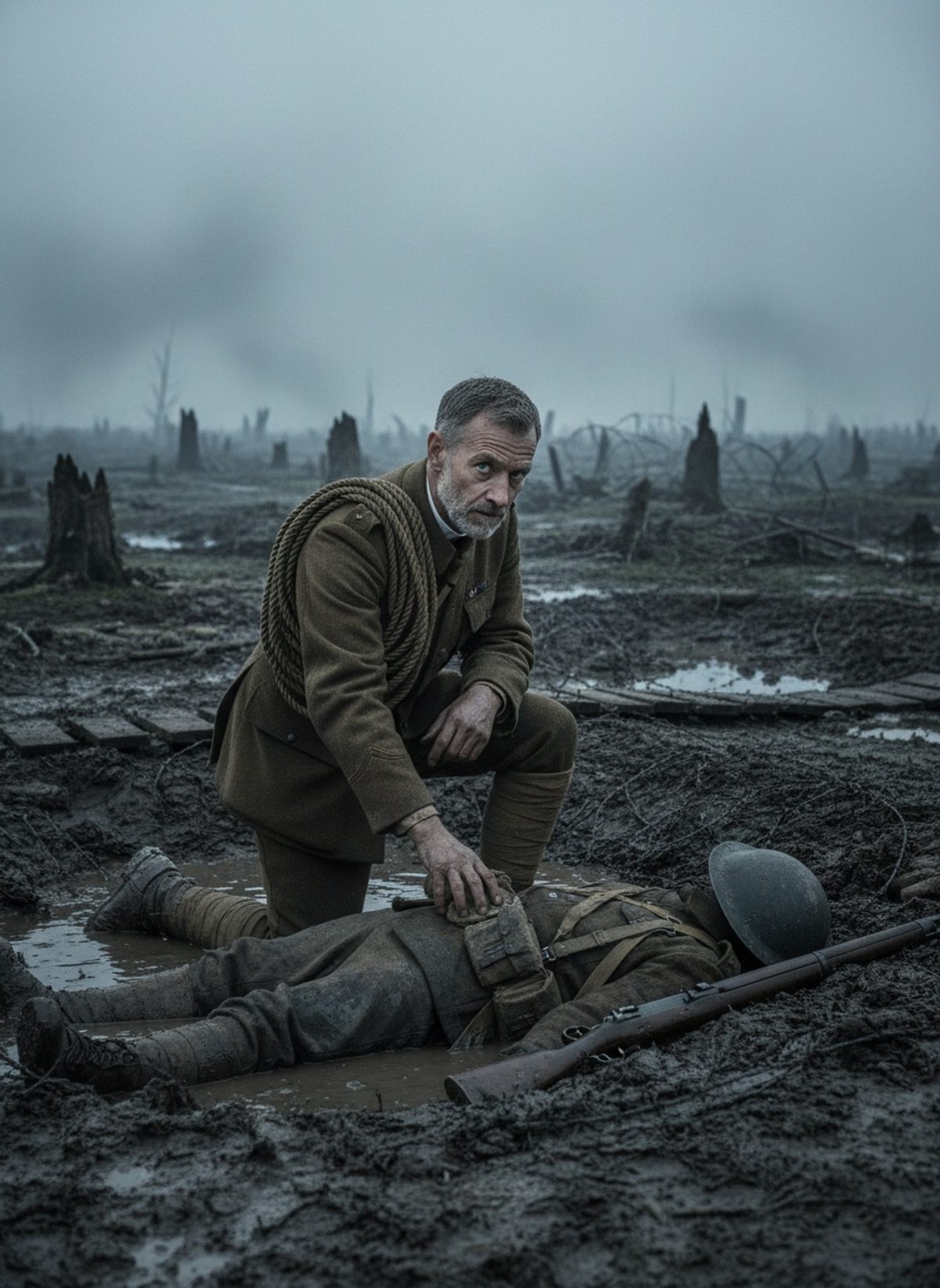
The mud pulled at his feet with each step, a grim reminder of the many souls trapped beneath its swallowing depths. Padre Theodore Hardy, his frame thin yet unyielded by the horror encircling him, forged ahead into the no man's land between the trenches of Passchendaele. His breath heavy with the damp chill of autumn 1917, he had not come armed with rifle or grenade, but with nothing more than a stretcher and a rope slung across his shoulders.
War had not been kind to this corner of Belgium. It was a stage set for calamitous acts of valor and tragedy, where the elements seemed as fierce as the enemy. The land itself had twisted into a turbulent sea of muck, shell craters filled with the stewing dregs of the earth throttling any who dared venture unprepared. Yet, there walked Hardy — a man seemingly ill-suited for the theatre of war by virtue of age and profession, yet uniquely prepared by the spirit within him.
Tales of Theo Hardy’s formidable courage had begun to filter back through the ranks; whispers of a clergy in a chaplain's uniform who did not simply preach comfort from the safety of dugouts but trudged alongside them through the mire. The echoes of his deeds even reached the confines of headquarters, tales of his steady gait through the storm of shells and squalls of machine-gun fire, when the very mud itself bogged down the solemn boots of soldiers.
Back then, the front lines needed not only their engineers and medics, but those who could knit together the fractured spirits of men overwhelmed by the relentless, churning folly of war. Hardy’s war was one for the soul as much as it was for surviving skirmishes. That day, his battlefield was the outstretched quagmire where cries cut through the fog in pleading tones that could not be ignored.
Read next: The Day a British Doctor Refused to Let His Enemy Die
Three of his company lay stranded, their bodies crouched low and desperate, unable to make the return from the morning's suicidal push. Mud encroached upon them, a monstrous cloak heaving ever higher, threatening to solidify the field as their final resting place. Without hesitation, Hardy approached, guided by instinct and the unwavering faith that one more soul saved might tip the balance towards light in a world enfolding in shadow.
Through such a lens, the concept of weaponry took on a different form. His heart, unyielding and stalwart, became his arsenal. Approaching each man, he spoke to them not with orders but with words emboldened by belief in their survivability. As each man was wrested from the grip of the slushy terrain, Hardy's own breath would mix with the mist as a prayer carrying their collective plight upward. They were not merely statistics or casualties avoided, but names, stories, lives he held dear. They were fathers, brothers, sons whose return would bristle with the whispers of a miracle.
Read next: The Day a British Nurse Walked Into a Prison Camp Alone
Theodore Hardy repeated this risky pilgrimage repeatedly, impervious to the notion of self-preservation that dictated others' actions. He slogged back into the abyss for the friend, peer, and sometimes stranger who dared not believe rescue could come. Each journey penned a silent sermon far more persuasive than pulpit rhetoric. Hardy's actions manifested a tacit admission of the sanctity of every soldier's life, engraving his belief on the hearts of those who witnessed his act of unprecedented grace.
Such feats do not belong solely to the trenches and battlegrounds, nor were they solely for those who perished or survived that day. Born amid the drumming of distant artillery, they transcend into the canon of our greater human experience. Padre Theodore Hardy illustrated that the human heart, when resolute, becomes the beacon through the relentless barrage of our most turbulent histories.
Perhaps, this tale which too often escapes the margins of conventional history holds a greater truth about conflict, morality, and compassion. Hardy’s deed, in the searing aftermath of one of history’s bloodiest sagas, invites us to reflect on the interwoven strands of courage and kindness that bind humanity even at its worst. He carried not a standard nor bore a rallying cry, but offered himself as a vessel of salvation in the darkest of quagmires. It’s a reminder that while battles might be fought with guns and courage, wars are won with acts of humanity — as fleeting and fragile as they may seem.