The crisp chill of November air kissed the onlookers' cheeks as they shuffled along London's bustling streets. In a simple act that had rapidly become routine, a British officer pinned a carefully crafted red paper poppy to the lapel of his coat, its crinkled petals contrasting sharply against the drab hues of the everyday attire around him. Yet this vibrant, ephemeral bloom held an immeasurable weight of memory and mourning.
Sowing Seeds of Remembrance
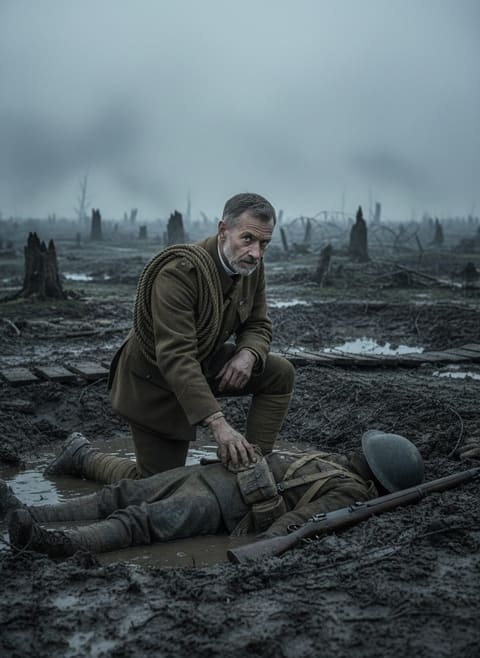
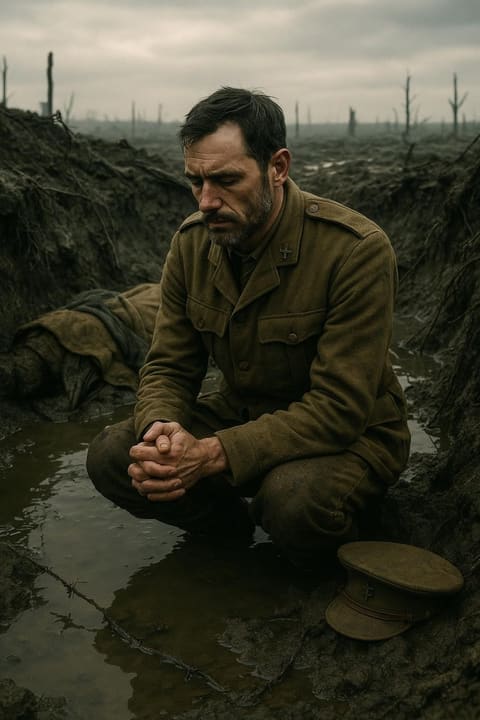
Amidst the devastation of post-World War I Europe, a solitary figure emerged among the chaos, wielding not a weapon but an idea. Anna Guérin, a remarkable French woman with an unwavering resolve, had observed the haunting red poppies growing on the war-torn fields of the Somme. To her, these flowers were more than mere wild flora. She envisioned them as symbols of the blood spilled by soldiers and the rebirth of hope from the ashes of despair.
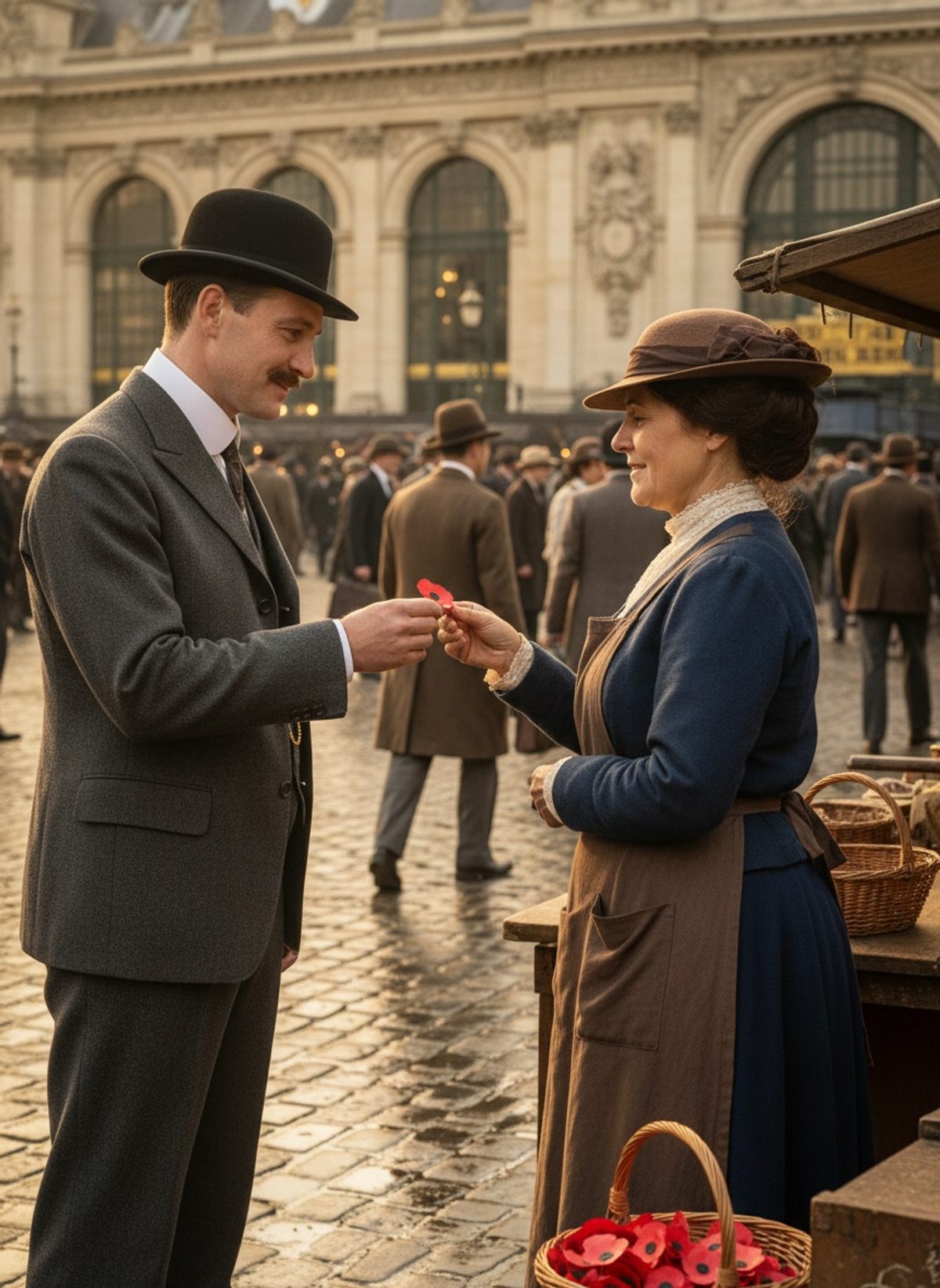
Anna spent countless days bringing her vision to life, crafting paper flowers with meticulous care, ensuring each carried the weight of respect and remembrance. Standing resiliently outside the Gare du Nord, she handed a poppy to a British officer. The exchange, though seemingly insignificant amid the city’s bustle, marked the beginning of an enduring tradition. Moved by her passion and the poignant imagery of the poppies, the officer shared Anna's vision, sparking the idea's journey across the Channel.
Upon returning to Britain, the officer presented Anna's concept to the British Legion, who, recognizing its potential, embraced it with fervor. Within just a year, the poppy became an emblematic symbol, a common thread weaving through individual losses into a delicate tapestry of collective mourning.
Read next: The Day a British Chaplain Walked Into No Man's Land Alone
The Bloom of an Idea
As news of the poppies spread, so too did the fervor to participate in this national act of remembrance. In November 1921, something extraordinary happened: nine million poppies were sold in a single day, painting the nation in hues of remembrance and solidarity.
These poppies, initially crafted by European women and children, became a source of income for those still struggling to rebuild their lives in the ruined landscapes left by war. Yet their significance extended far beyond economics. On station platforms from London to Liverpool, mothers clasped their blossoming brooches, reflecting on sons who would never return. Veterans, their own garments peppered by invisible scars, wore poppies as quiet nods to fallen comrades.
The symbol’s visual simplicity belied the profound complexity of emotions it carried. The British Legion's initiative transformed the chaos of grief into a shared, somber beauty. For many, it became a silent storyteller, capturing whispered prayers and shared glances, each poppy a petal in the undying promise not to forget those who had sacrificed everything.
Read next: The Day a British Padre Fed the Enemy's Wounded First
A Nation in Reflection
Every November, the streets of Britain witness a poignant display of unity. As the days shorten and the autumn chill grows deeper, the red of the poppies stands out vividly. This annual ritual has grown beyond a fundraiser, transforming into the United Kingdom's most profound act of public mourning. What was once a simple purchase on a chilly Parisian street became a cultural phenomenon that left an indelible mark on the British psyche.
The tradition has evolved, with poppy wreaths solemnly laid at memorials and ceremonies held to honor the fallen's legacy. The collective silence on Remembrance Day offers a moment for individuals to pause, reflecting on the threads of history that bind past sacrifices to the modern values of peace and solidarity.
Thus, the humble paper poppy endures not only as a symbol of loss but as a beacon of hope and remembrance. It reminds us of the narratives excluded from textbooks, of the remarkable individuals like Anna Guérin who saw potential in the transient bloom of a battlefield flower. Through these paper petals, memories live on. They serve as quiet yet powerful messengers, ensuring that amid the noise of progress, the sacrifices of those long gone are held close in hearts and minds, blossoming anew each year.