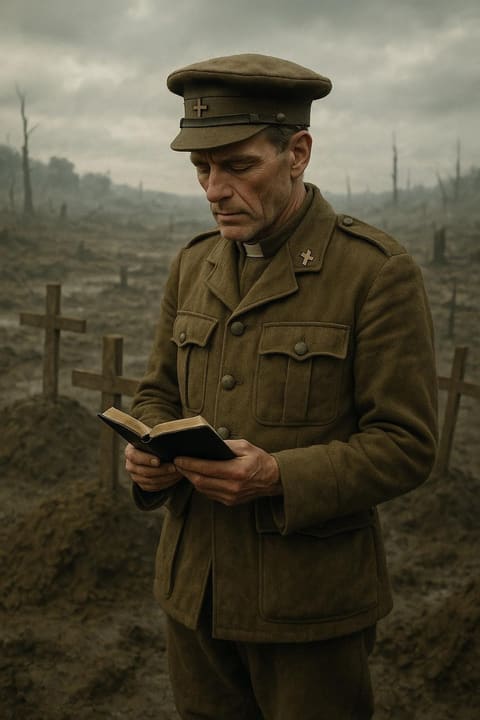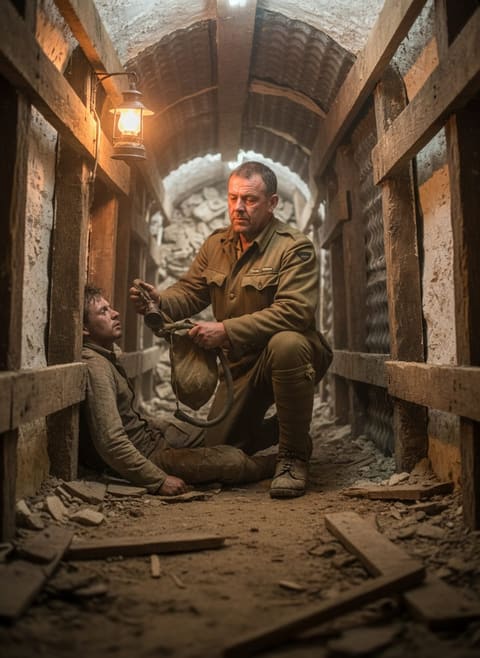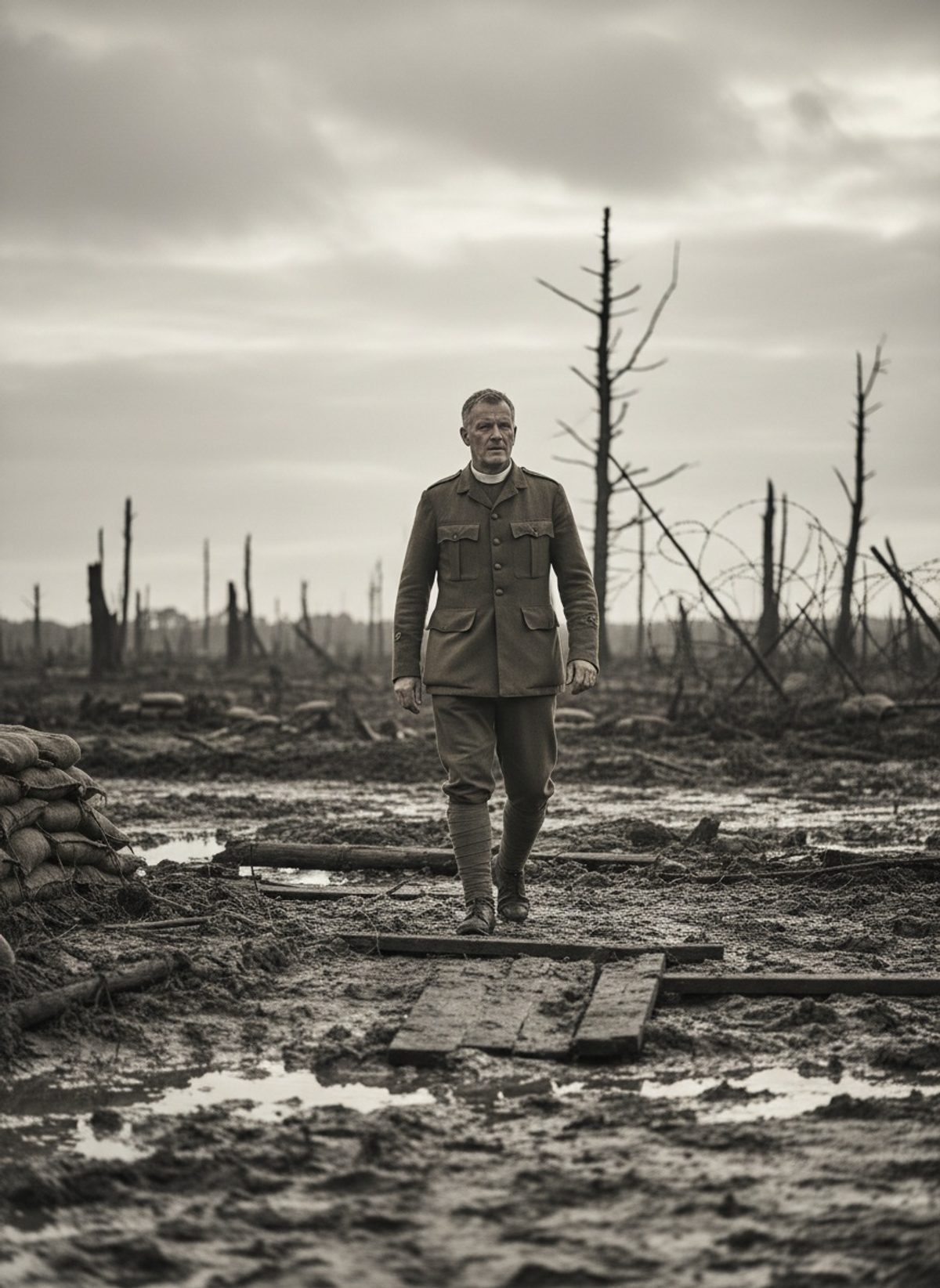
August 1917. The muddy expanse of No Man’s Land was eerily silent.
The Unseen Hero
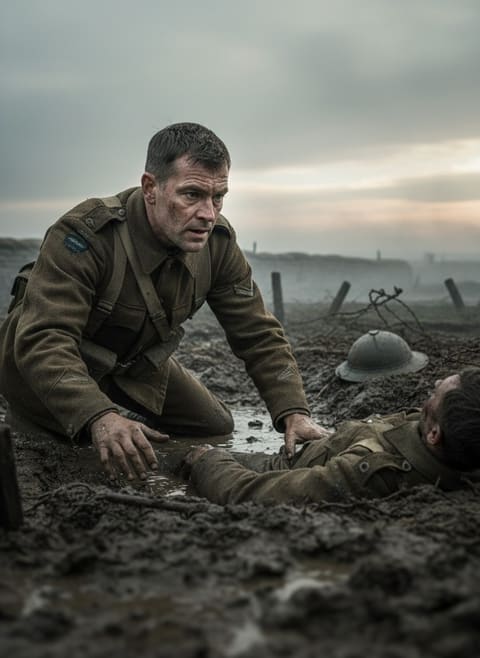
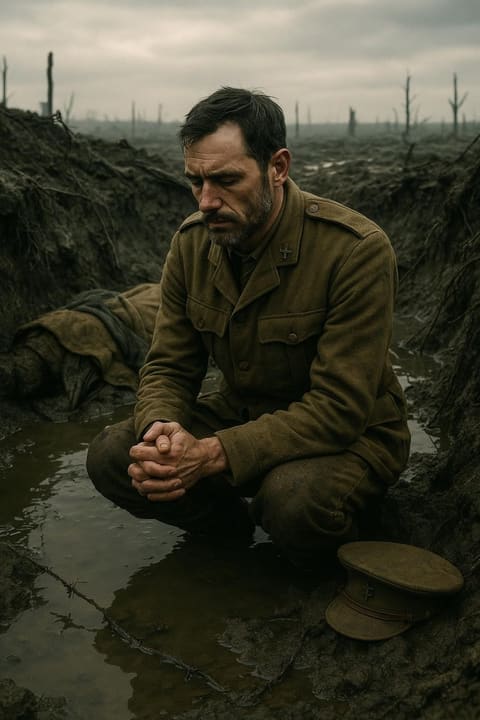
The sun hung low over the dismal landscape of the infamous Passchendaele battlefield. It was here, amidst the echoes of unspeakable violence, that an unusual figure emerged. Unarmed and determined, a lone British chaplain climbed out of the trench, his cassock flapping against his legs in the chilling wind. He took a steadying breath and pressed forward into the hellish mire, leaving the safety of the dugout and stepping into the void between life and death.
This chaplain had no official orders, no commanding officer’s blessing to walk into the desolation where spent ammunition and the wreckage of war lay strewn. His mission was both simple and monumental: to retrieve the fallen soldiers and grant them the dignity of a proper burial. Those who were left behind had been claimed by the muddy embrace of the Belgian countryside, their bodies marking the frontlines that barely shifted despite the incalculable cost.
A Moment of Humanity
The guns had paused, a rare and uneasy truce that brought a touch of relief and allowed soldiers on both sides to catch their breath. There in the lull, the chaplain made a choice that transcended orders and duty, one driven by a deep sense of compassion and morality. His silhouette against the bleak horizon was a small testament to courage and humanity amid the chaos of war.
Read next: The Day a British Padre Knelt in the Mud and Saved His Men
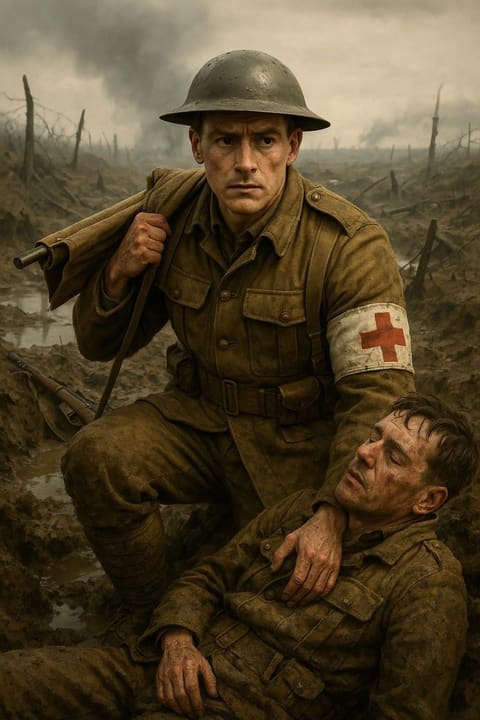
Walking slowly across the ragged terrain, each step was precarious, threatening to pull him into the earth as it had his fallen comrades. The mud clung to him like a relentless adversary. Yet, striding from crater to crater, he ignored the grasp of mud and the distant flashes of sporadic shell fire. Here, among planks of wood and twisted barbed wire, he moved with a clear, unwavering purpose — to return dignity to those who had given everything.
The Men Who Watched
The chaplain’s actions didn’t go unnoticed. From the safety of the trenches, weary soldiers watched in awe as he journeyed alone into the wasteland of warfare. It was a scene that seared itself into their memories, staying with them long after the guns resumed their thunderous dialogue. In a world dulled by bloodshed and the cold calculus of battle strategies, witnessing such individual bravery and selfness sparked something profound.
Stories rippled back through the ranks about the man with no weapon but faith. The day he walked into No Man's Land began to take on a mythic quality, wrapped in the hue of legend among the men whose lives had been little more than numbers so far. He was neither general nor decorated hero, but his presence was that of an angel among mortals, bringing solace in the midst of despair.
Read next: The Day 55,000 British Troops Trained for a War That Never Came
The Call of Duty Beyond Orders
His journey did not restore life, nor did it change the outcome of battles or shift the trenches an inch closer or farther from the enemy. Yet, what the chaplain did in those hushed hours echoed far beyond the fields he crossed. It spoke to something buried in each soldier's heart — the desire for honor, the hope of remembrance, and the need for personal humanity amid the anonymity of war.
In the years that passed, stories of heroes often faded into history, leaving only names on graves and medals. However, the chaplain's story lingered in the whispers among veterans and the anecdotes shared at reunions, a testament not to the chaos of war but to the quiet defiance of hope. Within the pageantry of military medals, sometimes it is the unsung, unnamed acts of personal sacrifice that leave the most indelible mark.
As the years stretch from that August day when a man of faith turned No Man's Land into hallowed ground, the tale continues to speak to each soul willing to hear it. It instructs not just in courage, but in the incomprehensible capacity for human empathy, teaching that even in the darkest of places, the light of humanity can never be snuffed out.