In the early spring of 1944, the English countryside of Surrey awoke beneath a pale, diffused light. The mist lingered over hedgerows and church steeples, a stubborn reminder of the chilly nighttime air.
The gentle rustle of leaves and the faint hum of distant vehicles traversing the rural roads filled the air with a peculiar tension, for the world beyond the quaint village was on the brink of seismic change. The Second World War loomed large, and within this sleepy backdrop, one of the most closely guarded secrets of the century teetered on the brink of exposure.
The Innocent Game of Words
Surrey’s unassuming presence belies its unwitting participation in a wartime conundrum that befuddled even the keenest minds of MI5. A crossword puzzle once a simple amusement had morphed into a manifest of hidden peril. In the days leading up to the pivotal D-Day landings, The Daily Telegraph’s crossword puzzle contained five words that could decode history: “Utah,” “Omaha,” “Overlord,” “Neptune,” and “Mulberry.”
To the untrained eye, they appeared innocuous, perhaps even acerbically cryptic. But these words were pregnant with a significance known only to the war's architects, words that spelled doom if discovered too early by enemy forces.
Read next: When the Indian Army Turned Its Officers Into Privates, 1942
Leonard Dawe, the headmaster of the Strand School in Surrey, stood at the center of this unraveling mystery. He was not some master codebreaker or secret agent but rather a man of letters and puzzles. The schoolchildren under his tutelage inadvertently became rogue capsules of clandestine terminology, humming with the buzz of military secrets whispered by soldiers bivouacked nearby. It was here, amid typical schoolboy antics, where history sought to unmask the whisper of impending invasion.
An Unexpected Interrogation
The shadow of suspicion had spread its wings over the quiet scholastic environment. News of the crossword conundrum reached the desks of MI5, where it left a chilly residue of trepidation.
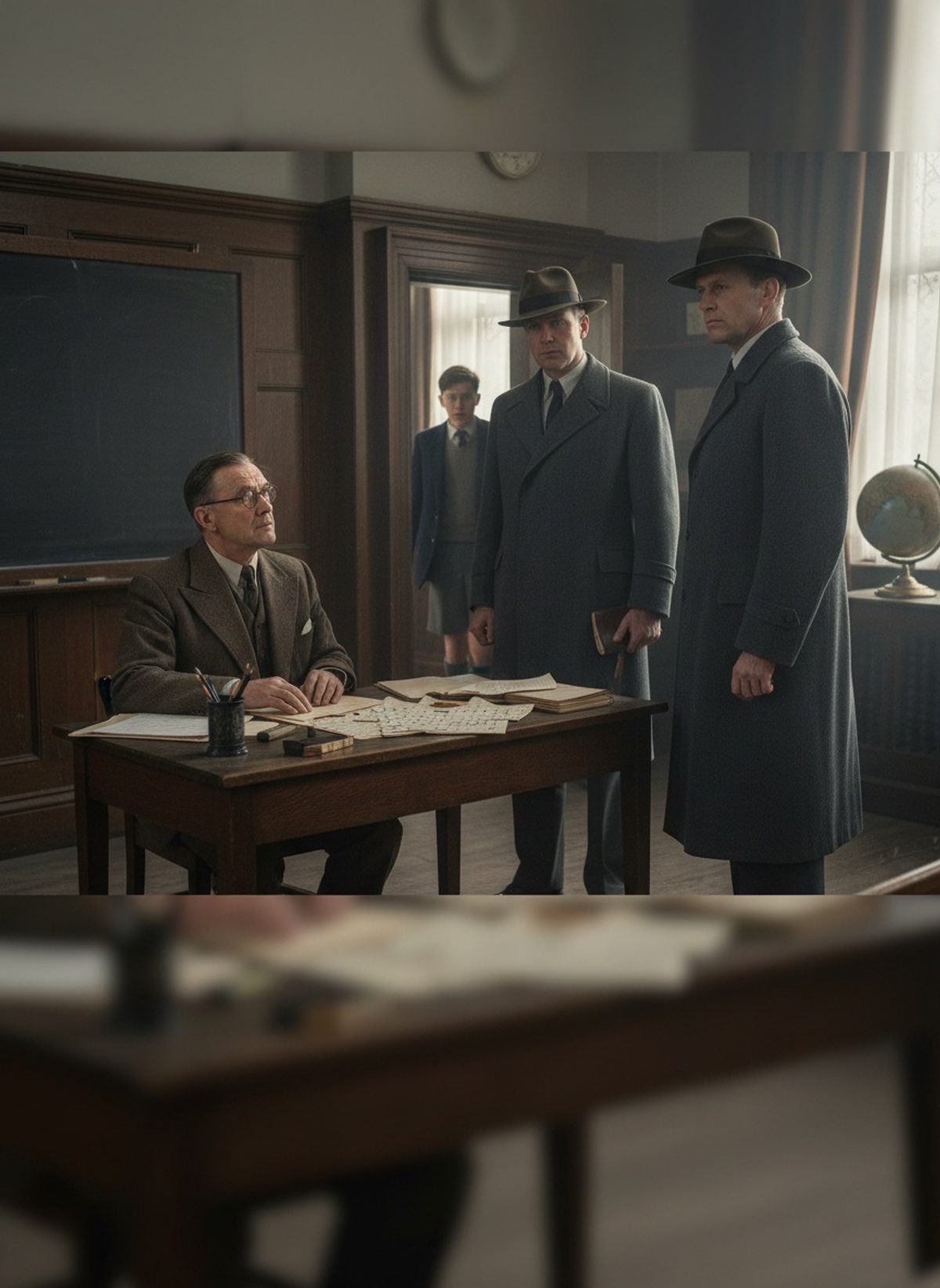
Swift and silent as shadows, agents descended upon the Strand School in search of the supposed spies who dared jeopardize the Allied forces’ stratagem. The interrogation room echoed with the heavy thud of footsteps and the scribble of pens on paper, a crucible of tension wherein innocence was weighed against the scales of security.
Dawe, a man nurtured on the promontories of language and order, found himself the unwilling star in a drama that had eluded planning and protocol. His crosswords were born of habit and keenness for intellectual challenge, pieces woven from the fabric of his everyday musings and those who surrounded him. The real spies, as it were, were the youthful minds absorbing strategic banter like unwitting sponges, churning it into the lexicon of play.
Penned in Laughter, Unwritten by Error
As MI5 agents sifted through the perplexing layers of minor suspense, the truth about the inadvertent breach slowly unraveled like the folds of an aged map. The war-game exercises and casual cant of soldiers had spread through village and school, imbibed by young minds wrapped in awe of uniforms and valor. Dawe’s pupils, in their mimicry of the noble efforts of war, laced their newfound vocabulary into the innocence of schoolwork.
Read next: The day Mary Toft convinced England's doctors she gave birth to rabbits
Dawe, a man whose puzzles often channeled the everyday curiosities and pronunciations of youth, found himself unwittingly involved in this wartime theater. The words that appeared as answers in his puzzles were not born of conspiracy but of the happy accidents of mingled impressions, the sort that children often unleashed in endless loops of imitation.
The Schoolyard of Secrets
With newfound clarity, the agents realized that what lay before them was but a chorus of happenstance. The inadvertent revelation of secret codewords within Dawe’s crosswords rendered them an unintended canvas of childhood antics rather than a master plan of espionage. What could have caused catastrophic leaks of strategic military operations was unwittingly coded through a mixture of proximity and curiosity amid the peaceable riots of academia.
Surrey’s undulating terrains would remain as witnesses to a narrative almost punctured by youthful exuberance. To safeguard against any further accidental intertwinings of the mundane and the monumental, intel was tightened and conversations hushed, ensuring that confidentiality would not scamper away on schoolboy tongues again.
In this curious alignment of fate, the world was briefly held between laughter and dread. A schoolboy’s fascination with soldiers and ships became a cipher only the innocence of youth could embroider, yet one that deftly danced around disaster. This tale, then, remains a reminder: history is often a missive of whispers and echoes, and sometimes, it is the gentlest breeze that lifts the heaviest burdens.