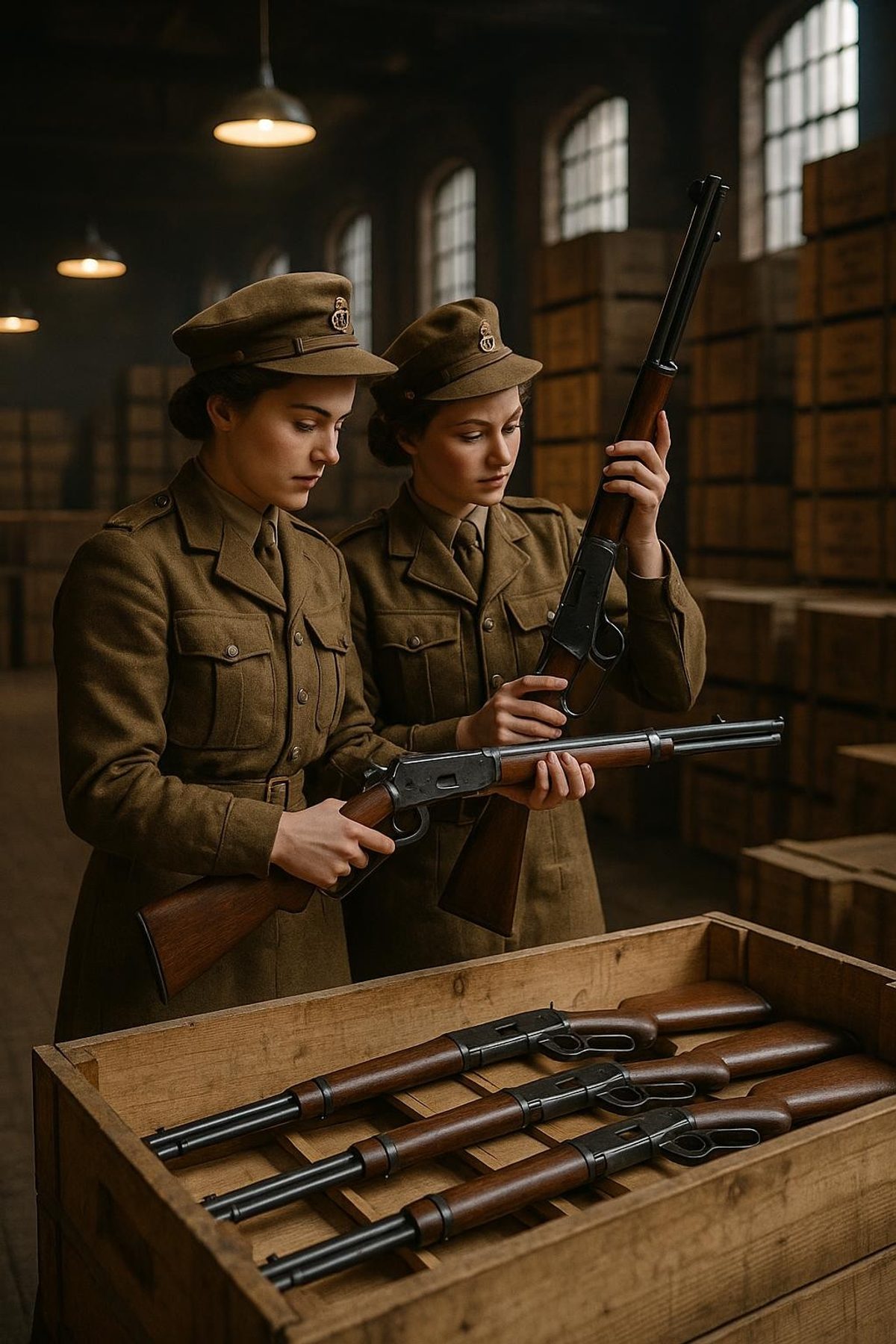
The women who rearmed Britain in 1942 hadn't fired a rifle in their lives. Yet their hands put back the fight into an exhausted nation's soldiers.
Unseen Warriors in Skirts
As Britain's fate teetered on the brink amidst the echoes of Dunkirk, a less celebrated yet pivotal battle unfolded behind the scenes. Not on the front lines but deep within depots and warehouses transformed into beacons of hope. These were the fortresses where the women of the Auxiliary Territorial Service (ATS) held the lines with skillful hands and determined hearts. Formed just before the outbreak of the Second World War, on 9 September 1938, the ATS stood as the backbone of Britain's wartime logistics. Yet, few could have predicted their invaluable service during this critical juncture in March 1942: the arrival of American Winchester rifles under the Lend-Lease program.
With France fallen and the remnants of British forces barely escaping the grasp of German troops at Dunkirk, Britain's war reserves lay dangerously depleted. Then, hope arrived in the form of crates stamped with U.S. insignia, containing the iconic Winchester rifles desperately needed by a stripped Army. As these wooden boxes landed at a quiet depot in Northamptonshire, it was these women who rose to the challenge—receiving, unpacking, and meticulously inspecting each firearm.
Their task was weighty: check every bolt and barrel, and ensure functionality before dispatching them to Britain's servicemen. The process required precision, a keen eye for detail, and—above all—the resolve to carry on without falter. They were quiet custodians of momentum, pressing forward with a determination as fierce as the weapons they handled.
Read next: When Juan Pujol García Fooled Hitler With a Library Card
The Lifeline Across the Atlantic
The Lend-Lease Act, passed by the United States in March 1941, was a pragmatic effort that transformed the arsenal of democracy into Britain's lifeline. Under its terms, it bypassed neutrality acts by providing the Allies with material support long before America would step directly into the fray. It was under this mantle that thousands of Winchester rifles—a symbol of American ingenuity—traversed the Atlantic to fortify British defenses.
The rifles, precision-engineered and encased in oil-paper wraps, came with an urgency accentuated by the specter of Axis dominance in Europe. Inside the Northamptonshire depot, a world ruptured by war seemed a distant specter as workers, predominantly women of the ATS, endeavored to return functionality to form. They worked tirelessly in the chill of storerooms, the clang of metal and the scent of lubricating oil their constant companions.
The function of unlatching crates and oiling mechanisms held a strategic significance perhaps only appreciated by those standing upon the fulcrum of fate. These women translated American industrial might into British resilience, ensuring that each soldier heading to the front bore a weapon ready to answer the call.
A Force Ignored No Longer
Before becoming the stewards of wartime logistics, the ATS hovered in the shadows of military hierarchy. Initially conceived as a voluntary service, reflecting its predecessor the Women's Auxiliary Army Corps of World War I, the ATS was expanded upon the dawning of global conflict once more. Yet, despite their contributions, women in the ATS received significantly less recognition, compensated at two-thirds the rate of their male counterparts.
Read next: He Was 58, Dying, and He Still Led the Charge
However, their presence within those weapon-laden hangars in 1942 challenged that narrative. As men headed to frontiers abroad, it was the women left behind who rolled up their sleeves and got to work. The startling speed at which the rifles were unpacked, cleaned, and repacked was testament not only to their efficacy but to the shifting perceptions of gender roles within wartime professions.
This rearming exercise was a monumental task, often overlooked in the grand narratives of the era. While others recounted tales of daring aerial dogfights or embattled sea voyages, the ATS continued to weave a different story—a story of silent service and steady hands that shared no spotlights yet bore equal weight in determining the outcome of war.
Quietly Holding the Line
The service of the ATS during these uncertain times was emblematic of an unyielding spirit that quietly held together the fabric of a nation at war. Though their narrative sits on the periphery of popular remembrance, they were undoubtedly craftsmen of victory in their own right. Each rifle they touched held not only steel but the fortitude of those who ensured it was fit for battle.
Reflecting on their contributions sheds light on an essential truth—heroism often germinates in mundane, unheralded places. Their diligent labor within nondescript depots was as vital to the war effort as the most decorated battlefield maneuvers. By laying bare the unseen efforts of these women, we appreciate the multitude of narratives composing history’s greater mosaic. In enacting their dutiful precision and profound resolve, they reminded a beleaguered nation that victory is a cumulative effort, often born in the hands of those least expected to wield its weight.