The British Army was a formidable force. Its blunders in the Crimean War exposed a far different reality.
Dressed for Summer in a Russian Winter
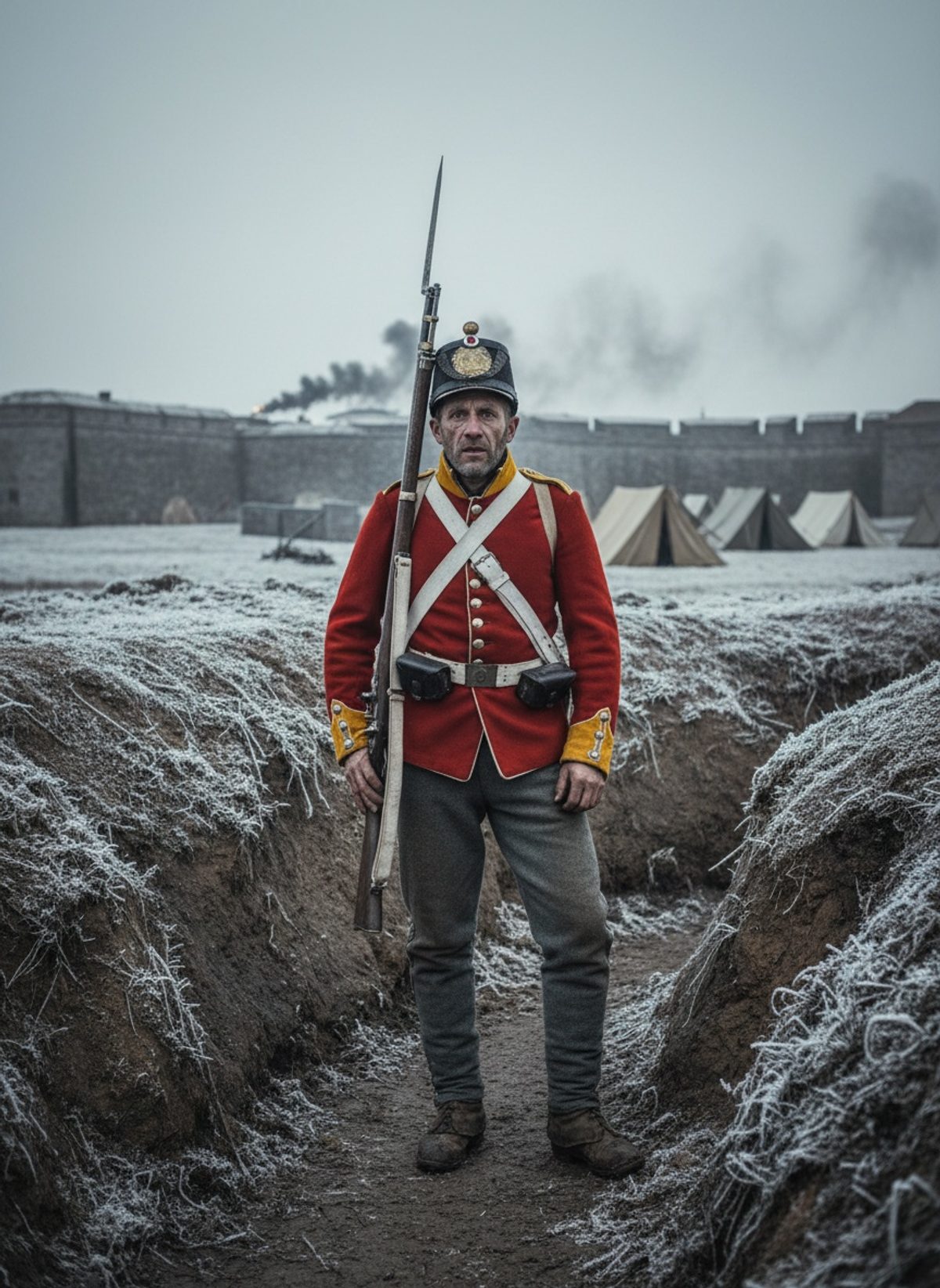
In 1854, when Britain declared war on Russia, its army was renowned for discipline and dominance. Yet, those who stepped onto the harsh Crimean Peninsula found themselves woefully unprepared, clad in uniforms as thin and unsuitable as the paper maps – or lack thereof – that were supposed to guide them. As temperatures plummeted, the frostbitten fingers of soldiers searched in vain for the winter coats trapped offshore in Balaclava harbour. A magnificent force had marched straight into a logistical abyss.
The oversight wasn’t just a logistical hiccup; it was symptomatic of deeper systemic decay. The tangled ropes of bureaucracy and complacency strangled effective planning. This lack of foresight left hundreds battling not only the Russian military but also the biting cold that descended upon them, garbed only in the assurance of their nation’s long-standing military prowess. For these men, bravery was not so much a choice as it was a necessity for survival.
Commissions Bought, Competence Questioned
The practice of purchasing commissions, a staple of British military tradition, ensured that positions of leadership were too often occupied by those of privilege over proficiency. Wealth, rather than wisdom, secured command, leaving those in the fight led by officers more familiar with the ballroom than the battlefield. It was a system built on patronage that served to protect the elite rather than the empire.
Read next: When Four British Sailors Washed Ashore at Ocracoke, 1942
This backdrop of complacency painted the grim picture of the Crimean War. The leadership’s ignorance of the terrain – born out of a sense of invulnerability – resulted in catastrophic strategic failures. Many officers barely knew the outlines of the landscape, let alone the vast expanses of snow and mud that their troops had to trudge through. Meanwhile, those soldiers endured not just the lack of direction but a shortage of basic necessities. It was an army gallant in spirit yet deeply betrayed by its governing body.
The Chaos of Balaclava Harbour
While the soldiers shivered on the battlefield, Balaclava harbour became a tragic symbol of incompetence. Supply ships laden with essential goods languished at anchor, their cargo holds bursting with untapped potential warmth and sustenance. Yet, the bottleneck of bureaucratic mishandling rendered them useless. Half-starved and hampered by an array of impediments, the soldiers' hope lay in vain at harbour’s edge, hidden behind reams of red tape.
The condition of Balaclava harbour was more pantomime than military operation. Logistics officers found themselves paralyzed by confusing orders, poor communication, and a distribution plan that was as labyrinthine as the British bureaucracy itself. Supplies meant to alleviate suffering instead rotted away, another casualty of the unseen war waged behind desks far from the front lines.
More Than Just a Lack of Winter Boots
A misjudgment as fundamental as underestimating the Crimean weather goes beyond mere oversight; it highlights an arrogance born from centuries of imperial domination. The British cultural mindset was steeped in the belief of its unassailable might; thus, logistical planning became secondary to maintaining appearances. Yet, this war stripped away the empire’s laurels, laying bare an administrative incompetence on scales as grand as any victory parade.
The men of the British army, often drawn from impoverished backgrounds, demonstrated resilience in the face of shivering adversity, igniting a reevaluation back home about the treatment and support of soldiers. As the war dragged on, the press’ role in uncovering the grim reality altered public perception, forcing a reluctant government to confront the deficiencies its pride had long masked. This media-driven introspection would become a turning point, nudging military reform into the public consciousness.
The Hollow Core of Greatness
The Crimean War was a dissonant chapter in the annals of British military history, revealing that an empire boasting unmatched global influence was, in fact, riddled with fundamental flaws. It was a conflict that opened the curtain on an enduring façade, urging the empire to reexamine its sense of invulnerability. This moment stands not just as a contemplation on past failings but as a continuous reminder about the perils of hubris and the necessity for introspection. The stories of those courageous soldiers cast adrift in administrative chaos echo across time, urging the powerful to remember that greatness lies not only in conquest but in the empathetic governance that sustains its warriors.