The valley was wrapped in an eerie silence, save for the rustle of a cold October breeze that moved like a whisper between the leaves. The Crimean Peninsula's terrain stretched in muted colors under a slate-gray sky, the earth still retaining the chill of the previous night’s frost. The only sound punctuating the morning was the distant roll of artillery, like a grim foreboding echo. Yet, despite the ominous atmosphere, history was about to be made as nearly 600 men of the Light Brigade prepared themselves for an order that made no sense, an order that seemed to defy reason, yet was obeyed regardless. It was the 25th of October, 1854, the setting for one of the most infamous cavalry charges in military history.
At the heart of this landscape, the battlefield of Balaclava lay waiting. The British forces faced the Russians in a confrontation that had already seen two separate actions that morning. The 93rd Highlanders stood in their thin red line against Russian cavalry, and a brutal engagement had seen the Heavy Brigade repel a Russian advance. But the afternoon's events would be defined by the Light Brigade, a unit trained for speed and mobility, not for the frontal assault they were about to endure. They were dressed in their bright uniforms, mounted on horses well-bred for agility and grace, and beneath the helmets, each soldier wore a determined, if not resigned, expression.
Lord Raglan, the British commander, sent down an order intended to prevent the Russians from removing captured British guns. Miscommunication between commanders led to the fateful directive: the Light Brigade was to advance into the very mouth of the Russian position. To their front and flanks, more than thirty cannons awaited, their presence like grim spectators to the disaster about to unfold. Each man in the line understood the peril as they formed into ranks. Lord Cardigan, commanding the brigade, knew the futility of the action but adhered strictly to the received orders.
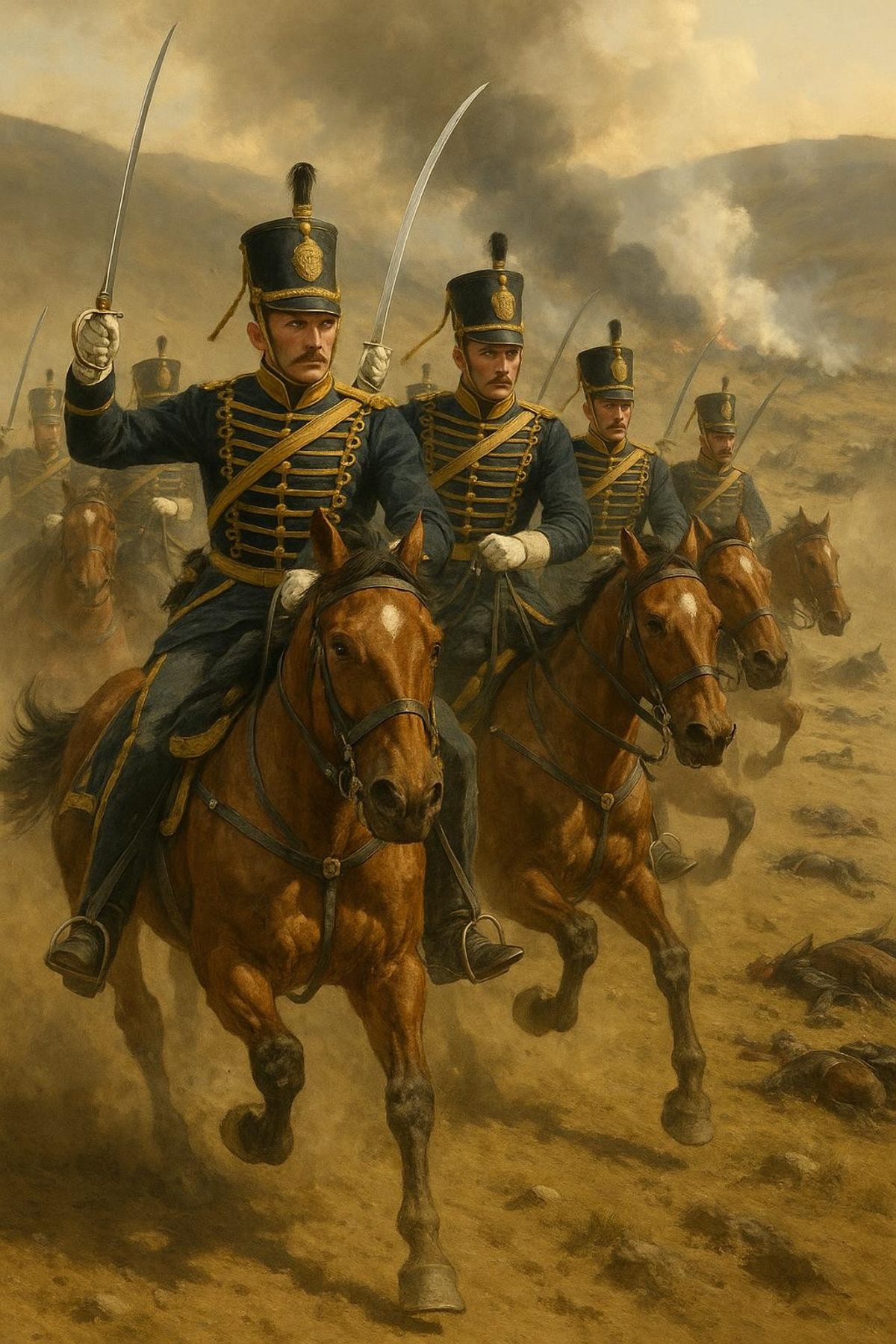
As the last echoes of preparation faded, the command to charge was finally given. The striking sight of 600 cavalrymen moving as one, trotting at first before quickening at Cardigan’s lead, was like an arrow loosed towards an inevitable target. Hooves pounded against the ground in a rhythm like the beating of a tumultuous heart. Russian artillerymen watched in disbelief, unable to comprehend the apparent madness—the British soldiers riding into what seemed a certain death.
Read next: The Day a Surgeon's Son Chose Death Over Silence
The first artillery shells whistled overhead, exploding amongst the riders with ear-splitting ferocity. The horses, feeling the terror as their riders did, surged forward regardless. Men fell, horses tumbled, and yet the charge did not falter. The remnants of the brigade pressed on, grim determination driving them in this surreal ballet of war and courage. The air was thick with smoke and acrid with the smell of gunpowder, a stinging blanket that clung to eyes and nostrils, intensifying the chaos.
The valley, no wider than a mile with hills on either side, became a suffocating gauntlet. As the Light Brigade reached the Russian guns, they found their ranks shattered. The initial momentum carried them through, slicing into the enemy where they could. Russian soldiers, though prepared, were momentarily stunned by the sheer bravado of the act. But it was not long before the charge, lacking support and fighting spirit, ebbed as quickly as it had begun.
Amongst the tumult, the human cost became starkly apparent. Of the 600, a staggering 278 men were either dead or wounded by the time the survivors struggled to regroup. Horses limped away riderless, some collapsing on the battlefield never to rise again. The return was as dreadful as the advance, with wounded comrades left amongst the battlefield wreckage. Those who returned did so with faces ashen, eyes carrying the haunted imprint of what they had witnessed.
Read next: The Day a Chimney Sweep's Son Shamed a Whole Parliament
Eyewitnesses were left to puzzle why it happened at all. Official reports were damning in their implications of miscommunication. The respect for the order was matched only by the subsequent soul-searching over its necessity. The Charge of the Light Brigade was immortalized by reactions that ranged from admiration of bravery to condemnation of what some viewed as unmitigated folly.
In the aftermath, the iconic words of Alfred, Lord Tennyson's poem "The Charge of the Light Brigade" cast this tragic episode into part of the British collective consciousness, turning chaotic reportage into poetic martial glory. Yet, beyond the bombast of verse remains the palpable question of duty and obedience—what drives men to follow an order they know to be disastrous? It speaks to the heart of military discipline and courage but also to the complexities of communication and human error that can sway the course of history in profound, often tragic ways.
As the story endures, the haunting cadence of the charge continues to resonate through time, serving not just as a testament to sheer bravery but as an echoing lesson on leadership, command, and the brutalities inherent to war. What tempers such a narrative is how keenly it speaks to the cost of unquestioning obedience and, perhaps more starkly, to the very nature of courage—the courage of men who faced the cannon's mouth, aware of their fate but riding onwards anyway, into the annals of history.