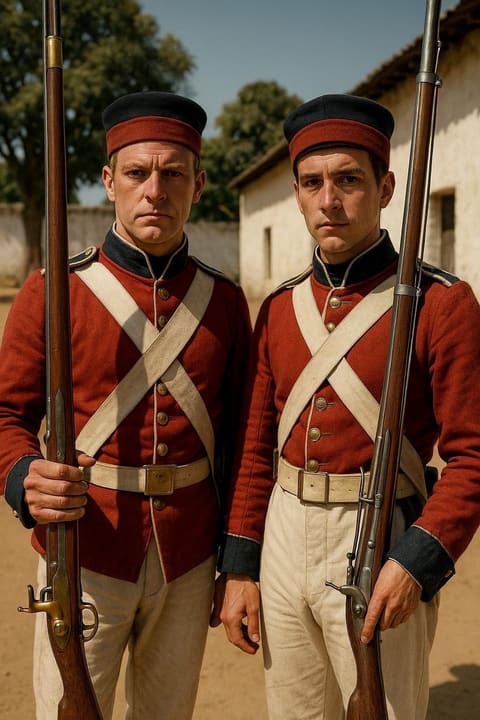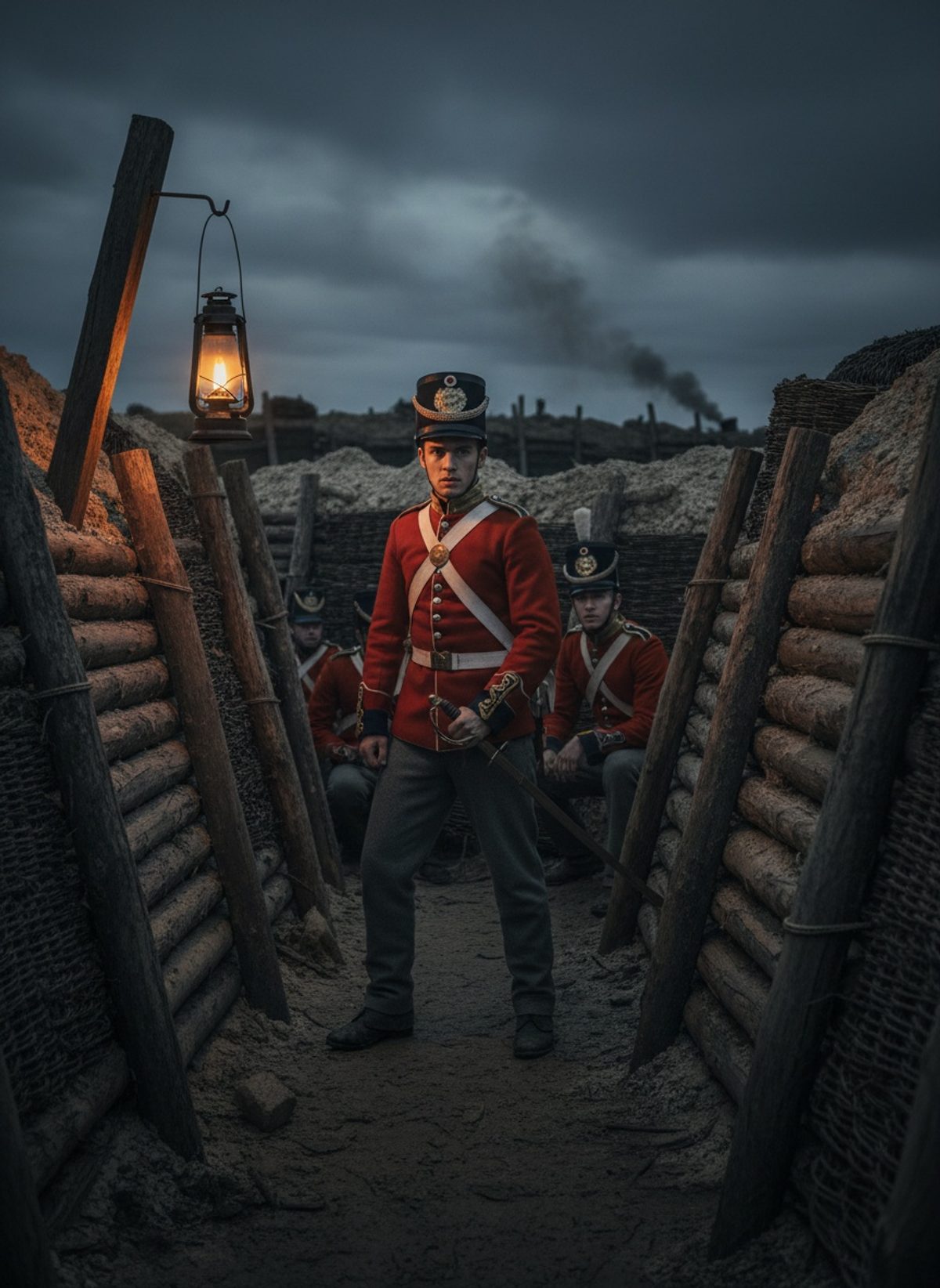
The night air was heavy with the scent of gunpowder and damp earth, mingling under the shroud of a half-lit moon. The siegeworks around Sebastopol in March 1855 were a grim labyrinth where shadows danced along the silent earthworks, and the wind carried the distant echoes of cannon fire. Here, in this stark and foreboding landscape, the fortunes of empires hung by the thinnest of threads, and men like Captain Hedley Vicars trod their uncertain paths of valor and fate.
The Courageous Path of Captain Vicars
By the time the Crimean War had dragged into its second painful year, Captain Hedley Vicars had already etched his name into the annals of admiration among his peers and subordinates. His origin was as unremarkable as any young officer of the Victorian Empire, but the spirit he embodied resonated far beyond the expectant bounds of military duty. Known for his fervent Christian faith and unyielding courage, Vicars was a soldier beloved by his men, his courage the stuff of campfire tales even before he had drawn his sword under the harsh sting of combat.
As the evening of March 22nd descended, a cold tense calm settled over the British encampments, the horizon painted in hues of gray as squads trudged through the trenches on their weary watch. Vicars had earned a reputation for defying the ordinary constraints of rank, often seen mingling with his men, never afraid to share both the load of duty and the perceived blessing of Providence. His was an example of leading by presence, a steady hand amid the chaotic heartbeats of looming battle.
Yet, the serenity with which he carried himself belied the peril that war always shadowed. The Siege of Sebastopol was a drawn-out attrition, with each assault chipping away at the fortitude and numbers of the British forces. The night of March 22nd held its breath in expectation, even as unspoken fears rippled through every rank. The Russian sorties came suddenly, like wolves descending, breaching the earthen ramparts with brutal alacrity. Somewhere in the fray, Captain Vicars received the ominous summons his soul seemed ready for. The trench, forewarned to be a death trap, called him forward.
Read next: When Bravo November Became the Only Chinook Left, 1982
Into the Teeth of the Storm
The lighting was dim, the trenches a snaking maze of inevitability. Men clung to the mud as their only shelter, grips tightening on weapons that served as both attack and defense. In the spur of these desperate moments, leadership became the lifeline, the bridge between chaos and coherence. For Vicars, the seconds slowed in a mix of instinct and bravery. He charged forward, his sword not merely an extension of his arm but of his will — a signal for his men to follow through the haze of gunfire and cannon blasts.
Suddenly, the eeriness of the still night gave way to a cacophony of human voices and inhuman forces crashing against each other. In this melee, as bullets tore through the air like an unpredictable force of nature, Captain Hedley Vicars advanced with the unyielding certainty of a man whose soul was already tested. It was a mission not of a madman seeking death, but of a noble heart compelled to stand amid the madness for those he led. His was a path of reciprocal duty, none more understood nor more dreaded than when his life was claimed almost instantly in the vortex of brutal conflict.
The loss was immediate, the shock pervading as if the man himself was the lifeblood of the 97th Regiment. His fall was more than a mere military defeat; it was a breach in the bastion of spirit he built within his comrades. The same soldiers who had whispered his valor in letters home now penned eulogies that spread like whispered prayers across the disparate outposts of the British Empire. Captain Hedley Vicars, at just 29, became a martyr to the cause and a lasting symbol of the human cost of imperial ambitions.
Read next: When Wideawake Became the Busiest Airport in the World, 1982
A Legacy Beyond the Battlefield
The anguish that followed Vicars' fate transcended the immediate pall of war. Stories of his courage were recounted in towns and cities far removed from the rocky cliffs and icy waters of the Crimean Peninsula, places where men judged their own worth by the tales told of soldiers afar. His name became a synapse in the shared memory of a nation at war, interwoven with calls to honor the sacrifice inherent in such noble valor. But Captain Vicars' story, more than a legend of bravery, was rooted in the complex weave of faith, duty, and the imperial narrative that carried British aspirations across the globe.
In those dark hours after his death, the question of what it meant to be a hero took on more than a definition. It became a reflection of a much larger human struggle — to reconcile courage with loss, to extract meaning from the unforgiving tides of war. Captain Hedley Vicars, it seemed, walked a rarefied path that demanded equal parts vision and sacrifice, a testament to the price paid by countless young men who walked similar paths on the expectations of empire extended over the Earth.
This story of Captain Hedley Vicars is not just one of inspiration for duty-bound valor; it’s a reminder of the intimate circumstances binding leaders with those they lead — of faith embodied in action and lives intertwined in the cause of something greater. It’s a story that calls us to remember: history’s heroes come with promises of greatness and sacrifice, written not only upon the earth of Sebastopol but the pages of time, worn, well-read, and eternally revered.