He was a giant of a ship designed in a time of giants. Yet the men who laid her keel hardly lived long enough to see her greatness. HMS Victory's story wasn't only forged in battles; it began in the hands of those whose names remain unfamiliar.
The Echo of Hammer on Wood
Amidst the industrial thrumming of Chatham Dockyard in July 1759, a symphony of hammers marked the commencement of a monumental task. This booming cacophony heralded the birth of HMS Victory, a ship destined for the annals of naval history.
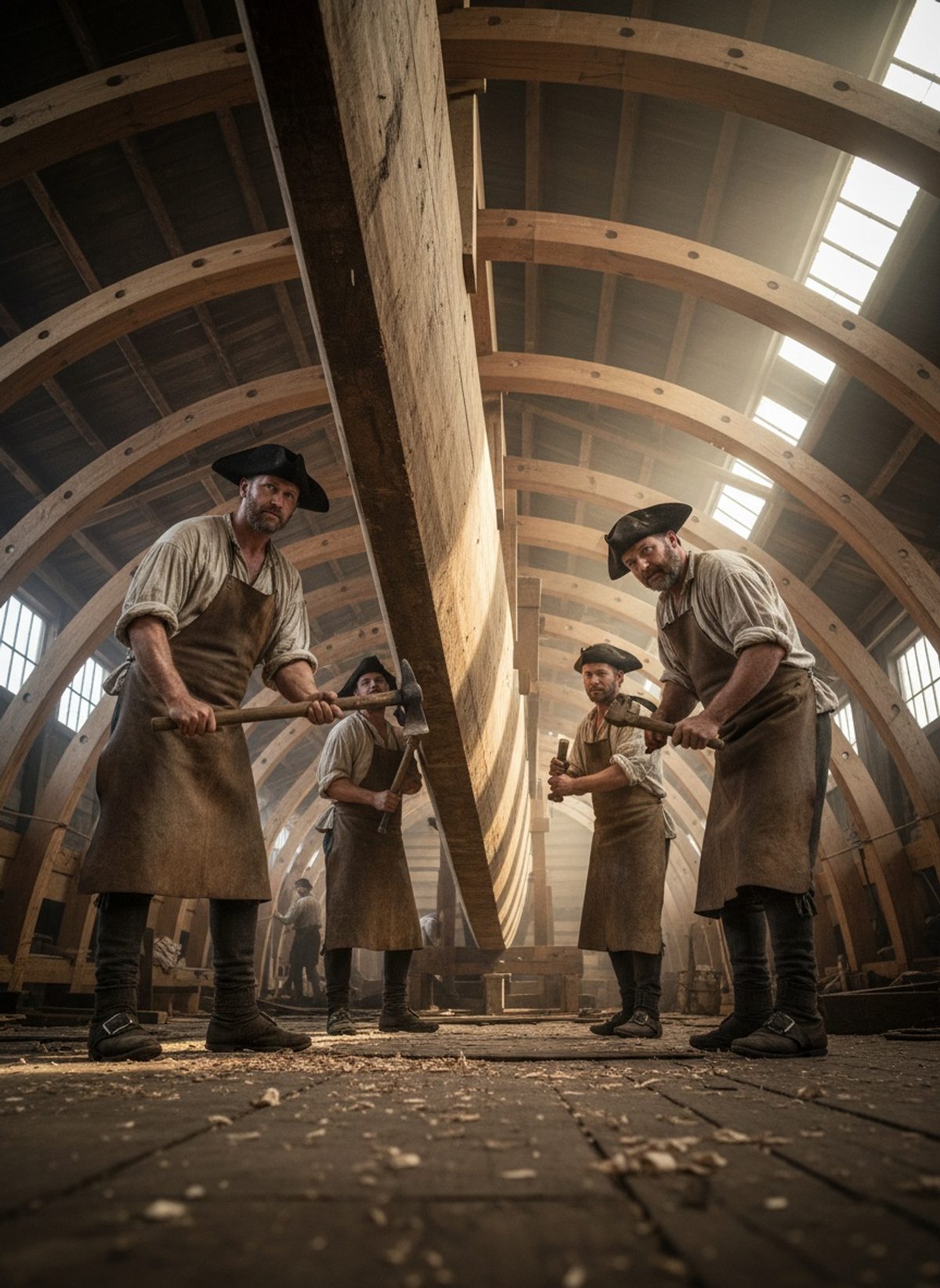
Overlooking the River Medway, the busy dockyard was a hive of activity where tradition met ambition. Craftsmen, shipwrights, and labourers brought Sir Thomas Slade’s intricate designs to life, each blow echoing a dedication to duty, even though their names would remain unsung.
The timber that formed the backbone of Victory, a staggering 6,000 oak trees, held the essence of countless winters. Cut from the mighty English oak, these trees had thrived for centuries before becoming the heart of this majestic ship.
Read next: When HMS Revenge Limped Home From the Armada, 1588
The wood was selected with care, each piece chosen for its strength and bend, allowing Victory to weather the fiercest of storms. From foundation to fine detail, nothing was left to chance. The shipwrights’ tool of choice, the adze, shaped these oaks with precision and care, ensuring every plank was as vital as the last.
The Vision of Sir Thomas Slade
Behind Victory’s construction was the mind of Sir Thomas Slade, whom many consider a genius of naval architecture. With a meticulous eye for balance and power, Slade's plans called for a ship that was both a formidable force in combat and a beacon of maritime prowess. While Victory's renowned destiny wasn't known then, her design promised that she was bound for greatness.
Slade envisioned a vessel that surpassed her predecessors, exceeding them not in mere size or firepower but in strategic brilliance. This vision required an exceptional level of craftsmanship from those who executed his blueprint. Each aspect of Slade's design was infused with innovation, from her elegant yet robust hull to the towering masts, crafted to harness the power of the winds.
Labour of Invisible Hands
The shipwrights of Chatham worked tirelessly, each man bound to their task in the hope of earning their daily keep and feeding their families. These men worked under harsh conditions, exposed to the elements, and toiled in exchange for modest pay.
Yet their hands were crucial, shaping the victory that future sailors would command. These anonymous craftsmen did not know the seas they would shape with their labor. They knew only the timber beneath their fingers, the ship before them, and the common bond with their fellow workers.
The construction of the keel was a particularly solemn milestone, a moment that linked shipbuilder and sailor. As the keel was laid, it symbolized the birth of a ship more resilient than any of the men who toiled to bring her to life.
Read next: When HMS Bellerophon Carried Napoleon Into Exile, 1815
Ships Built on Sacrifice
The costs of creating Victory were not counted only in coin or oak but in human lives. Building such a ship demanded sacrifice, not just from the man with an adze in his hand but also from those who labored unseen. Dockside life was incredibly harsh, often riddled with diseases that spread rapidly through workforces gathered in such tight, grimy lanes.
The everyman who helped craft this titan of the sea likely never glimpsed the finished vessel, let alone witnessed its legacy in shaping naval warfare. For many, the building of Victory was the work of a lifetime condensed into a few relentless summers and winters.
Immortality in Oak and Iron
The laying of Victory’s keel was more than the mere beginning of a ship; it marked the inception of an enduring legacy. Despite the anonymity of the men who built her, Victory's triumphs at sea would immortalize their craftsmanship. As a stage for the bravest and brightest, it bore testament to their skill with every shot it fired and every wave it split.
Pride of the Royal Navy, HMS Victory reminds us that history often forgets the many who contribute to a singular achievement. Their work laid down in sweat and wood set a path for future victories that would echo across the world. Although they are absent from the history books, these craftsmen remain inextricable from the story of a ship that outlived them by centuries, inviting us to remember the invisible threads of human endeavor upon which great achievements sail.