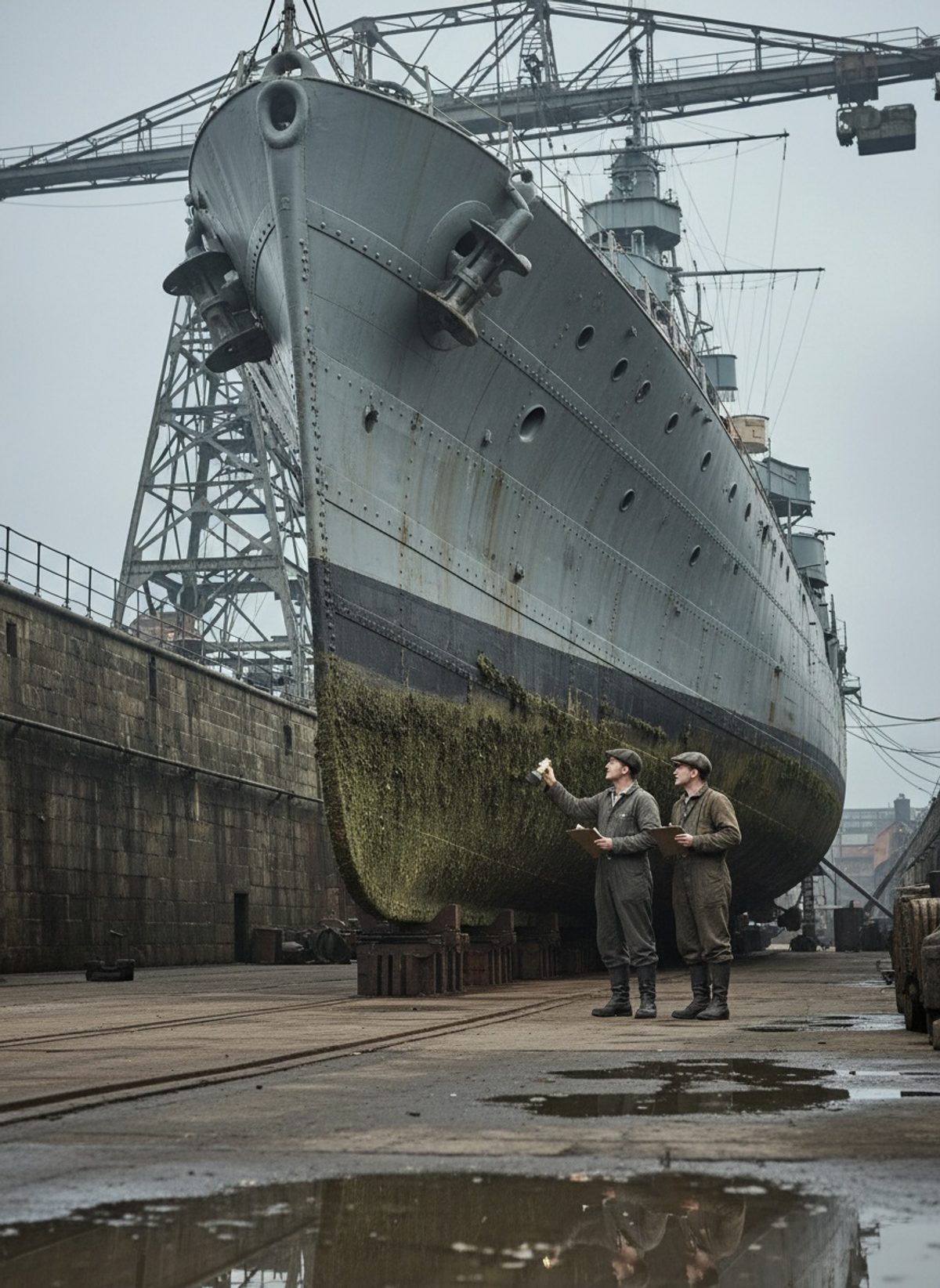
The ship’s hull creaked and groaned as welders and riggers tightened their grips, the rhythmic clang of their tools echoing against the colossal steel skeleton in the dry dock at Harland and Wolff. Beneath HMS Caroline’s weathered surface lay secrets the North Sea had jealously guarded for a century. The workers’ breath hung visibly in the frigid Belfast air, mingling with the metallic tang of machinery and the salty tang of lingering ocean mist. As they stepped back to admire the grandeur of the last ship to have fought valiantly in the Battle of Jutland, it was clear they were not just restoring a vessel, but attempting to reignite a piece of history.
Formidable Legacy, Fragile Vessel
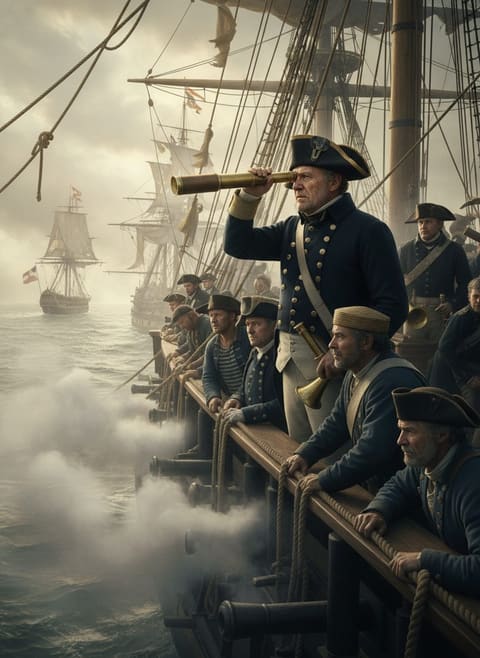
In the vivid tapestry of naval warfare, the Battle of Jutland held a special place—an awe-inspiring clash where steel leviathans thundered across the sea, trading fire and fury under the watchful eyes of a war-torn world. HMS Caroline, a cruiser birthed in the urgency of 1914, found herself amid this maelstrom—a participant in the largest naval confrontation of the First World War. With speed and agility that belied her robust form, she darted through the fog of war, her guns speaking to both adversaries and history alike.
Yet, while the roar of the cannons has long faded into the echoes of time, the survival of HMS Caroline had taken on a life of its own. Following the end of her active duty, the years turned into decades, and she weathered the sands of time with a stoicism that defied her metal hull’s natural fate. But even legends suffer the indignities of age. Docked quietly in Belfast, she had become both a relic and a reminder, a silent testament to the innovation and endurance of those who designed her in an era dominated by industrial might.
Harland and Wolff, the storied shipbuilders known for creating ocean titans such as the Titanic, were tasked with a new challenge—resurrecting HMS Caroline from her slow descent into decay. What lay below the waterline proved to be critical. Years of immersion in the cold grasp of the sea had taken their toll, scarring her hull with rust and erosion. Each weakened rivet and withered plate whispered tales of battles fought and the relentless jaws of time, underscoring the fragility of this iconic warship.
Read next: When HMS Glamorgan Turned Away From an Exocet, 1982
The Unfathomed Depths
With precision befitting a surgeon, engineers raised Caroline from the depths where she had rested, revealing what the ocean had hidden for decades. As the dry dock enveloped her in steel arms, the ship's underbelly drew audible gasps from onlookers. Pitted and scarred, the hull was a canvas of the ocean's quiet savagery, a chaotically beautiful map of corrosion and wear—a testament to both time and tides.
Experts painstakingly assessed the damage, their eyes tracing every line, examining each crevice, and cataloguing the delicate dance between preservation and decay. Conversations hummed around removing sections too degraded to save and how best to marry old steel with new, without erasing the unmistakable character that years of service and survival had etched into her bones.
It was during these delicate investigations that the ship revealed more than just her wounds. They discovered compartments long sealed, filled with artifacts frozen in time, remnants of an era where curved portholes offered scarce glimpses into maritime life. These relics provided new insights into the on-board life of sailors during her time at sea, adding depth to her storied history. Within confined quarters, voices resonated with tales untold—a poignant encounter between past and present, cascading across the cold steel of the ship's echoing halls.
Echoes of Yesterday, Promises for Tomorrow
The restoration of HMS Caroline at Harland and Wolff was more than the mere preservation of a vessel—it was the revitalization of a spirit, an effervescent memory of the human ingenuity and endurance witnessed across two world wars. As engineers labored to reinforce her hull with modern materials, a new story emerged, one of dedication not just to preserve but to celebrate a living museum piece for generations yet unborn.
Read next: When Hoste Took Three Frigates With One at Lissa, 1811
This endeavor weaves a complex tapestry of technical skill and historical reverence. The tangible repairs—cutting, welding, painting—ran parallel to the intangible threads that tie us to our history. Each bolt tightened, rivet replaced, and beam reinforced was not merely technical triumph, but a reaffirmation of human connection to the stories of our shared past.
And when at last the work was done, Caroline stood renewed, her aging lines still filled with elegance, offering a glimpse into the legacy she carried within her steel heart. Dock visitors marveled at her, with eyes wide at the notions she represented—the intersection of history and heritage, mystery and mastery. She had once outrun the guns of the enemy, and now she outraced oblivion, holding ground against time itself.
As we, too, face the passage of time and its relentless march, HMS Caroline emerges as more than just an artifact. She speaks to us of courage, resilience, and the inexorable flow of history that courses through our veins. Her survival teaches us that while metal may rust and wood may rot, the stories we preserve and the legacies we honor ensure that the heartbeat of history never truly fades.