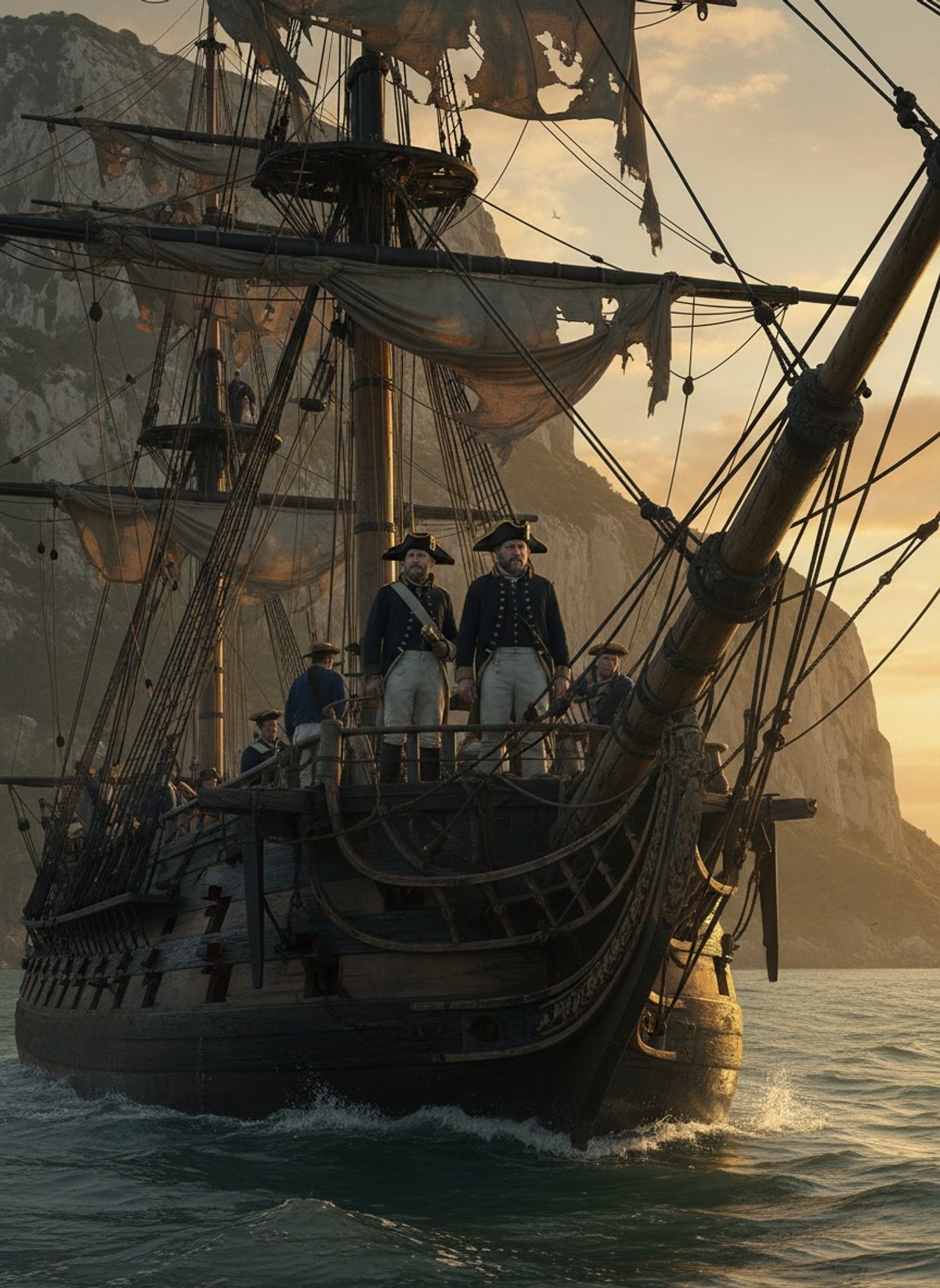
On a late October morning, the white limestone cliffs of the Rock of Gibraltar stood resolute against a cloud-covered sky. The usually boisterous waves whispered softly against the rocks, subdued, almost as if in mourning. Approaching this storied harbor was not a ship in full sail, flag snapping in triumph over a decisive victory at sea.
Instead, HMS Victory crept in like a wounded beast, her visage a portrait of resilience marred by sorrow. Though triumphant in her final encounter, she bore a heavy burden. In her hold, the body of Admiral Horatio Nelson — hero of the Battle of Trafalgar — lay preserved in a barrel of brandy for the somber voyage home.
Battered But Unyielding
As Victory neared the docks on the 28th of October, 1805, her battle scars narrated tales of ferocity and valor. The remnants of gunpowder clung to tattered sails, and her once-majestic rigging was a maze of tangled ropes.
The wood of her hull bore the impact of cannonballs, silent witnesses to the fierce battle with the combined Franco-Spanish fleet off Cape Trafalgar just days earlier. Yet despite the devastated exterior, the ship's heart still beat with the pride of a crew who had persevered against overwhelming odds.
Read next: When HMS Bellerophon Carried Napoleon Into Exile, 1815
Each of the 850 souls aboard felt the weight of their achievement tempered by profound loss. Nelson, a charismatic leader whose strategies had shattered the enemy's lines, had paid the ultimate price for victory.
The men, who had cheered him on with shouts of "England expects that every man will do his duty" ringing in their ears, now whispered in hushed tones. There were no jubilant cries of triumph as HMS Victory lowered its anchor, just a solemn acknowledgment of an end to both battle and life.
Gibraltar: Sanctuary and Mournful Port
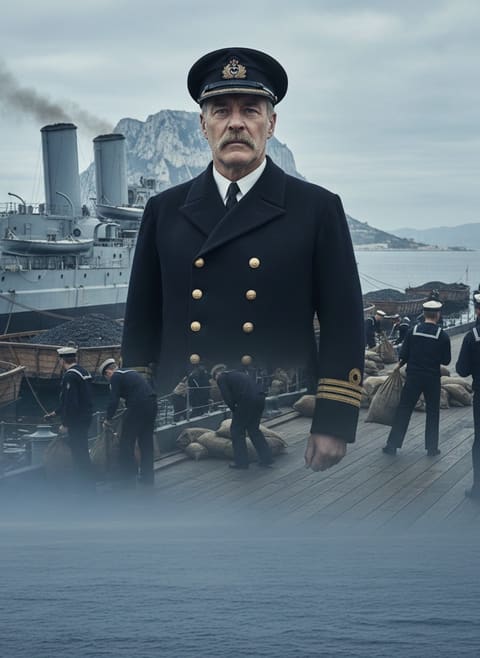
Gibraltar, with its strategic position overlooking the Strait, had long been a linchpin of British naval power. In peace, it served as a bustling port, its docks alive with the clamor of trade and the harmonious churn of diplomatic enterprise. But in those solemn October days, it transformed into a sanctuary for weary sailors and damaged ships seeking respite from the trials of war.
The arrival of Victory drew somber attention. Her appearance in the bay, an eloquent canvas of battle-earned damage, silenced the usual bustle of dockhands and merchants.
As word of Nelson's death spread through the town, shops closed in mourning, and locals gathered at the water's edge, whispering prayers for the departed hero. The presence of the flagship, besmirched with the blackened marks of conflict, transformed Gibraltar into a stage set for the reality of war — a stark reminder of its cost.
The Burden of Command
As Captain Thomas Hardy relinquished command of Victory upon docking, he carried not just the responsibility for his ship and her crew but the emotional weight of Nelson’s loss. Hardy, steadfast and trusted by Nelson, had remained by the admiral’s side in his final moments, navigating the maelstrom of battle with the same resolve he now used to guide Victory safely to harbor.
Read next: When the West Africa Squadron Hunted Slavers in the Dark
The role of command in such times was not merely about strategy and leadership but also about empathy and solidarity. The crew, each man deeply affected, found solace in their shared grief, paying their respects in small gestures — polishing the ship's brass fittings or simply standing in contemplative silence beneath her battered masts. Hardy, now entrusted with Nelson’s final journey, faced the dual task of maintaining discipline and offering comfort.
The Legacy Sealed in Brandy
The decision to preserve Nelson's body within a cask of brandy for the journey back to England was both a practical solution and a poignant symbol. It captured the essence of maritime tradition — a blend of practicality, homage, and the eternal struggle between life and death at sea. Ensuring that the admiral returned home provided a sense of duty fulfilled, both for the man he once was and the legend he became.
And so, HMS Victory, her voyage far from over, prepared to depart Gibraltar not in triumph but in tribute. Victory's battered sails, like the wings of some sea-weary albatross, would carry word of Trafalgar’s outcome to distant shores. She bore witness to a new chapter in naval warfare — a testament to courage, sacrifice, and the eternal dance of destiny upon the sea's winding path.
This story of valor and sacrifice remains timeless, illustrating how triumph is intertwined with loss. As HMS Victory left behind the rocky shores of Gibraltar, she carried a message through time: greatness often comes at the highest cost, and it is the stories of such sacrifices, untold and unheralded, that truly shape the annals of history.