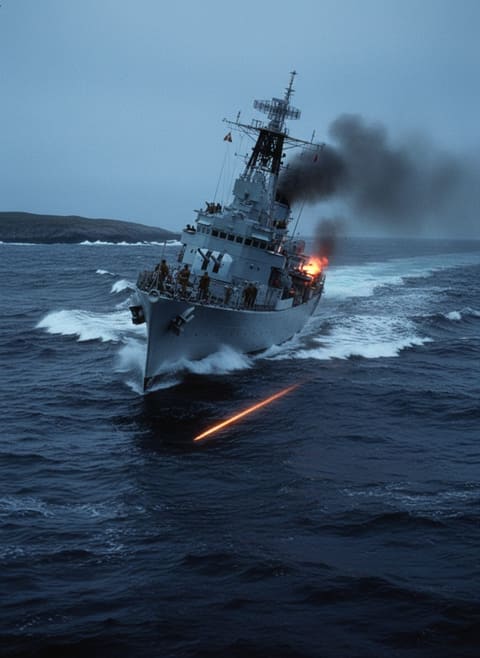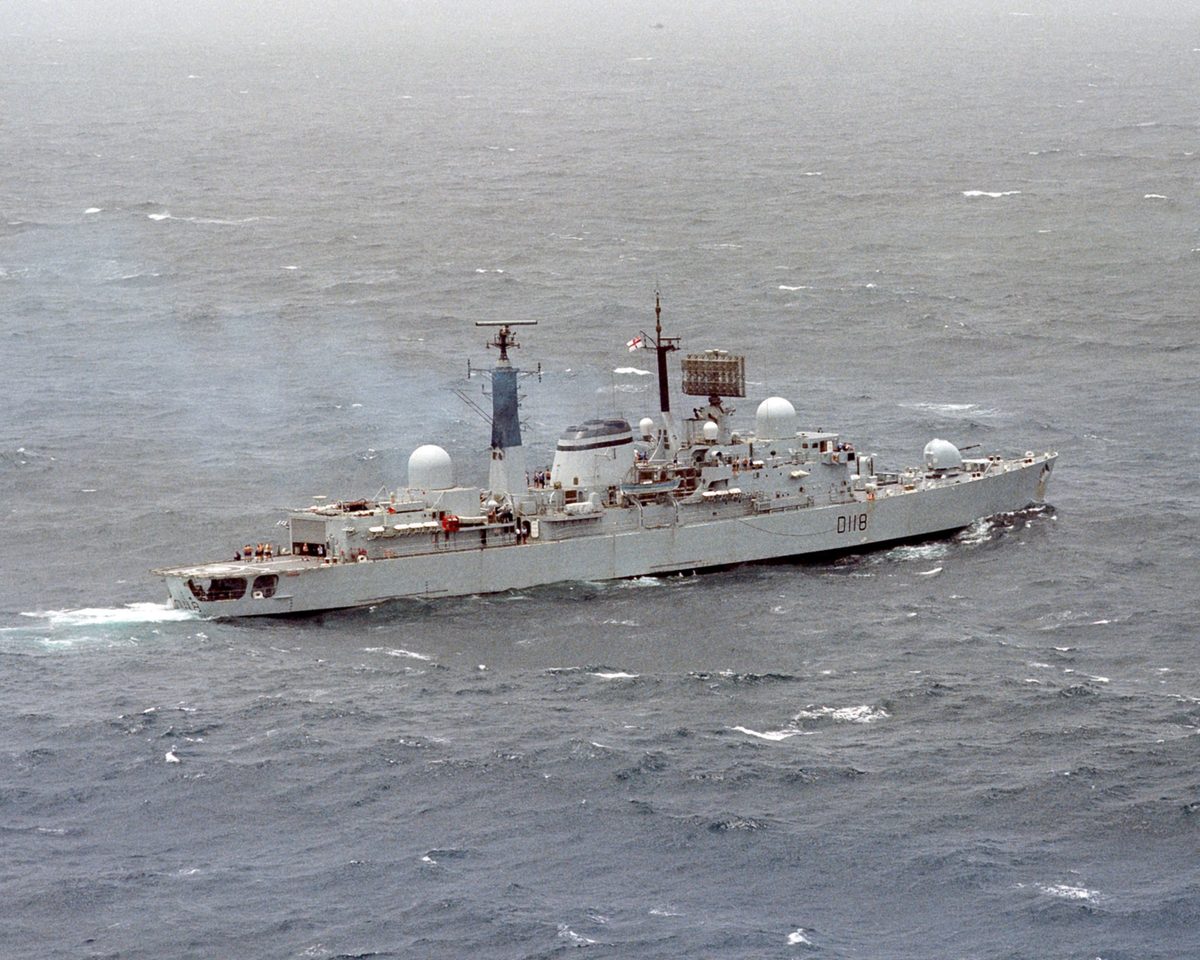
May 25, 1982. The South Atlantic wind buffeted the British ships, churning the waters around a tactical tandem maneuvering for a day that would plunge into legend. The Type 42 destroyer HMS Coventry and its partner, the frigate HMS Broadsword, stood as defensive sentinels in the tense waters north-west of Falkland Sound. Their mission? To serve as a decoy and pull the lion’s share of Argentine aerial attention away from the British landing forces at San Carlos Water. Coventry's captain, David Hart Dyke, understood the grim stakes. They were the bait; their survival was secondary to the success of the overall campaign.
The Trap is Set
In an age defined by Cold War power dynamics and territorial disputes, the conflict in the Falklands had ignited with fervent national fervor. On Coventry's bridge, the atmosphere crackled with a blend of resolve and anticipation. Coventry was armed with the renowned but contentious Sea Dart missiles, a long-range anti-aircraft system installed to shield the fleet's most vulnerable ships. Nearby, Broadsword, fortified with the nimble Sea Wolf system, was meant to complement Coventry’s longer reach, a combination resembling what was informally referred to as "Type 64": two distinct war vessels amalgamated into a streamlined defensive bulwark.
The pair took their position north-west of Falkland Sound, daringly close to the Argentine-occupied coast. Such proximity diminished the effectiveness of the Sea Darts, originally designed for broader ocean engagements far from crowded coastlines. The British gambit relied on the hope that their formidable firepower would be enough to stave off any dedicated assault, yet Coventry's precarious location made her vulnerable to low-flying attackers evading her formidable gaze.
Crew members knew the plan demanded sacrifices. This mission was no mere exercise in naval prowess; it represented calculated exposure within contested waters, poised to lure away the aerial predator's hungry eyes. And at first, fortune remained on Coventry's side. Alerted by rogue signals, her systems clattered into action, directing a Sea Dart north of Pebble Island to intercept an Argentine A-4B Skyhawk. The missile soared, claiming pilot Capitán Hugo Ángel del Valle Palaver as its quarry. Later, another A-4C met a similar fate, ejected into the icy embrace of the waters, its pilot never to return.
Read next: When HMS Caroline Went Under the Knife at Harland and Wolff
A Dance with Fate
The lull before the storm did not stretch far into the afternoon. The Argentinian pilots, tenacious and unyielding, arrived in coordinated waves, their sleek Skyhawks skimming the interface of sea and sky. Their strategy of flying low beneath the radar disoriented Coventry’s targeting systems.
The first wave peeled in, two Skyhawks diving with lethal intent. Broadsword's Sea Wolf sought to engage, but an unforeseen hitch in its systems blocked a lock-on. In those split seconds, destiny diverged. One bomb cast aloft bounced from the ocean's surface, wedging tightly into Broadsword's flight deck without detonating—a malfunction of geometry and fortune. Coventry's gunners claimed a glancing hit on the second Skyhawk's tail with small-arms fire, yet the aircraft flew home, a futile scuffle in this aerial ballet.
The second pair ripped across the void of warships with aspiring ferocity, bearing down on Coventry with grim focus. Slick and swift, they exploited Coventry's blind spot, converging from her port side. The coordinated choreography of missiles, maneuvers, and metal clanged in vain against the assault. In a bold, desperate bid, Coventry unleashed a Sea Dart, not for precision but disruption. Captain Hart Dyke wheeled the heavy behemoth sharply starboard, cutting the line of fire and turning Broadsword's aid into a helpless passenger.
The airborne assassins found their mark. In those eternal moments, where time stretches into fission and fear, three bombs crashed just above the waterline. Chaos ruptured within Coventry; one payload vaporized the nerve center of control—the computer room—plunging her command into darkness. Another bomb shattered the vital organs of the ship, the engine rooms, letting water flood where it should never belong, erasing hopes of salvation. And the final bomb, nestled within metal breast, heard no call to detonate, but the damage was done.
Steel’s Enduring Echo
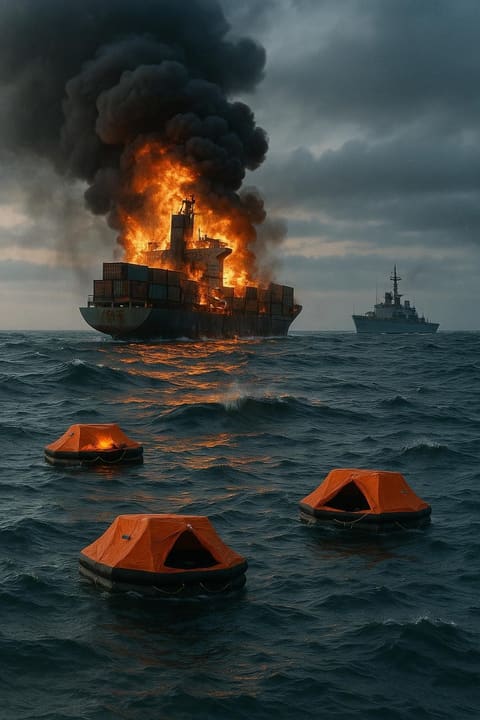
As the South Atlantic engulfed Coventry's listing form, the battle persisted in the men who floated now in the cold embrace of the ocean, 19 souls forever sealed in maritime valiance. In timeless British spirit, their voices melded into song—Monty Python, a buffer against reality’s sharp edges—while rescue motors rapidly churned towards them.
HMS Broadsword, marred but afloat, served as their lifeboat, ushering 170 souls back from the brink of eternity. This same day marked another loss—the Atlantic Conveyor—yet the landings at San Carlos rose firm amid the ebb and flux of desperation and sacrifice. As Coventry descended below the waves, her legacy continued to ripple through time.
Read next: When Broke Boarded the Chesapeake in Thirteen Minutes, 1813
Post-war, a poignant cross found its place on Pebble Island, a tribute to the unwavering human spirit beneath the iron hull. And five months on, an underwater team scoured the sunken ship, recovering emblems of courage and honor to be championed in the annals of naval history. Coventry's legacy materialized in her Cross of Nails, traversing through time and vessel, a carrier of hopes and remembrance as seas shift and change.
This tale of defense speeds beyond metal and missile, past tactics and tragedy. It encapsulates the enduring sacrifice that threads human history, marked by profound missions fraught with peril and purpose. The tragedy of HMS Coventry resonates through ages, a narrative woven into the fabric of national identity—a reminder of the price of war and of the men who paid it.
The MoD has confirmed commemorations for the 45th anniversary of the war in 2027.
Part 21 of 24: One Falklands story a day until Remembrance Sunday