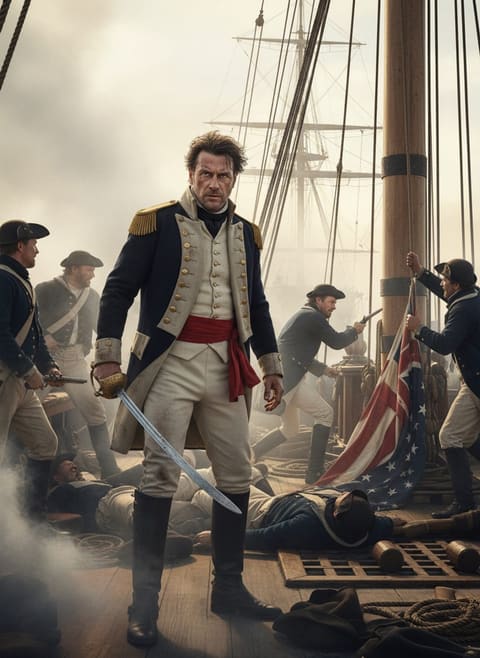
He was thirty-nine years old, and his career had been marked by routine rather than renown. Admiral Doveton Sturdee might not have caught the public eye, but in November 1914, his decisions would change the course of a war.
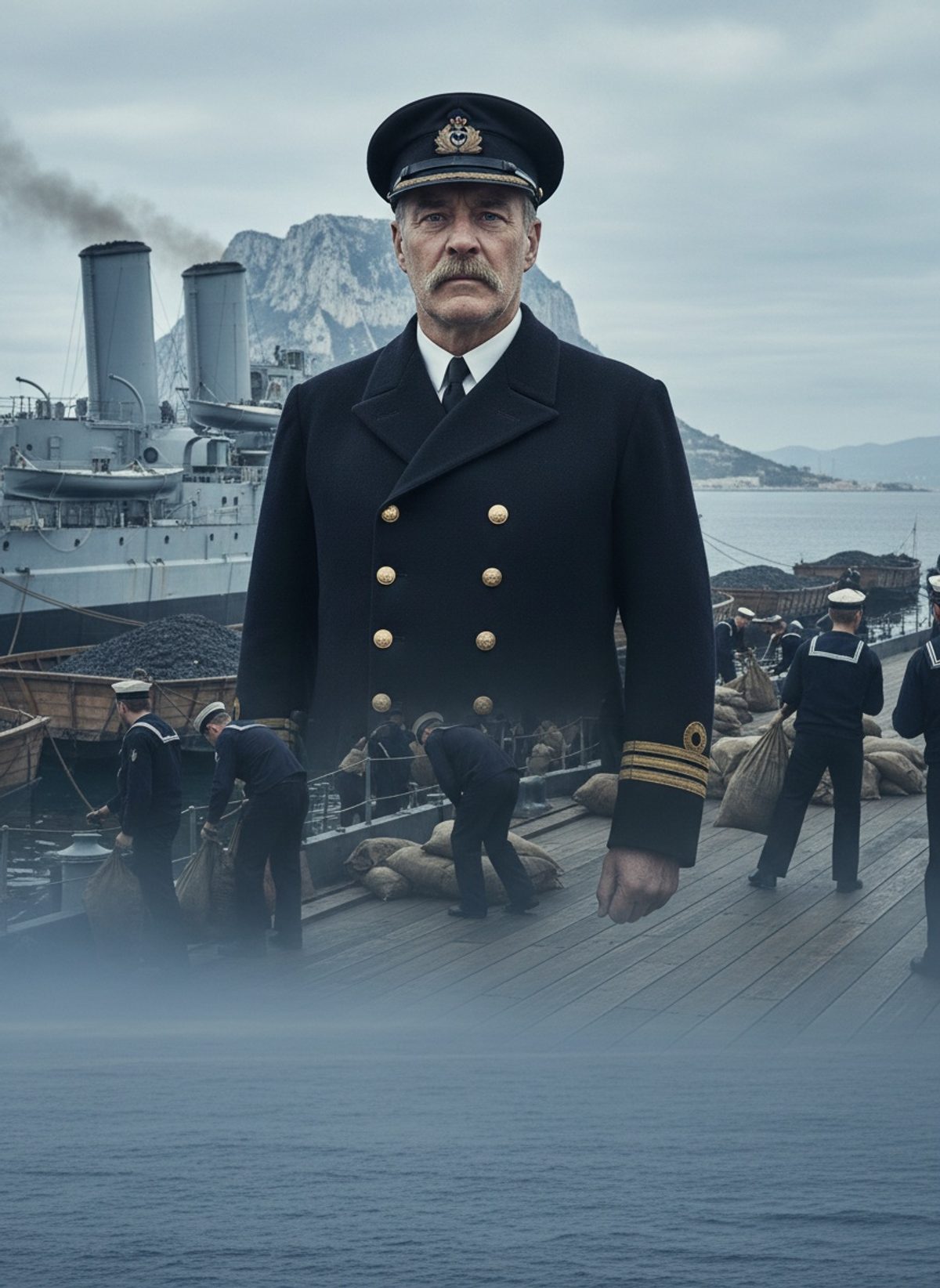
The sea was a heaving, uncertain stage as HMS Inflexible cut through the Gibraltar Strait, a point of transit that practically every sailor understood was key to mastery of the Mediterranean. But for Sturdee and the mighty British battlecruiser, this was merely a prelude. Gibraltar presented an opportunity for coal and, perhaps more significant, orders. The function seemed mundane, yet those brief hours would prove pivotal in a global conflict that had exploded with ferocity and surprise.
HMS Inflexible was part of the naval muscle the British Empire flexed to maintain its global dominance. Designed to intimidate, her great guns and length made her a fearsome presence on any ocean. As war clouds gathered throughout 1914, she had prepared for action against German forces. With Britain's naval supremacy presumed nearly unassailable, what came next was a shock.
Just days before Sturdee's Gibraltar sojourn, British forces had suffered a bruising defeat at the hands of the German Pacific Squadron at the Battle of Coronel. It was the kind of debacle that echoed back to the Admiralty with the heavy weight of wounded pride. In South America, British commanders had been outmaneuvered by a wily German opponent, Vice-Admiral Maximilian von Spee. The losses were not monumental in scale, but they threatened the perceived invincibility of the Royal Navy—a perception that was at the heart of its strategic deterrence.
Read next: When the Archer Class Was Born and Remade Itself, 1886
While coal was shoveled aboard HMS Inflexible, telegrams were rushing through a network of wires and stations—a communication web from London to Gibraltar—that carried a new mission. Sturdee was tasked with achieving redemption. His orders: hunt down the German Squadron that had broken the British line of confidence.
Details are scant on the specifics of the timing or discussions that took place aboard, but what is known is that Inflexible, invigorated by fresh coal, once again churned the sea at speed as it departed Gibraltar. Behind the iron bulk and engineering prowess of the battlecruiser throbbed an urgency to right the wrong and to re-assert British naval supremacy.
The operational plan was as bold as it was dangerous. The Atlantic, vast and with its weather frequently inhospitable, was no stage for the faint-hearted. As Inflexible streaked through the waters, the stakes couldn’t have been higher. The Empire demanded more than victory; it demanded a spectacle that could overwrite recent failures with the thunder of its great guns.
Inflexible and her sister ship HMS Invincible, along with several other support ships, had been tasked to give battle wherever Spee was found. Intelligence was gathered hastily, and the plan had to be both adaptive and sturdy under pressure. The Inflexible's hunt took her into the South Atlantic, a theater vast and full of unknowns. Here, the vastness of the sea could swallow both hunter and hunted.
Days stretched out, anticipation boiling with the rise and fall of the sun over the deck. When news finally crackled over the wireless sets that Spee’s squadron had been sighted near the Falkland Islands, the chase reached its climax. HMS Inflexible, channeling the coals of determination recruited at Gibraltar, pressed hard for engagement.
The convergence off the Falklands was as pre-determined as nature allowed, weather and ocean currents willing. What followed at the Battle of the Falklands was the collision of British intent and German awareness, with geography as their witness. The British squadron's arrival was a well-calculated affair, capitalizing on surprise and superior range of artillery.
Read next: When HMS Caroline Went Under the Knife at Harland and Wolff
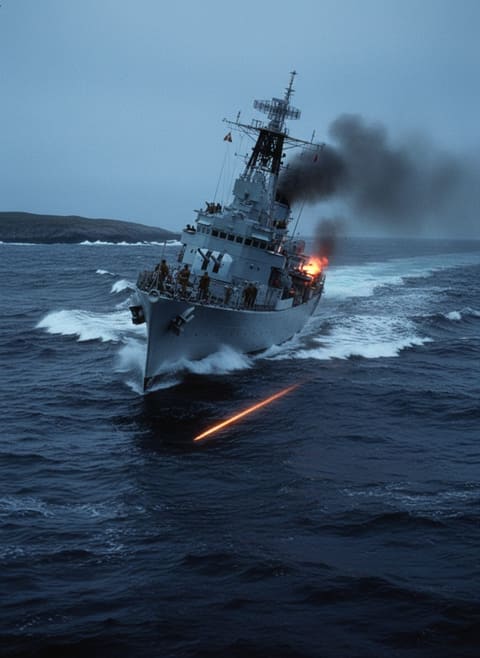
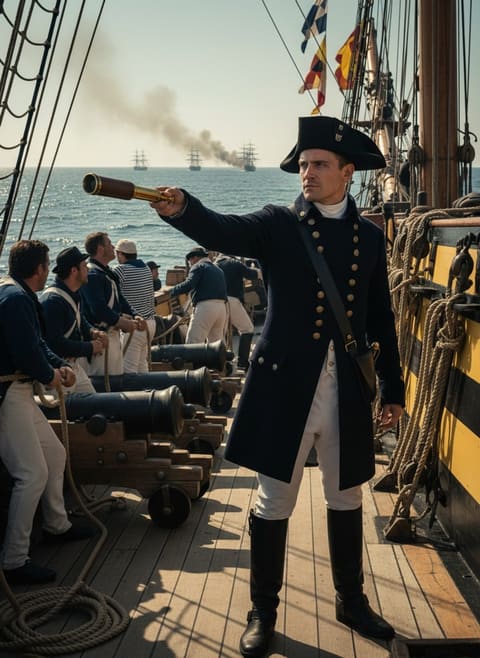
The battle, when finally joined, was furious. Inflexible's guns roared with seasoned aggression, and its armor shrugged off what the Germans managed to hurl in return. Yet, it was not merely a contest of arms but will; HMS Inflexible's victory was to be, in part, credited to the advantage conferred by readiness secured at Gibraltar.
German losses were devastating, with only a few complement members evading capture or death in the frigid waters. Spee’s gamble to challenge the British in unfamiliar waters had cost his nation dearly, a setback from which the German naval forces would not soon recover.
Gibraltar's coal had burned to revenge-driven steam, and the orders received had orchestrated triumph from the ashes of Coronel. This moment shaped not only the course of naval engagements at large but re-confirmed the British dominance over newly considered, remote theaters.
The story of HMS Inflexible and her transformation at Gibraltar from a tool of war into an instrument of history teaches us the value of readiness and the often underappreciated pivot points upon which history turns. It was not the demonstrable strength of arms alone but the unseen maneuvers, the silent logistics, and the telexed orders that secured mastery at sea. Every warship gliding across the horizon might sail on stories like these, quietly passed over or duly noted.