March 7, 1904. Dust hung in the morning air, drifting across the streets of Allahabad under a pale sun. Market vendors had just begun arranging their wares with the promises of the day yet to unfold. Amidst this symphony of daily life, there emerged a distinct figure purposefully making her way through the bustling cityscape. Cornelia Sorabji, with her characteristic calm determination and a brown notebook clutched tightly in her hand, was on a mission that would not only challenge societal norms but illuminate a continent's silent cries for justice.
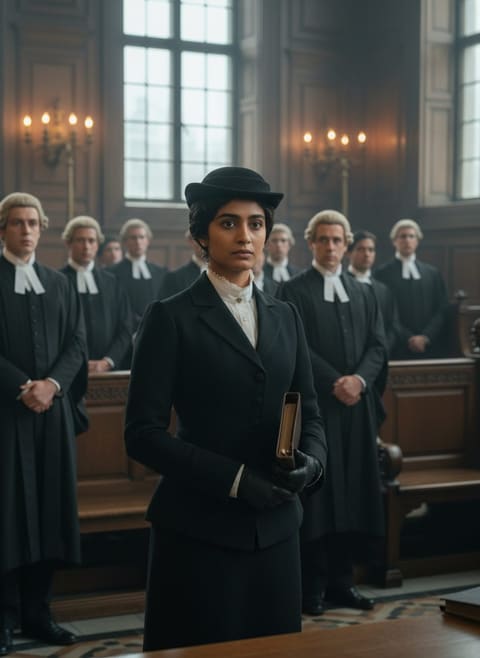
Cornelia Sorabji was no ordinary woman in the realm of Edwardian India. She stood, quite literally, at the edge of two worlds. Born on November 15, 1866, in the dense social fabric of Poona, her Indian heritage danced quietly with the legacy of her Parsi Christian upbringing. Her parents were influential in education, particularly for women, given her mother, Francina Ford, was a well-known advocate for women's rights. This environment cultivated Cornelia’s insatiable appetite for knowledge and justice, culminating in her becoming the first woman to graduate from Bombay University. Her resolve, however, did not stop there. Breaking more barriers, Cornelia became the first woman to study law at Oxford University, overcoming steadfast opposition and societal disbelief.
Yet upon returning to India, Cornelia encountered an unyielding legal system designed to exclude her. Despite her qualifications, the Indian legal profession dismissed her apparent capabilities because of her gender. Not to be deterred, she immersed herself in an arena untouched by male lawyers — the zenana, the secluded quarters designated for the women of the household.
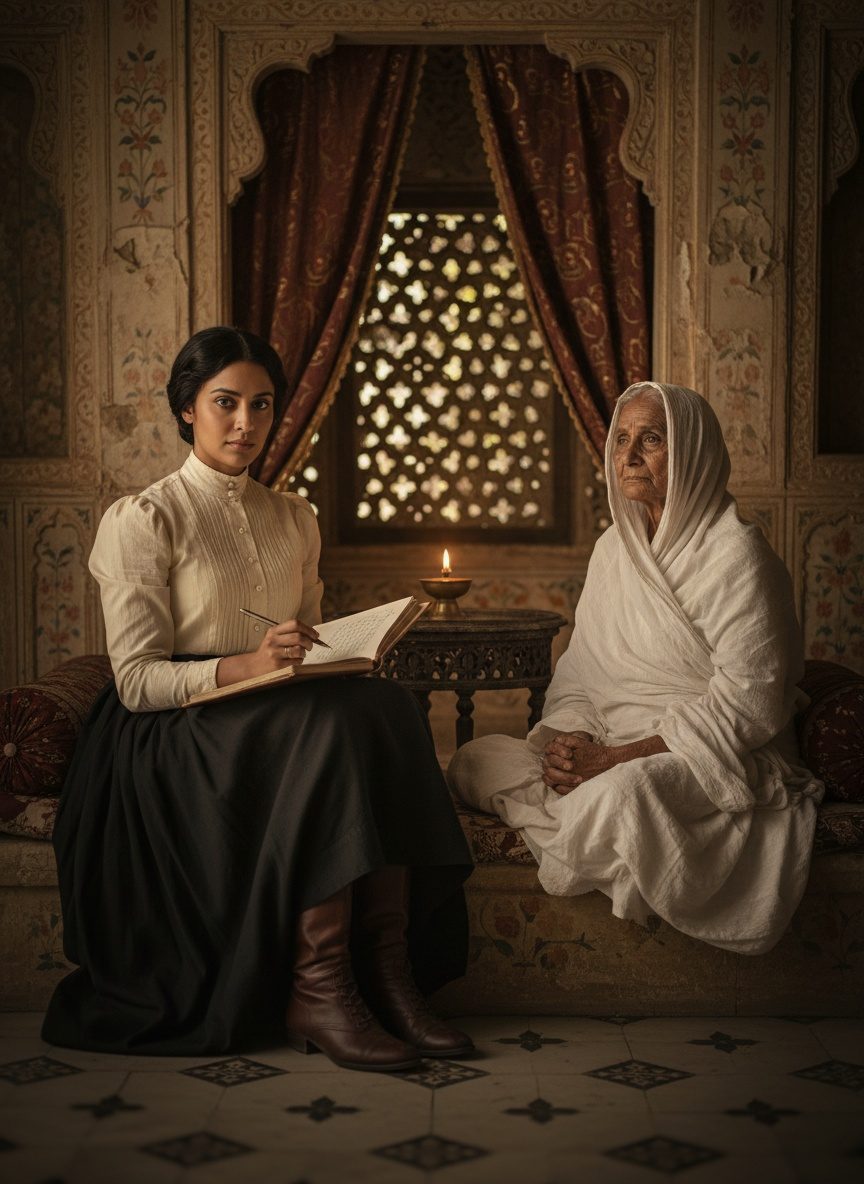
The concept of the zenana intrigued Cornelia and presented a singular opportunity. Picture this: beyond high walls, through narrow corridors, there lay the lives of women categorized as purdahnashins — women who spent their lives in enforced seclusion, unable to communicate with men outside their immediate family. In this isolated world, many faced injustices and predicaments that the governing powers and the outside world neither understood nor could rectify. Cornelia realised there was a desperate need for legal representation to cut through the silence, an opportunity for advocacy that none but she could seize.
Read next: When Britain Seized an Island and Dared the World to Stop It
Six years after returning to India in 1894, Cornelia took and passed the LLB examination of Bombay University in 1897 and the pleader's examination of Allahabad High Court in 1899. The titles stacked up, but not the recognitions. Still, through these sustained efforts, she became the first female advocate in India, although full acknowledgement by the Bar was elusive until 1923, when women were finally allowed to practice law.
Nonetheless, Cornelia’s entry into the zenanas was an unconventional path that bypassed bureaucracy’s shackles. As Cornelia traversed the threshold of the zenana estates, she carried not just legal expertise but the weight of hope and change. Her involvement with these women was not purely legal; it was deeply empathetic. She listened to them, advised them, and where possible, extracted them from legal quagmires which could involve anything from inheritance disputes to property rights and personal liberty.
Consider the symbolic unlocking of the door she approached on that March day in 1904. This particular mission revolved around the estate of a recently deceased widow, where the legal parameters dictated said estate should transfer to male relatives. But within the obscured lines of tradition lay Cornelia’s path. Her brown notebook was a ledger of accounts, rights, and decisions — essentially the voices of the voiceless, scrawled into life.
Through the narrow streets and intricate court systems of India, Cornelia’s presence grew into an unignorable force for change. With the ability to speak several languages and dialects, her communication melted barriers ideologically and linguistically. Each successful legal advice, transaction, and resolved case didn't exist in a vacuum — it propelled a movement slowly, surely, turning tides within the stronghold of colonial and patriarchal powers.
Read next: When Cornelia Sorabji Stood Before a Purdah Wall, 1904
Her dedication expanded beyond the confines of legal advocacy. Cornelia engaged extensively in social reforms and campaigning groups, straddling spaces which esteemed the essence of womanhood in unfamiliar contexts. She joined and influenced organizations such as the National Council for Women in India and the Federation of University Women. Here, she skilfully balanced traditional Indian values with the progressive notions filtering through the British Empire, championing rights suited to the Indian cultural landscape instead of imitating Western women's suffrage aspirations.
In her mind, Cornelia was sowing seeds for the future. Her cautious, yet unwavering, approach conveyed a potent message — that empowerment is not simply given, it must be claimed, cultivated, and adapted within one’s own society. Over time, as Cornelia continued her advisory work well into her later years, she had left an indelible mark upon the very fabric of gender dynamics in India.
By the time the law changed in 1923 to allow women to practice as barristers in India, Cornelia was finally able to openly occupy the legal stage she had long prepared. Though her name appeared on many a legal document, it was upon her unofficial transcripts — translated tales and hushed voices from secluded quarters — that she truly etched history. Cornelia Sorabji's symbolic walk into the zenana remains not merely an anecdote of triumph over adversity but a testament to the subtle power of one individual's resolution interwoven with cultural empathy. She dared to speak where there existed a profound silence.
In revisiting Cornelia’s story, it is not merely a recalling of historical accomplishment but an evocative reminder of the nuanced battle for justice. Her journey endures as a bridge between worlds, revealing how much exists beyond visible barriers. In these locked quarters resided the hidden musings of thwarted hopes, still resonating in the echoes of today, urging us to peel away at veils of silence in pursuit of justice anew. Cornelia Sorabji's walk into the zenana was thus not just a moment but the opening of doors — a call to arms in a relentless march towards equity and understanding.