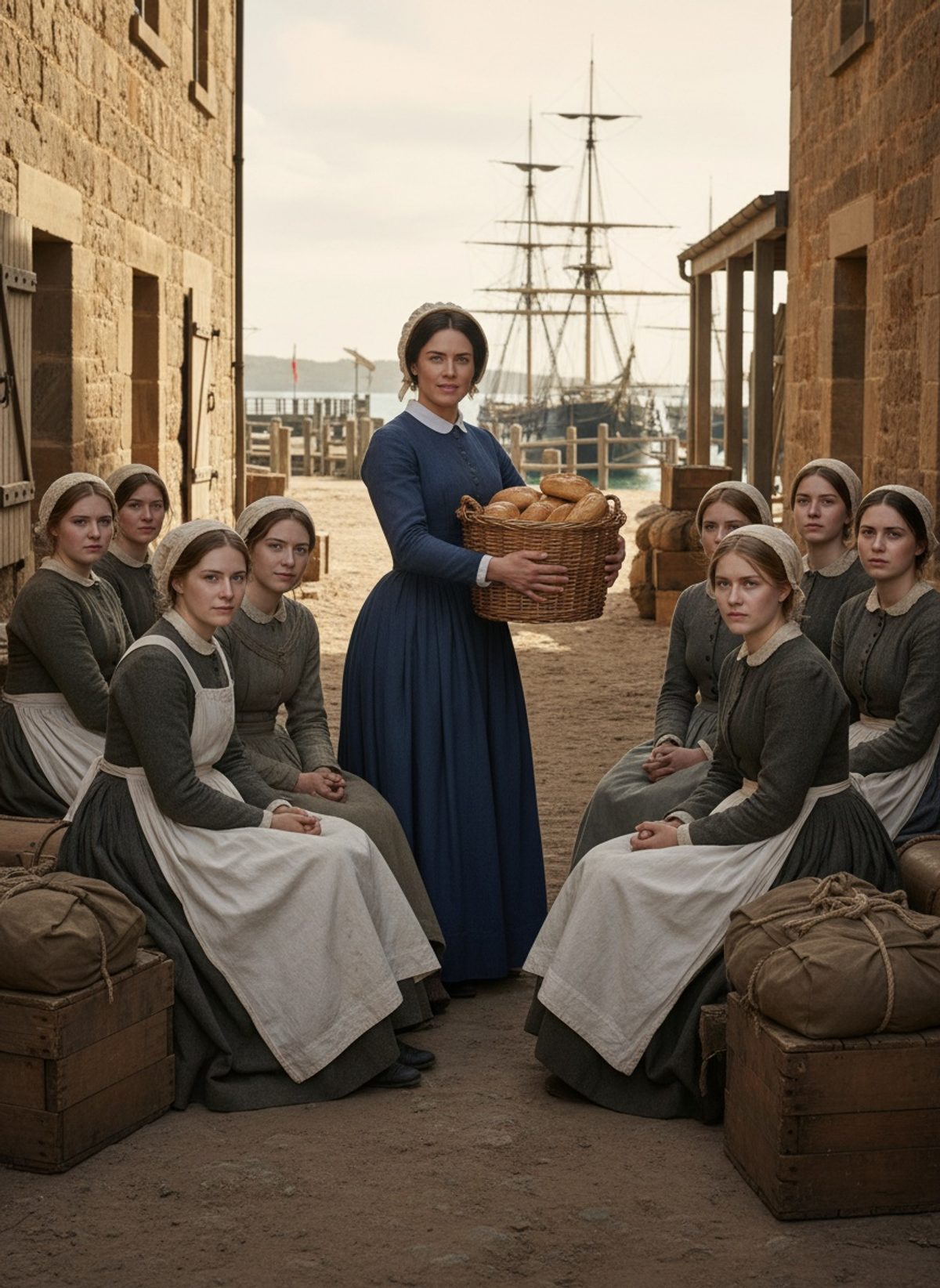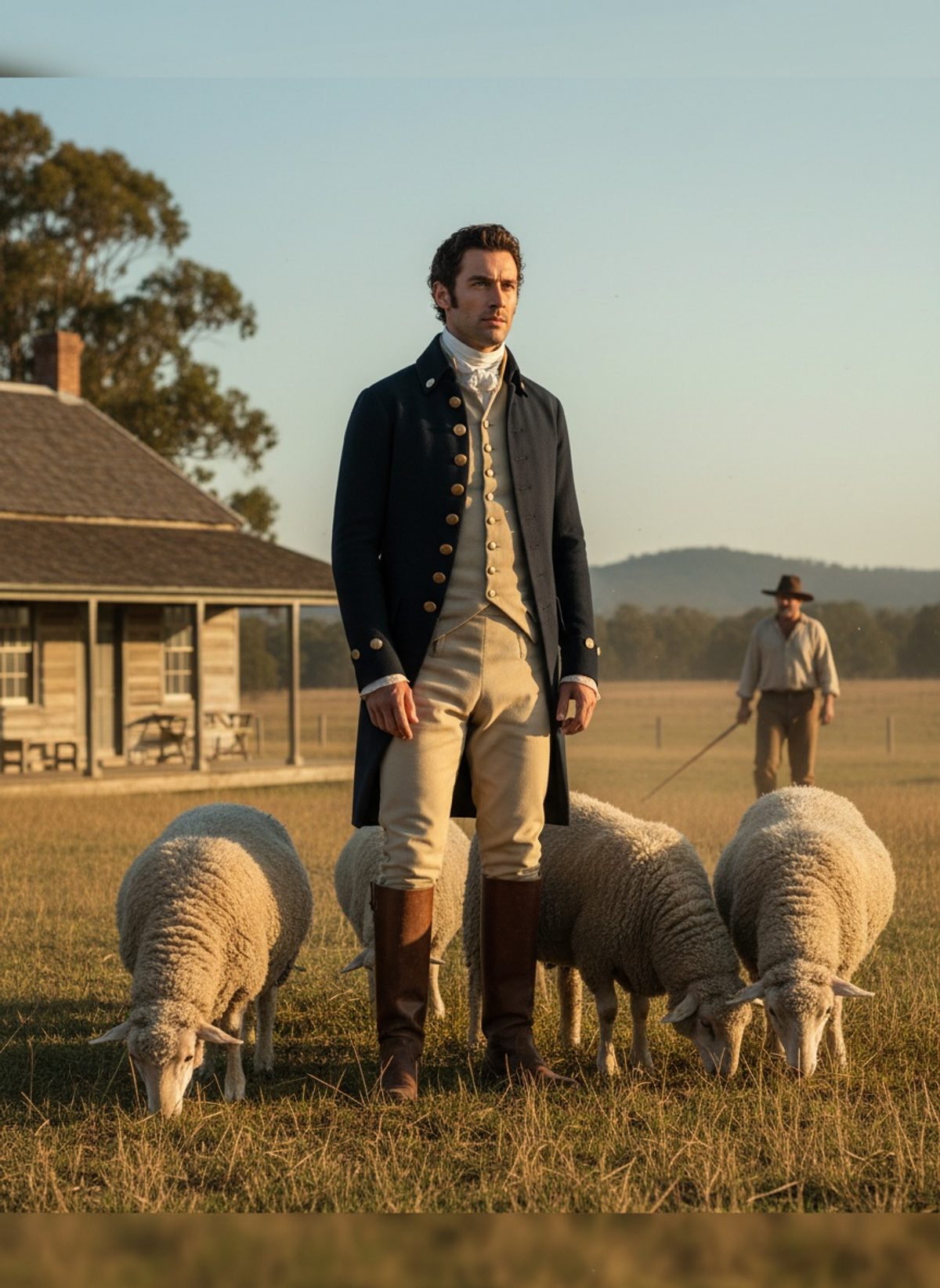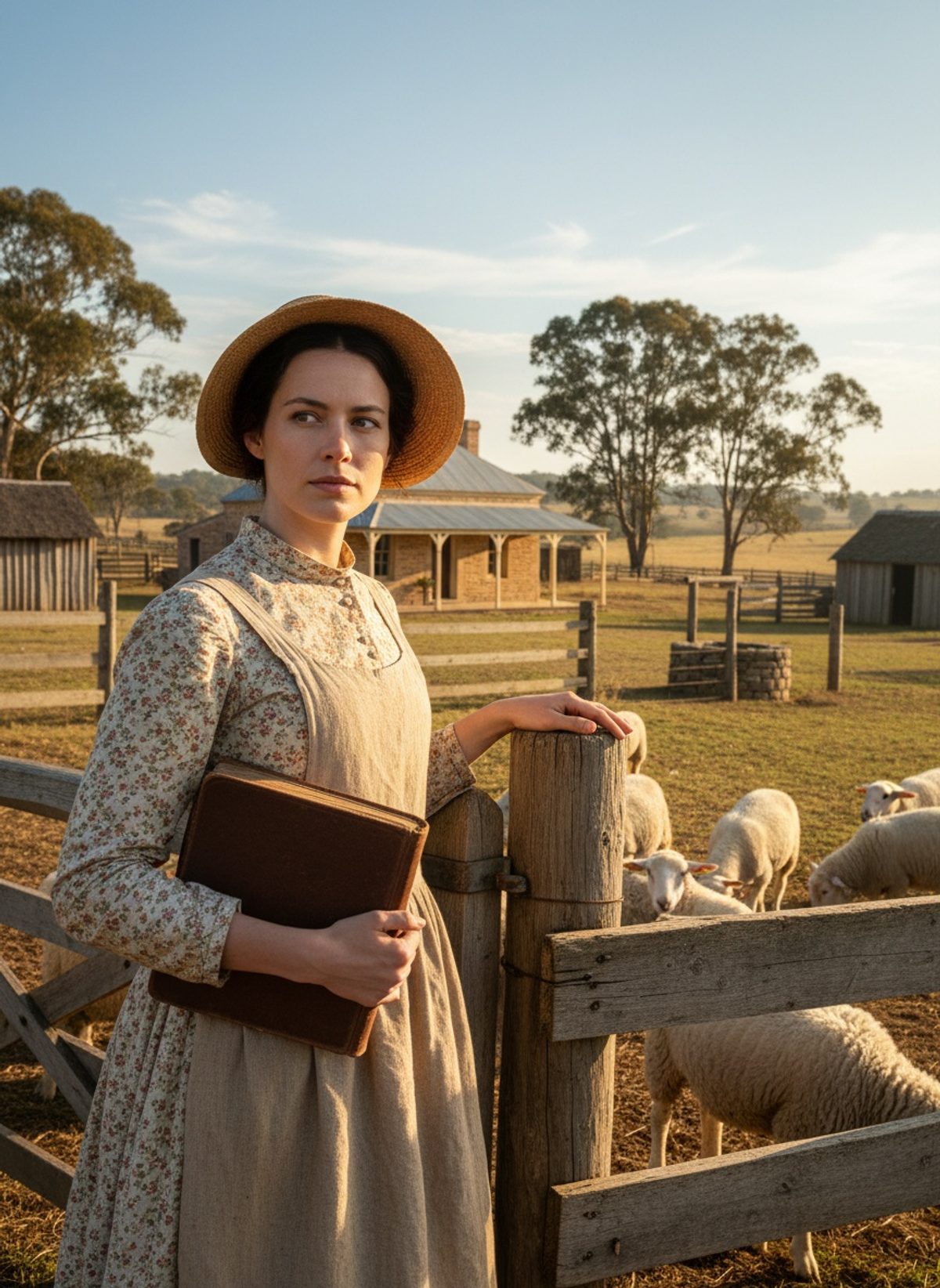
The late afternoon sun casts long shadows on the rolling plains of Parramatta. A soft breeze rustles the eucalyptus trees, carrying the faint bleating of sheep in the distance. It is the autumn of 1804, a transitional time when the landscape basks in subdued golden light, hinting at prosperity yet to fully bloom. But beneath this serene facade lies a colony teetering on the brink. Elizabeth Macarthur stands at the heart of an estate struggling to survive, with her husband, John, detained halfway across the world in England. Charged with the responsibility of maintaining a pioneering dream, Elizabeth finds herself alone, with four young children and over two hundred sheep to tend.
In the burgeoning settlement of New South Wales, the Macarthurs had sowed the seeds of an audacious venture. Merino wool, with its promise of a lucrative future, was their chosen path to prosperity. Yet, as John Macarthur faced trials in England due to his involvement in a duel, the burden of this ambitious project fell unexpectedly on Elizabeth. Far from the courts and intrigues of London, in the isolated expanse of New South Wales, she faced both the harsh realities of colonial frontier life and the skepticism that a woman could manage such operations without a man’s oversight.
The year John departed marked a turning point—not just for the Macarthur family, but for the colony itself. Elizabeth was no stranger to the adversities of colonial life, but the responsibility she now shouldered was daunting. The wool enterprise teetered on collapse at a time when the entire settlement’s survival was precarious. Drought, food shortages, and the ever-present threat of conflict with the local Indigenous tribes intensified the pressures already felt by the colonists. Yet, driven by an unyielding spirit, Elizabeth took control of the sprawling estate with a precision that belied her years in the harsh Australian environment.
Parramatta in the early 19th century was a world away from the sophistication of Elizabeth’s native Devon, and the task wasn't just about sustaining sheep. The rams and ewes of her flock required careful breeding practices, something John Macarthur had passionately advocated but could not execute in his absence. Elizabeth was quick to absorb every detail of sheep husbandry, negotiating with local convicts and liaison men for resources and labor, determined to keep the heart of the enterprise beating. The daytime sounds of clattering hooves and bleating merged into the nightlife all hardened colonists knew too well—an orchestra that never ceased and to which Elizabeth became attuned, night after sleepless night.
Her day began before first light, often spent in the pastures. Elizabeth walked among the flocks, checking on lambing ewes, the elegant, albeit delicate Merinos, whose fleece could spell the difference between dissolution and prosperity. The colony's survival seemed entwined with these small, woolly creatures. With a steady hand, she managed the workers, many of whom were assigned against their will, and sought counsel from agricultural experts when she could. The impact of her diligence was tangible. Slowly, the estate's resilience grew alongside her children, each thriving in independence as their mother exemplified through sheer necessity.
Elizabeth’s empowerment defied the typical expectations of women in the early 19th-century British Empire. She was expected to preside over domestic affairs and was not conventionally seen as someone who shaped colonial enterprises. Her seamless navigation through societal constraints allowed her to enter negotiations rarely available to women of her time. Through quiet determination and strategic acumen, she cultivated alliances, her words often mediated by letters sailing across oceans to rope partners into her wool business. The empire and Sydney's unforgiving earth conspired to drain her vigor, but Elizabeth's adaptability became paramount in steering the ship her husband was accused of abandoning.
The years stretched into eight long ones before John returned from his enforced stay in England. By then, Elizabeth's achievements were indisputable, the estate burgeoning under her sole command. The wool she preserved carried an aura of quality recognized even overseas. But perhaps her most profound contribution was in showing that fortitude, entwined with intelligence and adaptability, knew no gender bounds. The legacy she helped establish transcended the wool trade, leaving behind a blueprint for resilience amidst adversity that other women could emulate in time.
When history chronicles the tale of Australia’s wool industry, John Macarthur’s boisterous insistence on merino sheep often takes center stage. But it is in the shadow of his absence that Elizabeth's quiet yet profound legacy becomes most clear. In an era where spouses supported ambitions behind closed doors, Elizabeth Macarthur’s was a labor that unfurled under the open skies of New South Wales. Her story matters because it illuminates an early chapter of colonial Australia where innovation was nurtured not only by exploration but by tenacity and endurance amidst isolation. Her lifetime of survival and success speaks volumes about the potential for female agency in seemingly male-dominated domains, a lesson transcending time and space. Within that story lies the essence of what shapes not just individual legacies, but the destiny of nations.