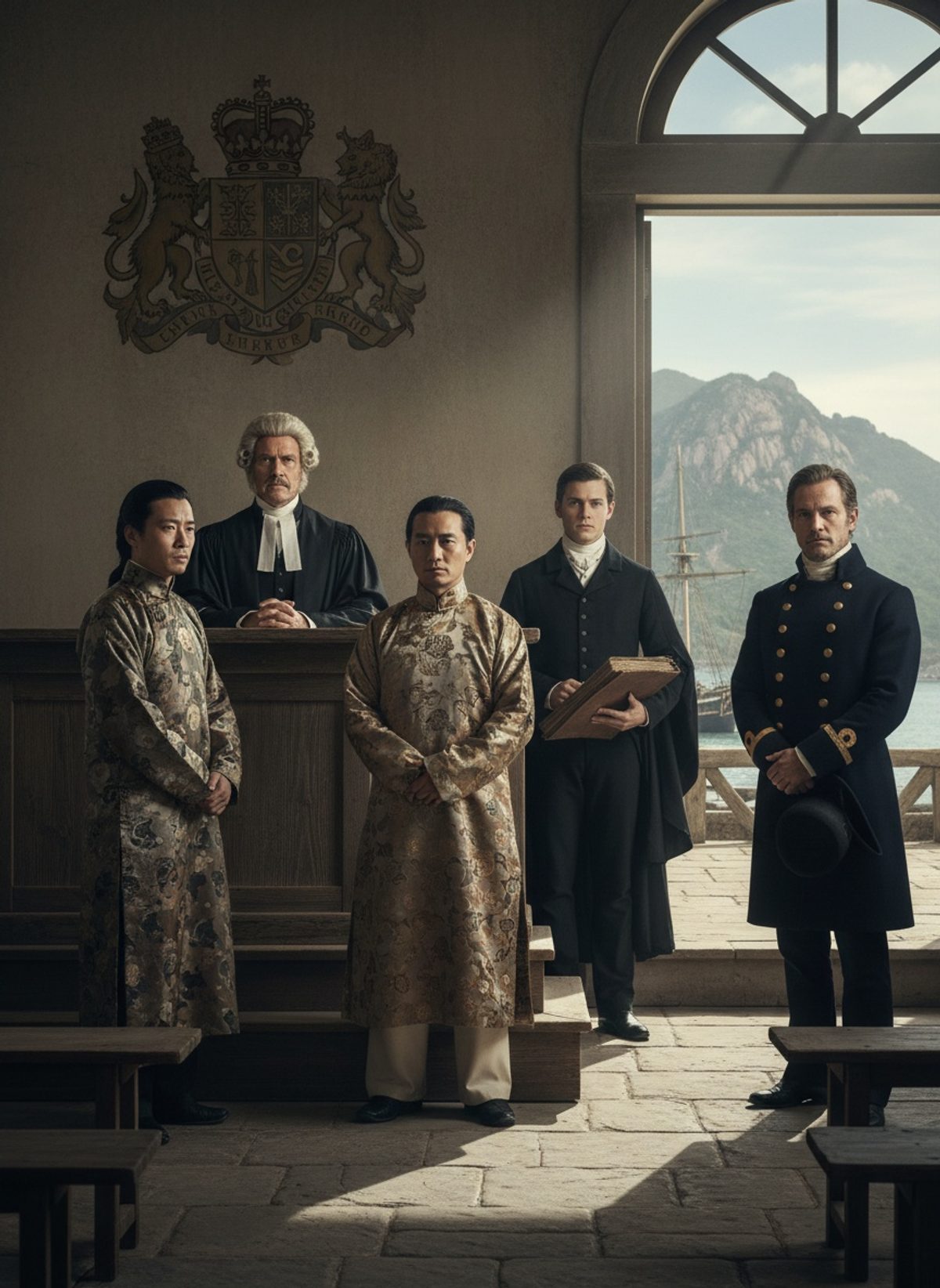
September 18, 1842. The unabating winds off the South China Sea swept through the harbor as merchants clung to their hats and documents, oblivious to how transformative these papers would be.
The Island That Became a Legal Landmark
Hong Kong entered a new epoch with the stroke of a pen on that fateful September day. The Treaty of Nanking, signed between China and Britain, brought about the official cession of Hong Kong to the British Crown. What appeared as a mere political transaction unfolded into a remarkable narrative of legal transplantation. Nestled among the rocky outcrops and dense jungles, this small island was set to become an unlikely bastion of English common law—a system that would go on to root itself deeply into the civic consciousness of the region, defining fairness and justice in an unprecedented way.
Unlike other colonial endeavors, where imperialistic overtones often overshadowed local traditions, the establishment of English common law in Hong Kong had a somewhat different trajectory. It was more than a legal imposition; it became a symbol of equity and due process that many in Asia had never witnessed in such codified form. The application of trial by jury and habeas corpus—concepts that guaranteed fair trials and protection from unlawful detention—were principles that resonated on this foreign soil.
Sails on the Horizon, Judges in Chambers
As the British administration cruised into the harbor, the initial team of legal architects quickly set about laying the foundation for a judicial system. English common law, renowned for its adaptability, was introduced, sparking a transformative effect on how justice was perceived and administered. Courts were swiftly established, and merchants, traders, and citizens found themselves navigating this new legal milieu.
Read next: When English Law Gave a Slave His Freedom in Open Court, 1772
Judge by judge, case by case, the nuances of English jurisprudence began to take form. One of the earliest trials involved the application of maritime law, reflecting the island's bustling port life. These early decisions often required balancing traditional Chinese customs with newer British codes—a delicate dance that would require the careful weighing of centuries of legal traditions.
Yet, it was the balance and independence with which these judicial matters were handled that slowly garnered local respect. An independent judiciary, seen as an impartial arbitrator, became a cornerstone of society, allowing for grievances to be addressed fairly regardless of one's status or nationality. The discipline and rigor of these courts gradually won over skeptics who had initially viewed the English legal system as another mechanism of control.
The Crown's Lingering Shadow
The influence of English common law on Hong Kong extended beyond the courtroom. By introducing a legal system that emphasized civil liberties and the safeguarding of individual rights, the British laid the groundwork for a legacy that would outlast the empire itself. This legal scaffolding became an indelible feature of the island, continuing to shape its identity long after the Union Jack was lowered for the last time in 1997.
The example set by Hong Kong became a reference point for numerous jurisdictions across Asia and beyond, as others sought to incorporate elements of English common law into their own legal frameworks. Legal scholars and jurists worldwide took interest, intrigued by Hong Kong's success in integrating British legal traditions with local customs, creating a hybrid system that was both pragmatic and just.
Yet, the trials mapped over decades also reflected tensions inherent in this integration process. Cultural and social dynamics often presented formidable challenges to the seamless operation of English law, and cases occasionally stirred controversy when local customs appeared at odds with imported legal norms. Despite this, the persistent adaptability of common law ensured its relevance and continued evolution.
The Pen That Outlasted the Empire
The story of how English common law took root in Hong Kong is as much about adaptation as it is about transformation. Over the years, this legal institution not only endured but flourished, outlasting the colonial presence and shaping Hong Kong's destiny. Surviving challenges both domestic and external, it stands as a testament to the endurance of principles of justice and fairness.
As Hong Kong grapples with its contemporary political landscape, the island’s legal legacy underscores the power of law in preserving freedoms and protecting rights. It prompts us to reflect on the enduring impact of seemingly mundane decisions made by those early British settlers. In a rocky island once seen merely as an opportune trading post, they left behind a more profound inheritance—a legal system that became the steadfast voice of the people, transcending the tenure of empires and standing resilient in the face of time.