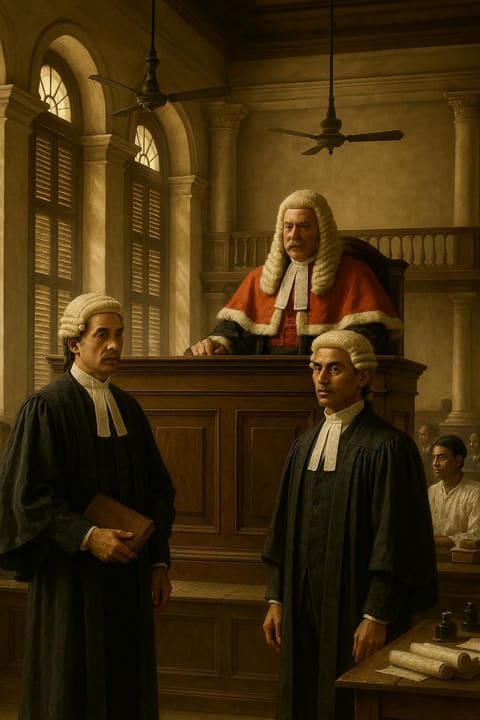
The sleepy morning mists hung thick over the waters of the Bay of Islands, clinging to the low jagged peaks like a shroud. The gentle lapping of waves against the wooden hulls of anchored ships was accompanied by the call of native birds, their cries echoing through the lush, untouched landscapes. Yet on this day in 1840, in what would later be known as New Zealand, the air was electric with anticipation. Beneath the towering pōhutukawa trees, a gathering of indigenous Māori chiefs and British officials stood poised, pen in hand, ready to ink their names into a document that would carry the tones of English common law into the heart of the Pacific.
The Meeting at Waitangi
It was a gathering unlike any other. The Māori, fierce protectors of their lands and culture, stood in stark contrast to the British representatives, cloaked in the guise of colonial diplomacy. The Treaty of Waitangi, as it would come to be known, was not a mere agreement; it was a fusion of worlds, cultures, and laws. Each group held differing expectations and understandings. To the British, this treaty was a path to secure sovereignty and structure within the newfound land, promising protection and rights to the Māori. For the Māori, it was a paper shield against foreign encroachment, as well as a bridge to trade and technological benefits they'd glimpsed through earlier interactions.
The stakes were monumental. With their quill pens, they transferred words that had first been inked into parchment in the chambers of London many years before. The words, shaped in the crucible of English common law, spoke of governance, authority, and protection - ideas that would lay the foundation for a nation.
Words Born in the Shadow of Empires
The principles enshrined within the Treaty of Waitangi were birthed far from these shores, in an England caught between its medieval past and its global future. English common law, with roots buried deep in Anglo-Saxon and Norman conquests, had evolved over centuries. Guided by precedent and judicial wisdom, it offered predictability and a semblance of fairness. By the 19th century, it was the invisible ligature that held an empire’s ever-expanding reaches together.
Read next: When English Law Gave the World Its Courtroom, 1215
When English law made its way to New Zealand, it did not travel reluctantly but with an authoritative confidence. It arrived to offer an imaginative uniformity in a world that was otherwise unpredictably diverse. The Māori, for generations shaped by their own complex tikanga or customary laws, encountered within the treaty a legal language foreign yet profound. Its adoption would signify adaptation and resistance, validation and transformation.
Carrying the Law to Distant Shores
Observe carefully the signatures at the document’s base, they speak as silent witnesses to a solemn pact. Here, both nations' leaders signed away futures they could only begin to grasp. Interestingly, the negotiations preserved through oral histories and sparse written accounts reveal the Māori's robust debate and passionate oration. Many chiefs were sagacious, with a rooted understanding that this treaty symbolized both risk and opportunity.
The transmission of English common law was more than the imperial interjection of foreign governance. It intended to be a civilizing force, an effort to administer order in an otherwise unruly expansion. Yet, these laws traversed more than the waters on British ships; they made their way inland, seeping into the very cultural fabric of the place, influencing far beyond the treaties’ initial expectations.
The Living Constitution of Aotearoa
Despite its imperial origins, English common law found fertile ground amidst New Zealand's natural wonders and cultural complexity. Over time, its interpretations and applications evolved, shaped anew by the hands of a diverse populace. While the Treaty of Waitangi itself has undergone rigorous analysis and debate throughout New Zealand's history, it remains a living force, an integral cornerstone of the nation’s legal structure and identity.
Read next: When English Common Law Became the Voice of Hong Kong, 1842
Cases in New Zealand's courts regularly cite the Treaty, not just as a historic artefact but as a legal touchstone for rights and claims. Its principles inspire a continuous dialogue about identity, sovereignty, and partnership. The law is not static but a living conversation between past nations and future generations.
The Resilient Echo of a Distant Promise
The echoes of decisions made on that day in 1840 reverberate through New Zealand's valleys and cities. They speak to the intricate dance between colonial power and indigenous resilience. As they resonate through time, these words written centuries ago in London serve as a reminder that the imposition of law brings unforeseen consequences: shaping societies, constructing identities, and often building paths that their creators never envisioned.
When English law became the voice of the Pacific, it illuminated possibilities while imposing complexities. It’s a storied testament to law’s enduring power to transcend geography, language, and time. In Aotearoa, English common law diverged from its imperial course, crafting a unique journey whose tale is as much about persistence and adaptation as it is about the law itself. Today, amidst changing tides and societal shifts, those ancient words continue to guide a vibrant, evolving nation.