The early morning sun draped its golden light over a thin ribbon of mist that clung to the edges of the Virginia coastline. The air, thick with the scent of salt and pine, carried the distant cawing of seagulls. The year was 1607, and a small band of English settlers was about to make history. They came not with gold or glory-seeking ambitions but with something far weightier: the English legal code. As they set foot on the shores of what would become Jamestown, they unwittingly planted the seeds of legal principles that would reshape the governance of an entire continent.
The Charter That Spanned an Ocean
Within chests crafted from English oak, the settlers safeguarded documents that held the promise of order and civilization—their charter. Granted by King James I, it was more than a mere permission slip to found a colony; it was the lifeline of English Common Law reaching across the Atlantic. Unlike the rigid codes of the continent, English law was a living document, a collection of customs and precedents that would adapt to the needs of the land it governed. This was a contract not just between ruler and subject but also among the settlers themselves, laying out mutual rights and obligations.
The significance of this narrative is often eclipsed by tales of survival and struggle against hostile landscapes and native peoples. Yet, it was this legal framework that would form the backbone of colonial society, establishing a foundation for governance based on the rights of freeborn Englishmen. The settlers' deepest allegiance was not only to the Crown but to the principles of justice and liberty embedded within their legal legacy.
Trials by Trial
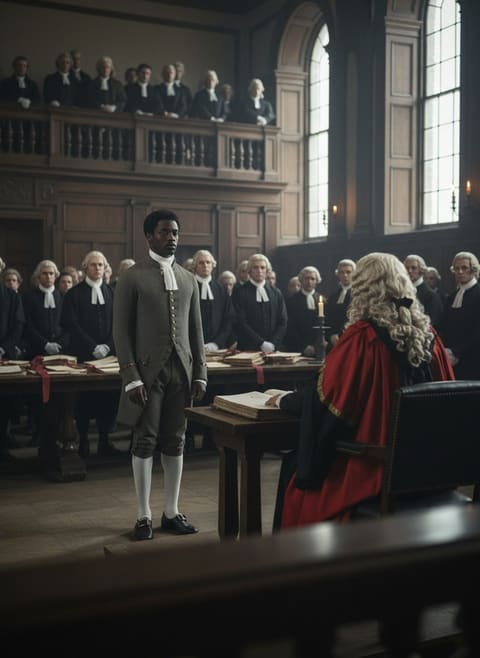
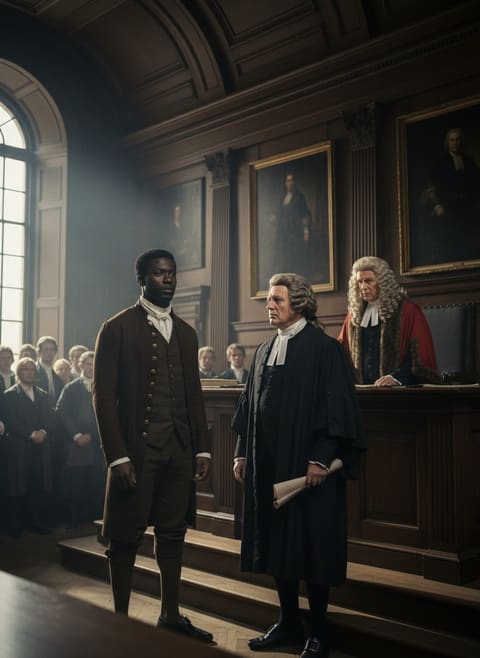
As the colony began to take shape, so too did its legal systems. The settlers convened courts, a unique fusion of English legal practices and the pragmatism demanded by their new world. From petty thefts to major disputes, these fledgling courts adjudicated the laws brought with them, and an embryonic version of trial by jury was initiated. This system was revolutionary in guaranteeing that common men, not just elites, had a voice in legal proceedings. It was an embodiment of the people's power within the boundaries of structured law.
Read next: When English Law Gave the World Its Courtroom, 1215
Habeas corpus made the journey too, ensuring that even in the untamed wilderness, an individual's liberty could not be extinguished without due process. In a terrain where solid structures—and stability—were scarce, the settlers built a robust legal fortress, each ruling a carefully laid stone.
Embracing Legal Evolution
The settlers' transplantation of English Common Law was more than a simple case of cultural inertia. The colonial application welcomed evolution. Indigenous legal concepts, practical necessities, and local conditions began to influence and soften its rigidity, making the law an adaptable entity. Land ownership presented particular challenges in this new environment. Understanding land through the lens of English property law offered security, but it still required reinterpretation, given the vast and communal lands of the Native Americans.
This process of legal evolution also allowed for the inclusion of innovative roles and laws—some rudimentary, others forward-thinking. Women, who back in Europe had limited legal standings, found their roles expanded due to the harsh demands of colonial life, resulting in more dynamic interpretations of property and inheritance laws.
The Silent Revolution
Despite the turbulence, an invisible revolution was unfolding. The settlers—former subjects of a rigid monarchy—embraced concepts of self-governance articulated through the same legal frameworks that had enforced sovereign rule. The settlers held assemblies, began drafting codified laws, and by necessity, found themselves engineering a political identity distinct from the English Crown.
Read next: When English Common Law Became the Voice of Hong Kong, 1842
One of the most telling examples was the Virginia House of Burgesses, established in 1619. It was an embryonic legislative body with powers far exceeding those typically granted to colonial assemblies. This development showed the growing importance and regard for laws in the decision-making process and communal governance, a seedling that would mature into the complex democratic systems observed today.
A Legal Inheritance That Shaped a Nation and Beyond
From these modest beginnings, the ripples of English law extended far beyond the borders of the original colonies. As the weighty ideals of liberty and justice continued to flourish in the fertile American imagination, they were enshrined in the foundational documents of a nascent nation. Four centuries later, English Common Law forms the bedrock not only of American jurisprudence but also of legal systems across the globe, influencing the lives of billions.
In 1607, when those English settlers set their feet on Virginia's shores, they carried a charter much larger than the parchment upon which it was written. It was a charter that spoke to the inherent dignity and worth of all individuals, an ideal to be continually aspired to, even when the ink long dried and the paper's edge began to fray. In the shadow of the old world, a new world was conceived, destined to shift the axis of law and governance forever. Indeed, they brought a living tradition that neither ocean nor time could contain.